Boyana Church
Sofia, Bulgaria
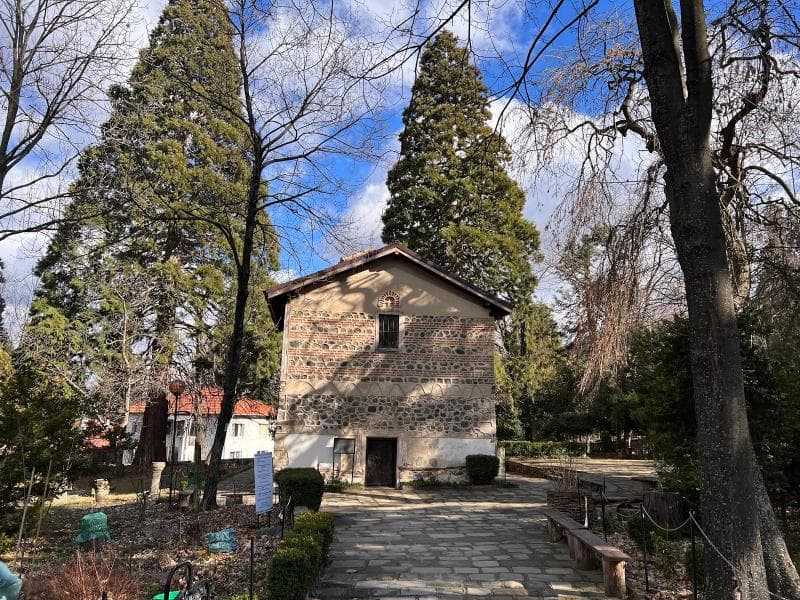
Discover Boyana Church in Sofia, Bulgaria, a UNESCO World Heritage site famed for its 13th-century frescoes, a precursor to the European Renaissance.
Overview
Nestled at the foot of Vitosha Mountain, on the serene outskirts of Sofia, Bulgaria, stands the Boyana Church, a UNESCO World Heritage site since 1979. This medieval Bulgarian Orthodox church is not merely a place of worship but a breathtaking gallery of medieval art, renowned globally for its remarkably preserved frescoes. Comprising three distinct building stages spanning from the 10th to the 19th centuries, the church presents a layered history in its architecture and priceless wall paintings. It offers a unique glimpse into the artistic and spiritual landscape of the medieval Balkans, drawing visitors into a world of vibrant colors and profound historical significance.
History & Cultural Background
The Boyana Church's narrative is etched in stone and paint, evolving over several centuries. The oldest section, an unassuming cross-vaulted church forming the east wing, traces its origins back to the late 10th or early 11th century. This modest structure laid the foundation for what would become an artistic marvel. The most significant expansion occurred in the mid-13th century during the Second Bulgarian Empire, when Sebastocrator Kaloyan and his wife Desislava commissioned the construction of a second, two-story church adjoining the older one. It was within this new structure that the church’s most celebrated frescoes, dated to 1259, were created. A final addition, the western section, was completed in the mid-19th century, integrating the earlier parts into the complex we see today. The church functioned as an active parish church until 1954 and has been managed as a branch of the National History Museum since 2003, dedicated to its preservation and study.
What Makes It Special
The true heart of the Boyana Church lies within its walls, adorned with over 240 vibrant frescoes depicting 89 biblical scenes. Among these, the 1259 murals stand out as an extraordinary achievement of medieval Bulgarian art. These paintings are celebrated for their profound psychological depth, individuality, and vitality, departing from the rigid conventions of contemporary Byzantine art. Scholars often describe them as precursors to the Italian Renaissance, showcasing a remarkable artistic innovation that emerged in the Balkans much earlier than in Western Europe. The artistic style, associated with the Tarnovo Artistic School, is characterized by its bright colors and realistic portrayal of human figures. Particularly captivating are the donor portraits of Sebastocrator Kaloyan and his wife Desislava, depicted alongside Tsar Constantine Tikh Asen and Empress Irina. These full-length representations are not only masterworks of art but also among the earliest and most valuable preserved images of historical figures from the Bulgarian Middle Ages, capturing their dignity and refinement. French art historian Andre Grabar notably praised the Boyana Church as 'the most valuable Bulgarian contribution to world medieval art,' emphasizing its 'purity and harmonic balance of forms.'
Stories, Fun Facts & Local Details
The Boyana Church holds many intriguing layers, both visible and hidden. One fascinating detail uncovered during restoration works is an inscription that reads 'I, Vasiliy inscribed,' possibly revealing the name of one of the talented artists behind the 13th-century frescoes, a rare instance of an artist signing their work in that era. There's a local anecdote suggesting the church's survival through the Ottoman era might be attributed to its relatively humble exterior, which reportedly did not exceed the height of a Turkish soldier on horseback, thus escaping destruction that befell many other taller Christian structures. The area surrounding the church is also noteworthy; it was Queen Eleonora of Bulgaria who initiated the first major restoration efforts in 1912, and she is buried nearby. The picturesque park around the church, established at the initiative of Tsar Ferdinand, is home to impressive giant sequoias, adding a unique natural element to this historical site.
Visitor Perspective
Visiting the Boyana Church is an intimate and carefully managed experience designed to protect its fragile frescoes. To preserve these invaluable artworks, access is strictly controlled: a maximum of nine visitors are allowed inside at any given time, and each visit to the medieval sections is limited to 10 minutes. While individual visitors can often gain entry without prior reservation, it's advisable to check the official website or make a reservation, especially during peak seasons, to avoid potential waiting times or disappointment. Tickets can be purchased directly on-site, and combined tickets offering access to the National History Museum are also available. For those seeking to visit on a budget, free admission is offered on specific days, such as the last Monday of every month after 3:00 PM. The church is easily accessible from central Sofia by local bus lines, including routes N°64 and 107, making it a convenient and enriching half-day excursion.
Coordinates: 23.2661722, 42.6446722
View on Google Maps💬 How Travelers Describe This Place
Based on community votes
Interesting
852Must See
326Beautiful
270Unique
146Photogenic
80
Traveler Stories
Discover memorable experiences shared by travelers who have visited this place.
No traveler stories yet.
Be the first traveler to share what made this place memorable.
Things to see at Boyana Church



Tour
By
Spot
Discover amazing places around the world. Your journey starts here.
Explore
© 2026 TourBySpot. All rights reserved.