Main Church Building
Sofia, Bulgaria
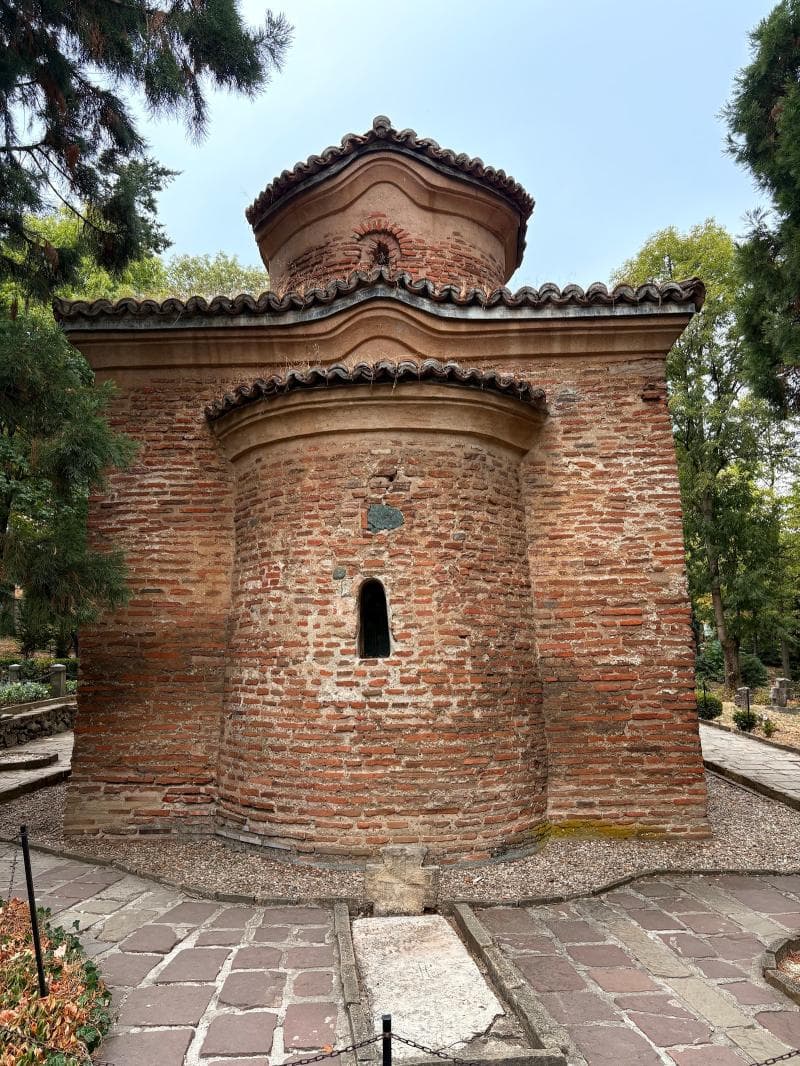
Overview
Nestled at the foot of Vitosha Mountain, on the serene outskirts of Sofia, Bulgaria, lies the Boyana Church, a UNESCO World Heritage site of extraordinary cultural and artistic significance. Often referred to as the 'Main Church Building' due to its central importance, this medieval Bulgarian Orthodox church is not a single structure but a fascinating ensemble built and expanded across three distinct historical periods: the 10th-11th, 13th, and 19th centuries. It is celebrated globally for its remarkably well-preserved frescoes, particularly those dating from 1259, which are considered pivotal in the history of medieval European art.
History & Cultural Background
The history of the Boyana Church unfolds like a richly illustrated manuscript, with each architectural layer telling a chapter of Bulgaria's past. The oldest section, the eastern church, is a small cross-vaulted edifice believed to have been constructed in the late 10th or early 11th century. This was later adjoined by the second and most renowned section in the mid-13th century, commissioned by Sebastocrator Kaloyan and his wife Desislava, who were local feudal lords. This two-story addition includes a ground-floor family sepulchre and an upper-floor chapel. It was this expansion in 1259 that saw the creation of the frescoes that would bring the church international acclaim. A final western extension, a two-story antechamber, was added in the mid-19th century through donations from the local community, completing the present-day architectural complex. The church functioned as an active parish church until 1954 and was inscribed on the UNESCO World Heritage List in 1979, recognizing its outstanding universal value.
What Makes It Special
What truly sets the Boyana Church apart are its 13th-century frescoes. These murals, painted in 1259, are often regarded as precursors to the European Renaissance, displaying a remarkable departure from the rigid Byzantine artistic traditions prevalent at the time. The anonymous artists, collectively known as the 'Boyana Master,' imbued the more than 240 figures across 89 scenes with unprecedented realism, psychological depth, and individuality. Viewers can discern emotions and personalities in the expressive faces, a quality rarely seen in earlier medieval art. The frescoes portray biblical narratives alongside contemporary figures, most notably the lifelike portraits of the donors, Sebastocrator Kaloyan and Desislava, and the Bulgarian Tsar Constantine Asen Tikh and Tsaritsa Irina. These royal portraits are among the oldest surviving images of Bulgarian rulers and offer a unique glimpse into the period. The inclusion of elements from everyday life within sacred scenes further underscores the innovative spirit of the Tarnovo School of Painting, of which Boyana is considered the most impressive preserved monument.
Stories, Fun Facts & Local Details
Beyond its artistic grandeur, the Boyana Church holds charming stories and local significance. One touching detail is the role of Tsaritsa Eleonora, wife of Tsar Ferdinand of Bulgaria, in the early 20th century. During a time when the church faced potential destruction, she actively championed its preservation, even requesting to be buried in the churchyard following her death in 1917. This act of devotion highlights the deep affection and importance the church has held for generations. Despite its monumental significance, the Boyana Church is surprisingly small in physical size, a detail that often strikes first-time visitors. This intimate scale, combined with the intricate detail of its frescoes, creates a profoundly personal and spiritual experience. The fact that the 'Boyana Master' remains anonymous adds to the mystique, allowing the art itself to speak volumes without the distraction of an identifiable artist's persona. The church also features the earliest known portrait of St. Ivan of Rila, a highly revered Bulgarian patron saint.
Visitor Perspective
Visiting the Boyana Church is a unique experience designed to protect its fragile treasures. Due to the delicate nature of the frescoes, strict conservation measures are in place. Access is limited to small groups, typically no more than nine visitors at a time, for a brief duration of approximately 10 minutes. This controlled environment, complete with air conditioning to maintain stable temperatures, ensures the long-term preservation of the murals. Individual visitors can often purchase tickets on-site, but organized groups are required to make reservations in advance. While the visit inside is brief, the intensity of the artwork and the historical weight of the space leave a lasting impression. Travelers often find themselves mesmerized by the vibrant colors and humanistic expressions that seem to leap from the walls, offering a rare window into medieval Bulgarian artistry and spirituality. Planning your visit, especially during peak season, is advisable to fully appreciate this unparalleled jewel of Sofia.
Coordinates: 23.2661722, 42.6446722
View on Google Maps💬 How Travelers Describe This Place
Based on community votes
Photogenic
981Must See
958Unique
565Beautiful
157Interesting
28
Traveler Stories
Discover memorable experiences shared by travelers who have visited this place.
No traveler stories yet.
Be the first traveler to share what made this place memorable.

Tour
By
Spot
Discover amazing places around the world. Your journey starts here.
Explore
© 2026 TourBySpot. All rights reserved.