Basilique Notre-Dame De Fourvière
Lyon, France
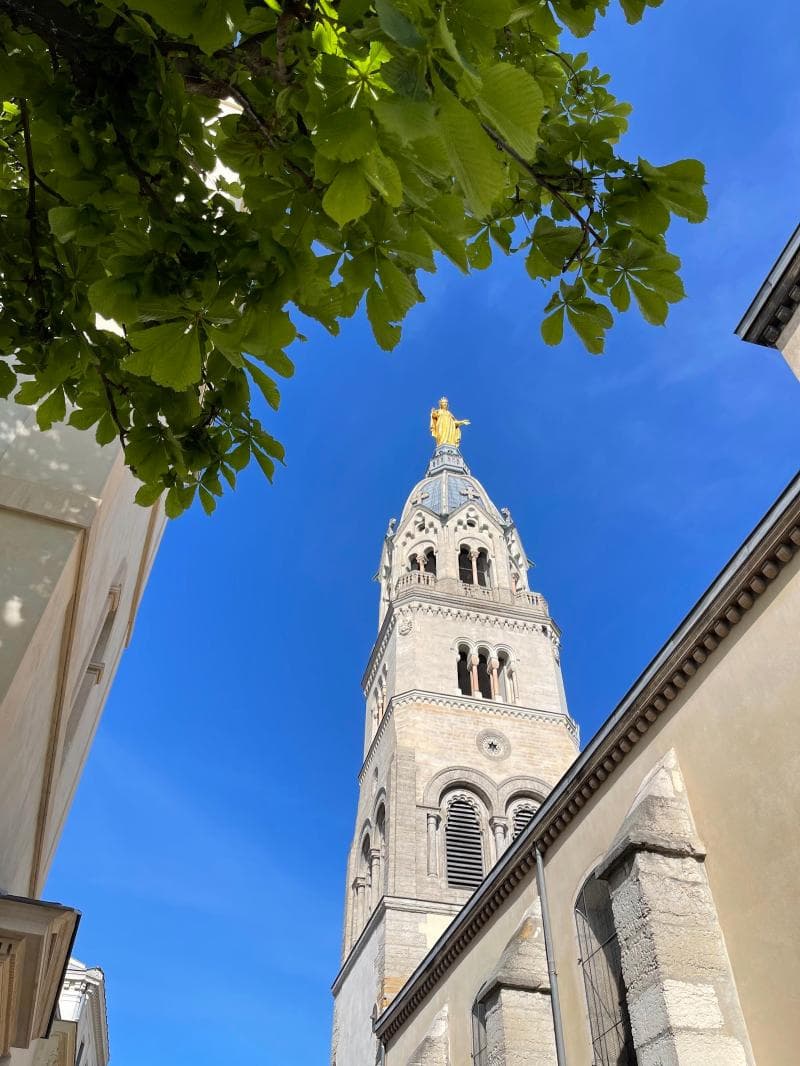
Discover the Basilique Notre-Dame de Fourvière in Lyon, France. Explore its rich history, unique Byzantine-Gothic-Romanesque architecture, and panoramic views.
Overview
Perched majestically atop Fourvière Hill, the Basilique Notre-Dame de Fourvière stands as an iconic landmark overlooking the vibrant city of Lyon, France. This breathtaking basilica, often considered an emblem of Lyon, welcomes over 2.5 million visitors and pilgrims annually, drawn by its spiritual significance and commanding presence. Its distinctive architecture, a captivating blend of Byzantine, Gothic, and Romanesque influences, makes it a truly unique sight. Construction of the basilica primarily occurred between 1872 and 1896, though some sources note the main building phase ending in 1884, with interior decoration continuing later. Dedicated to the Virgin Mary, the basilica is not only a place of worship but also a UNESCO World Heritage site, recognized for its historical and cultural importance.
History & Cultural Background
The story of Notre-Dame de Fourvière is deeply intertwined with the history and faith of Lyon. The basilica's location on Fourvière Hill is historically significant, as it stands on what was once the Roman forum of Trajan, known as 'Forum Vetus' (old forum), which is believed to be the origin of the name Fourvière itself. The construction of the grand basilica in the late 19th century was primarily an act of gratitude and devotion. It was built following a vow made by the Lyonnais people to the Virgin Mary, thanking her for sparing the city from invasion during the Franco-Prussian War of 1870-1871. This act of faith was not new; centuries earlier, in 1643, a similar vow was made to Mary to protect Lyon from the Black Death, which led to an annual pilgrimage and is celebrated today with the famous Fête des Lumières (Festival of Lights) every December 8th. The basilica was designed by architect Pierre Bossan, with his disciple Louis Sainte-Marie Perrin overseeing its completion after Bossan's passing. It is important to note that while its grandeur might suggest otherwise, Fourvière is a basilica, not a cathedral; Lyon's cathedral is the Cathédrale Saint-Jean-Baptiste, located in Vieux-Lyon at the foot of the hill.
What Makes It Special
What truly sets Basilique Notre-Dame de Fourvière apart is its striking architectural synthesis and its symbolic richness. From its elevated position, it offers some of the most breathtaking panoramic views across the city of Lyon, an experience not to be missed by any visitor. The basilica's design is an eclectic masterpiece, masterfully blending elements of Romanesque, Gothic, and Byzantine styles, creating a visual feast both inside and out. The interior is lavishly decorated, showcasing an array of luxurious materials: pristine white marble from Carrara, warm pink granite from Northern Italy, cool blue marble from Savoy, vibrant green onyx, and intricate accents of silver, gold, ebony, and ivory.
The basilica uniquely comprises two distinct churches, one built directly above the other. The upper church is characterized by its spaciousness and ornate decor, featuring three domes, six large stained-glass windows, and elaborate mosaics. Below, the lower church, often mistakenly referred to as a crypt, is more subdued but equally profound, dedicated to Saint Joseph. Adding to its grandeur are six colossal mosaics, each spanning 50 square meters, vividly illustrating Mary's enduring connection to the Church and to France. Furthermore, eight lateral chapels adorn the basilica, each presenting different episodes from the life of the Virgin Mary. The four towering structures that define its silhouette are not merely decorative; they symbolize the cardinal virtues of Prudence, Temperance, Force, and Justice, adding layers of meaning to this architectural marvel.
Stories, Fun Facts & Local Details
Beyond its grand appearance, the Basilique Notre-Dame de Fourvière holds several fascinating stories and local details. During its construction, some critics, perhaps overwhelmed by its unconventional design, amusingly dubbed it 'the upside-down elephant.' This nickname hints at the basilica's imposing yet somewhat whimsical presence on the skyline. The very name 'Fourvière' carries historical weight, likely stemming from 'Forum Vetus,' referring to the Roman forum that once occupied the hill, a testament to Lyon's deep roots in antiquity.
A profound cultural link exists between the basilica and Lyon's famous Fête des Lumières. This annual Festival of Lights, held every December 8th, commemorates the city's gratitude to the Virgin Mary for intervening during the 1643 plague and later in 1852 when a statue of Mary was inaugurated, illuminating the entire city. Visitors might also discover the Rosary Gardens nestled below the basilica, designed as a tranquil buffer from the bustling city. Inside, the basilica features a series of intricate mosaics, some of which controversially depicted historical 'heresies.' One such mosaic, representing 'Lutherism,' sparked debate, leading to a public apology years later, showcasing the evolving dialogue between faith and history within this sacred space.
Visitor Perspective
Visiting the Basilique Notre-Dame de Fourvière is an enriching experience designed to be accessible and welcoming for all. Entry to both the basilica and its lower church (often called crypt) is completely free, allowing individual visitors to explore at their leisure. The basilica is open daily, typically from 7 am to 8 pm, with the lower church open from 8 am to 6:30 pm, though it's always wise to check for specific hours, especially on Sundays when morning visits might be reserved for religious services. Getting to Fourvière Hill is convenient, with options including a funicular ride (Line F2 from Vieux-Lyon metro station), a bus (Line 55), or a picturesque 25-minute walk through the charming Rosaire gardens from Vieux-Lyon.
For those with reduced mobility, the basilica is fully accessible, with elevators and reserved parking available. When visiting, respectful attire is requested, and while photography without flash is permitted, visitors are asked to maintain an atmosphere of silence and contemplation in prayer areas. While there is no luggage storage on site, the basilica provides essential amenities and information to ensure a comfortable visit. Beyond the architectural marvels, the true highlight for many is the unparalleled panoramic vista of Lyon from the esplanade, making the journey up Fourvière Hill an essential part of any visit to the city.
Coordinates: 4.8225, 45.7625
View on Google Maps💬 How Travelers Describe This Place
Based on community votes
Unique
685Photogenic
472Beautiful
446Interesting
399Must See
33
Traveler Stories
Discover memorable experiences shared by travelers who have visited this place.
No traveler stories yet.
Be the first traveler to share what made this place memorable.
Things to see at Basilique Notre-Dame De Fourvière



Tour
By
Spot
Discover amazing places around the world. Your journey starts here.
Explore
© 2026 TourBySpot. All rights reserved.