Esplanade De Fourvière
Lyon, France
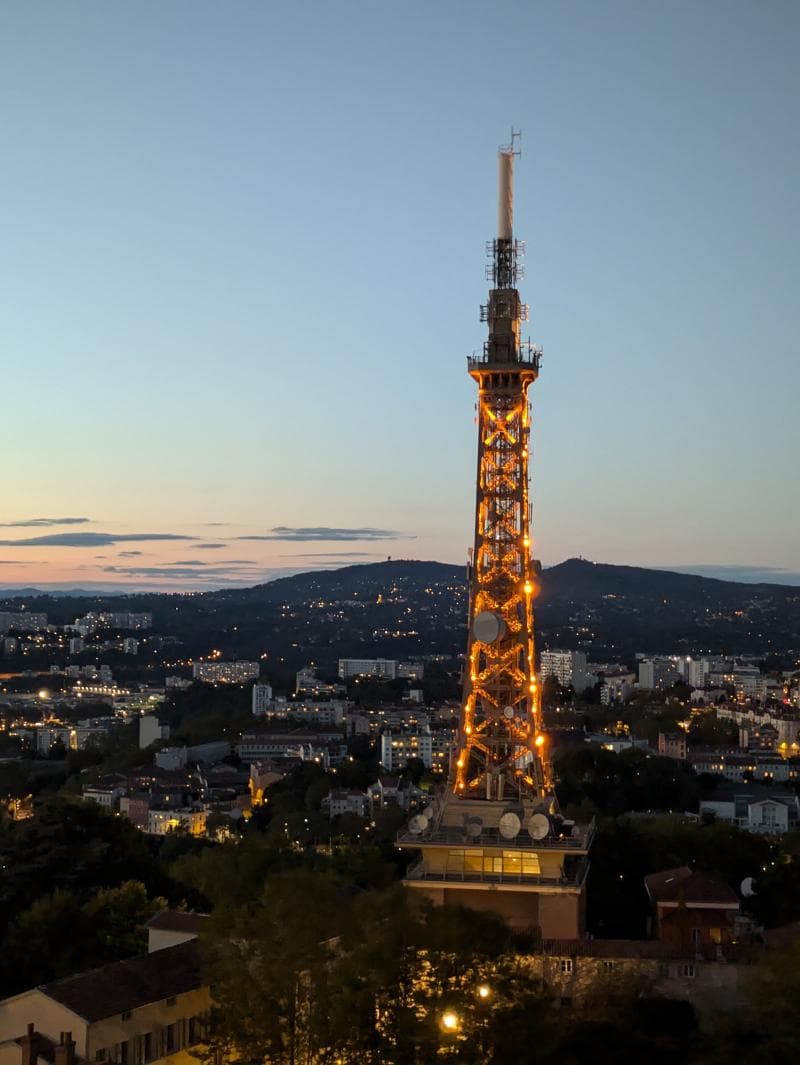
Discover Esplanade de Fourvière in Lyon, France, offering panoramic views of the city from atop Fourvière Hill, next to the Basilica.
Overview
Perched majestically atop Fourvière Hill in Lyon, France, the Esplanade de Fourvière offers an unrivaled vantage point over the city. Adjacent to the iconic Basilique Notre-Dame de Fourvière, this spacious outdoor area provides visitors with breathtaking panoramic views. From here, one can admire the winding Rhône and Saône rivers, the ancient rooftops of Vieux Lyon, and the modern cityscape stretching out to the horizon. On exceptionally clear days, the distant Alpine foothills even make an appearance, adding another layer of grandeur to the vista. It's a place where history, spirituality, and natural beauty converge, making it an essential stop for any traveler to Lyon.
History & Cultural Background
The story of Fourvière Hill, and by extension its esplanade, is deeply intertwined with the very genesis of Lyon. It was on this elevated ground that the Roman settlement of Lugdunum was founded in 43 BC, establishing it as the historical heart of the region. The name 'Fourvière' itself is thought to be derived from 'Forum Vetus', meaning 'Old Forum', referring to the ancient Roman forum that once occupied this significant site.
Centuries later, the hill became known as 'the hill that prays', a testament to the numerous religious structures that have graced its slopes. The most prominent of these is the Basilique Notre-Dame de Fourvière, constructed between 1872 and 1896. Its creation was partly inspired by a vow made by the city's inhabitants during the Franco-Prussian War. A significant cultural detail tied to the Basilica is the golden statue of the Virgin Mary, whose inauguration on one of the towers is believed to be the origin of Lyon's famous Fête des Lumières (Festival of Lights) on December 8th, drawing hundreds of thousands of visitors each year.
What Makes It Special
The primary allure of the Esplanade de Fourvière is undoubtedly its spectacular, sweeping views. It's not just a beautiful cityscape; it's a living map of Lyon's evolution, where you can trace the confluence of its two great rivers and pinpoint historical landmarks like the Saint-Jean Cathedral, the Lyon Opera House, and Place Bellecour.
Beyond the visual feast, the esplanade's unique character is enhanced by its immediate proximity to the Basilique Notre-Dame de Fourvière. The Basilica's distinctive architecture, a blend of Romanesque Revival, Gothic Revival, and Neo-Byzantine styles, with its richly decorated interior, provides a profound cultural and spiritual complement to the panoramic outdoor experience.
Adding to its special appeal is the 'Regard sur la Ville' sculpture located on the esplanade – a tactile map designed specifically for visually impaired visitors. This thoughtful inclusion allows everyone to engage with and understand the city's layout, offering a truly inclusive way to experience Lyon.
Stories, Fun Facts & Local Details
- The Hill That Prays vs. The Hill That Works: Lyon is characterized by two prominent hills. Fourvière is affectionately known as 'the hill that prays' due to its religious significance, while Croix-Rousse, on the opposite side of the city, is called 'the hill that works' in reference to its historical silk weaving industry.
- Ancient Origins of a Modern Name: The name Fourvière is widely believed to be a linguistic evolution of 'Forum Vetus', the Latin term for 'Old Forum', referencing the Roman public square that once stood where the Basilica now dominates.
- A Festival of Light Born from a Statue: The famous Fête des Lumières, an international event that illuminates Lyon every December, has its roots in the dedication of the golden statue of the Virgin Mary atop one of the Basilica's towers. Citizens spontaneously lit candles in their windows to celebrate, a tradition that grew into today's spectacular festival.
- Lyon's Own 'Eiffel Tower': Just a short distance from the esplanade stands the Metallic Tower of Fourvière, built in the late 19th century. Although shorter, it was constructed at the same time as Paris's iconic landmark and was intended to be Lyon's answer to the Eiffel Tower.
- UNESCO World Heritage: The Fourvière Hill, including the Basilica and its esplanade, is part of the historic site of Lyon, recognized as a UNESCO World Heritage Site in 1998, highlighting its enduring historical and architectural importance.
Visitor Perspective
Reaching the Esplanade de Fourvière is an experience in itself. The most popular and scenic way to ascend is via the funicular from Vieux Lyon, a charming journey that bypasses the steep climb. Once at the top, the esplanade serves as an excellent starting point for further exploration, with the ancient Roman theaters and Odeon just a short walk away, connecting visitors to Lyon's deep Roman past.
While the views are magnificent at any time, many visitors find sunrise or the 'blue hour' (just after sunset) to be particularly magical, when the city lights begin to twinkle. It's worth noting that, like many popular attractions, the esplanade can become quite crowded, especially during peak tourist seasons or specific events, so planning your visit for quieter times might enhance the experience. Despite potential crowds, the sense of grandeur and the sheer scope of the panorama make it an unforgettable encounter with Lyon's beauty and heritage.
Coordinates: 4.821866, 45.762361
View on Google Maps💬 How Travelers Describe This Place
Based on community votes
Beautiful
831Photogenic
685Interesting
433Must See
232Unique
211
Traveler Stories
Discover memorable experiences shared by travelers who have visited this place.
No traveler stories yet.
Be the first traveler to share what made this place memorable.

Tour
By
Spot
Discover amazing places around the world. Your journey starts here.
Explore
© 2026 TourBySpot. All rights reserved.