Main Basilica Interior
Lyon, France
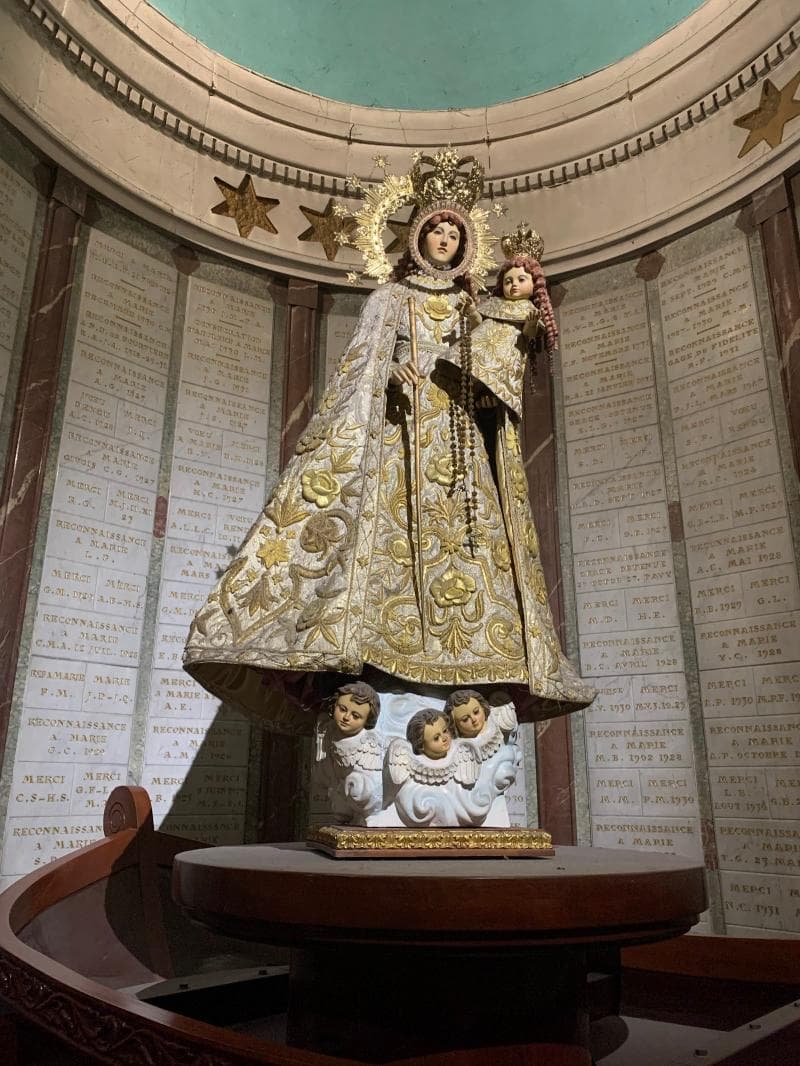
Explore the Main Basilica Interior of Basilique Notre-Dame De Fourvière in Lyon, France. Discover stunning mosaics, rich history, and spiritual grandeur.
Overview
Stepping into the Main Basilica Interior of Basilique Notre-Dame De Fourvière in Lyon, France, is to enter a realm of astonishing artistry and spiritual grandeur. While the basilica’s exterior might be described as monumental or even austere, its interior reveals an explosion of color, intricate detail, and opulent materials that immediately captivate the senses. Often referred to as two churches built one upon the other, the upper basilica offers a lavish display dedicated to the Virgin Mary, while the crypt below provides a more subdued, yet equally significant, space dedicated to Saint Joseph. The basilica stands not just as a place of worship, but as a vibrant canvas telling stories of faith, history, and the unwavering devotion of the Lyonnaise people.
History & Cultural Background
The Basilique Notre-Dame de Fourvière, perched majestically atop Fourvière Hill, is deeply interwoven with Lyon’s identity. Its construction, initiated in 1872 and largely completed by 1896, was born from a powerful vow and public subscription. Following the Franco-Prussian War of 1870, and echoing an earlier vow from 1643 when Lyon was spared from the plague, the basilica was erected to express gratitude to the Virgin Mary for protecting the city. Designed primarily by architect Pierre Bossan and later completed by Louis Sainte-Marie Perrin, the basilica’s unique architectural style fuses Romanesque and Byzantine influences, a departure from the prevailing Gothic trends of its time. This blend resulted in a structure intended to be both visually striking and rich in symbolism. Today, it is recognized as a UNESCO World Heritage site and is a powerful symbol of Lyon's status as a 'Marian city', attracting millions of visitors and pilgrims annually.
What Makes It Special
The Main Basilica Interior is distinguished by its extraordinary wealth of decorative elements. The upper church features three grand naves and three vaulted spans supported by sixteen columns, culminating in three domes. Everywhere one looks, surfaces are adorned with a magnificent array of materials: white Carrara marble, pink granite from Northern Italy, blue marble from Savoy, green onyx, and sparkling accents of silver and gold, creating a symphony of textures and hues. Six monumental mosaics, each approximately 50 square meters, dominate the side walls. These masterworks by Charles Lameire and Georges Décote depict the profound connections between Mary and the Church on one side, and Mary's relationship with France on the other. Above, six high stained-glass windows illuminate the space, illustrating the litanies of the Virgin Mary, such as Queen of the Prophets and Queen of Angels. Eight chapels, each a distinct artistic creation, showcase different episodes from Mary's life, from her Nativity to her Assumption, featuring works by various sculptors. The monumental 'Stairs of Wisdom', carved from red marble, lead to the high church, symbolizing the ascent to divine knowledge. Below the main sanctuary lies the Crypt of Saint Joseph, a space of simpler design that provides a contrast to the opulence above, yet is equally rich in spiritual significance, housing numerous relics and statues.
Stories, Fun Facts & Local Details
Locals affectionately, or perhaps humorously, refer to the basilica's imposing exterior as 'the upside-down elephant' due to its bulky shape and four prominent towers. However, the real stories lie within its walls. The devotion to the Virgin Mary, deeply ingrained in Lyon's history, is perhaps best exemplified by the annual Fête des Lumières (Festival of Lights) on December 8th. This spectacular event, where the entire city illuminates in vibrant displays, originated from the 1643 vow to Mary for saving Lyon from the plague, a tradition that continues to this day. Inside the upper sanctuary, visitors might notice the controversial series of mosaics depicting various 'heresies' at the feet of the Virgin Mary, each symbolized by a different animal. These were intended to show Mary's triumph over doctrines contrary to Catholic faith, though one, representing 'Lutherism,' caused some contention in later years. Furthermore, the crypt is a fascinating space that houses eleven statues of the Virgin Mary, gathered from various shrines across the globe, transforming it into a unique international pilgrimage site.
Visitor Perspective
For many travelers, entering the Main Basilica Interior is an overwhelming experience. The sheer scale and density of decoration—the gilt, marble, stained glass, and mosaics covering nearly every surface—often elicit a gasp of wonder and awe. Unlike some older, darker European churches, Fourvière’s interior is vibrant, with light filtering through the colorful stained-glass windows, emphasizing the rich decor. There is a tangible sense of sacredness and history, yet the artistic exuberance prevents it from feeling somber. Visitors often find themselves lingering, discovering new details in the mosaics or contemplating the stories told through the chapels. Despite the bustling crowds that frequent this popular site, moments of quiet reflection can be found, particularly in the contemplative atmosphere of the crypt. It is a place that truly rewards a slow and deliberate exploration, offering both a visual feast and a profound spiritual connection to Lyon's enduring faith and heritage.
Coordinates: 4.8225, 45.7625
View on Google Maps💬 How Travelers Describe This Place
Based on community votes
Unique
998Photogenic
903Interesting
481Must See
472Beautiful
92
Traveler Stories
Discover memorable experiences shared by travelers who have visited this place.
No traveler stories yet.
Be the first traveler to share what made this place memorable.

Tour
By
Spot
Discover amazing places around the world. Your journey starts here.
Explore
© 2026 TourBySpot. All rights reserved.