Alcatraz Island
San Francisco, United States
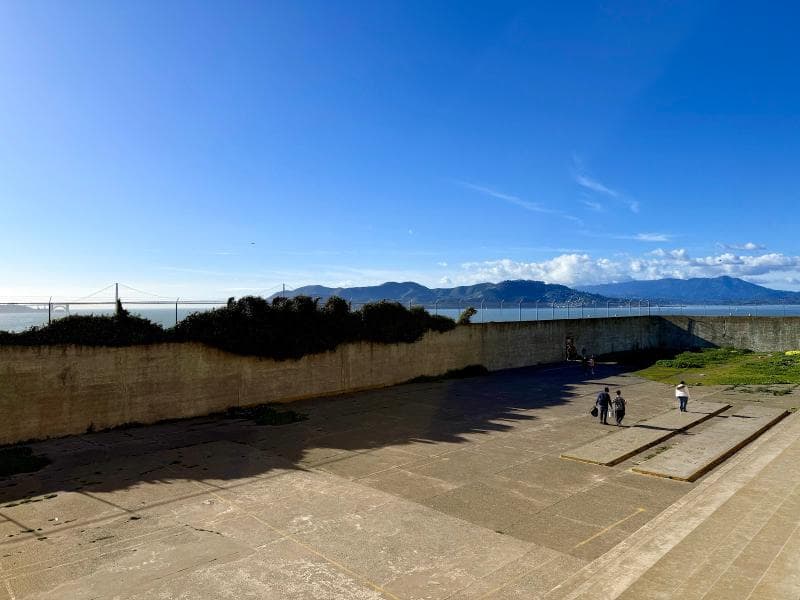
Explore Alcatraz Island, the former notorious federal prison in San Francisco, United States. Discover its rich history, iconic stories, and stunning bay views.
Overview
Alcatraz Island, often referred to simply as 'The Rock,' stands as an iconic landmark in San Francisco Bay, California, United States. Located approximately 1.25 miles (2.01 km) offshore from the city, this small island holds a complex and layered history, transitioning from a strategic military fortification to one of the world's most infamous federal prisons, and now, a compelling national park attraction. Managed by the National Park Service as part of the Golden Gate National Recreation Area, Alcatraz draws millions of visitors annually, eager to explore its storied past and unique natural environment.
Its formidable presence in the bay hints at its previous role as an inescapable penitentiary. Today, Alcatraz offers a profound insight into American incarceration, justice, and the resilience of the human spirit, inviting travelers to delve into a narrative that spans centuries.
History & Cultural Background
The island's history predates its prison days, beginning in 1775 when Spanish explorer Juan Manuel de Ayala charted San Francisco Bay and named it 'La Isla de los Alcatraces' – the 'Island of the Pelicans,' after the abundant seabirds. In 1850, President Millard Fillmore designated Alcatraz as a military reservation, recognizing its strategic importance for defending San Francisco Bay.
By 1854, Alcatraz became home to the first operational lighthouse on the West Coast of the United States, guiding ships through the often-foggy entrance to the bay. It swiftly evolved into a military fortress and a prison, housing Confederate sympathizers and military prisoners during the Civil War. The island served as a military prison for over 80 years before being transferred to the U.S. Department of Justice in 1933.
In 1934, Alcatraz was transformed into a maximum-security, minimum-privilege federal penitentiary, designed to house the most 'incorrigible' inmates from other federal prisons. It gained a formidable reputation as 'The Rock' due to its isolated location and the cold, strong tidal currents of the bay, making escape seem impossible. The federal prison operated for 29 years, closing on March 21, 1963, primarily due to the high cost of maintenance and operations.
Following its closure, Alcatraz gained another significant chapter in its history. From November 1969 to June 1971, Native American activists, calling themselves 'Indians of All Tribes,' occupied the island for 19 months. This occupation was a pivotal moment in the American Indian Red Power movement, raising awareness for Native American rights and self-determination. In 1972, Alcatraz became part of the Golden Gate National Recreation Area and opened to the public as a National Historic Landmark in 1973.
What Makes It Special
Alcatraz is uniquely special for its layered history and the dramatic stories embedded within its walls. It's a place where the strategic military defense of the 19th century coexists with the stark reality of 20th-century incarceration. The island's inherent isolation, naturally secured by the frigid, treacherous waters of San Francisco Bay, made it an ideal, albeit notorious, prison.
Beyond its infamous federal penitentiary era, Alcatraz serves as a powerful symbol of social change, particularly due to the Native American occupation. This blend of roles—from a fort guarding the Golden Gate, to a formidable prison, to a beacon for civil rights, and finally, a thriving bird sanctuary and national park—offers a profound reflection on American history and human nature. The contrast between its grim past and the natural beauty of its gardens, tidepools, and panoramic bay views against the San Francisco skyline is striking.
Stories, Fun Facts & Local Details
- The Name's Origin: The name 'Alcatraz' is an Anglicized version of the Spanish 'Alcatraces,' meaning 'pelicans,' named by Spanish explorer Juan Manuel de Ayala in 1775, noting the island's bird population.
- Notorious Inmates: During its federal penitentiary days, Alcatraz housed some of America's most infamous criminals, including Al Capone, George 'Machine Gun' Kelly, and Robert Stroud, often referred to as the 'Birdman of Alcatraz.'
- The Escape Myth: Despite numerous attempts, no prisoner officially succeeded in escaping Alcatraz. Those who tried were either captured, shot, or presumed drowned in the bay's cold, strong currents.
- Hot Showers: Inmates were provided with hot showers. However, this wasn't a luxury; it was a calculated measure to acclimatize them to warm water, making the shock of the cold bay waters a powerful deterrent against escape.
- Officer Families Lived There: Remarkably, many prison guards and their families, including children, lived on Alcatraz Island, creating a small community alongside the notorious inmates.
- Gardens of Alcatraz: Over many decades, military personnel, officers' families, and even prisoners cultivated gardens on the island, bringing unexpected color and life to 'The Rock.' These historic gardens are now being preserved and maintained by volunteers.
- High Costs Led to Closure: The federal prison closed not due to successful escapes, but because of the exorbitant operational costs. Supplying an island in the middle of a bay, including freshwater, proved financially unsustainable.
Visitor Perspective
Visiting Alcatraz Island is a deeply immersive experience. To ensure your trip goes smoothly, it's essential to plan ahead. Ferry tickets are required for access to the island and are highly sought after, especially during peak season, so booking well in advance is crucial.
Ferries depart from Pier 33 in San Francisco. Once on the island, visitors can explore at their own pace. A highlight is the award-winning Cellhouse audio tour, available in multiple languages, which offers compelling narratives from former inmates and correctional officers. Expect to spend approximately two to three hours for a round trip to fully experience the island.
The island involves walking on uneven surfaces and steep inclines, so comfortable walking shoes with good grip are highly recommended. The weather on Alcatraz can be unpredictable, often windy and cool even on sunny days, so dressing in layers is advisable. There are no luggage storage facilities at Pier 33, so plan accordingly. Beyond the prison, visitors can explore the historic gardens, enjoy panoramic views of the San Francisco skyline and Golden Gate Bridge, and observe the thriving bird colonies.
Coordinates: -122.423012, 37.826664
View on Google Maps💬 How Travelers Describe This Place
Based on community votes
Photogenic
457Interesting
252Beautiful
147Must See
114Unique
19
Traveler Stories
Discover memorable experiences shared by travelers who have visited this place.
No traveler stories yet.
Be the first traveler to share what made this place memorable.
Things to see at Alcatraz Island



Tour
By
Spot
Discover amazing places around the world. Your journey starts here.
Explore
© 2026 TourBySpot. All rights reserved.