Alcatraz Lighthouse
San Francisco, United States
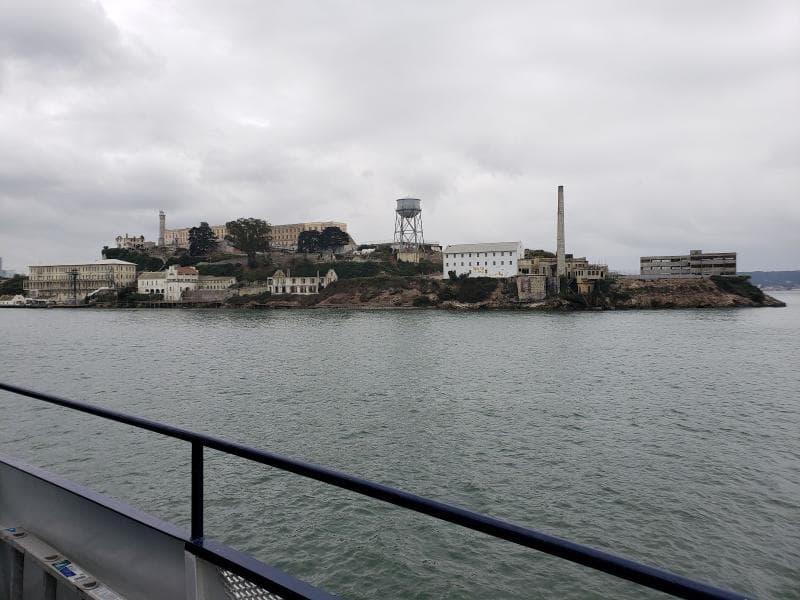
Explore Alcatraz Lighthouse, the first lighthouse on the U.S. West Coast, on Alcatraz Island in San Francisco, United States. Discover its history and significance.
Overview
Perched majestically on Alcatraz Island in the heart of San Francisco Bay, the Alcatraz Lighthouse stands as a historic beacon, guiding ships through the often-foggy waters. More than just a navigational aid, this iconic structure holds the distinction of being the first lighthouse established on the U.S. West Coast. Since its initial lighting, it has silently witnessed the island's dramatic transformation from a military fort to the infamous federal penitentiary known as 'The Rock,' and now, a revered national park site.
Today, the existing lighthouse, a sturdy reinforced concrete tower built in 1909, continues its vital function, broadcasting its light across the bay. While the interior is generally not accessible to the public, its presence is a powerful reminder of maritime history and the diverse past of Alcatraz Island, offering visitors a striking visual focal point amidst the island's other storied landmarks.
History & Cultural Background
The story of the Alcatraz Lighthouse begins with the California Gold Rush, which brought a surge of maritime traffic to San Francisco Bay and created an urgent need for navigational safety. Congress responded by funding the construction of several lighthouses along the West Coast.
The original Alcatraz Lighthouse, a Cape Cod-style structure, was completed in July 1853, making it the oldest major navigational light on the West Coast. Its light was first exhibited on June 1, 1854. This initial lighthouse served the bay for over five decades, witnessing the island's early days as a military citadel and prison. However, the devastating San Francisco earthquake of April 18, 1906, severely damaged the original structure.
Following the earthquake, and due to the construction of the larger cell house that would obscure the light, a taller, more robust lighthouse was deemed necessary. The current 84-foot (26 m) concrete tower was built to the south of the original site in 1909 and became operational on December 1 of that year. The original lighthouse was eventually demolished between 1912 and 1913. In 1963, the same year the federal penitentiary closed, the lighthouse was automated by the U.S. Coast Guard, eliminating the need for resident keepers.
What Makes It Special
What truly sets Alcatraz Lighthouse apart is its pioneering role in West Coast navigation. It was the very first light station to be activated on this expansive coastline, a testament to its strategic importance in guiding ships through the Golden Gate and into San Francisco Bay during the bustling Gold Rush era.
Its enduring presence through the island's various phases—from military fortification to notorious federal prison, and now a national park—lends it a unique historical gravitas. The lighthouse served not only as a navigational aid but also as a steadfast symbol for all who lived and passed through Alcatraz.
Interestingly, despite being shorter than the Alcatraz Water Tower, the lighthouse appears taller from a distance due to its elevated position on the island, creating a fascinating optical illusion. It remains an active aid to navigation, symbolizing resilience and continuity amidst the dramatic changes of its surroundings.
Stories, Fun Facts & Local Details
The lighthouse keepers and their families were once an integral part of the small community on Alcatraz Island, living in attached dwellings near the tower. They maintained the light and also operated the fog signals, which included bells and later electric sirens, crucial for navigating San Francisco's notorious fogs.
A poignant moment in its history occurred during the occupation of Alcatraz Island by the 'Indians of All Tribes' from 1969 to 1971. During this period, the top of the lighthouse was painted red, transforming it into a powerful symbol of the 'Red Power Movement.' Although the red paint was later removed, this event left an indelible mark on its legacy. The lighthouse has also gained cultural recognition, appearing in numerous films set on Alcatraz Island, further cementing its iconic status.
Visitor Perspective
For visitors to Alcatraz Island, the lighthouse is an unmissable landmark, standing proudly at the southern end of the island, near the entrance to the prison. While the interior of the tower itself is not typically open for public ascent, the grounds around it offer magnificent panoramic views of the San Francisco Bay, the Golden Gate Bridge, and the city skyline.
Its prominent location means it's a constant visual companion as you explore the island's other historical sites, reminding you of the island's dual purpose: a guardian of the bay and a place of confinement. Seeing this historic light station up close allows travelers to connect with the maritime heritage of San Francisco and appreciate the challenging lives of those who maintained these essential beacons.
Coordinates: -122.4223, 37.82625
View on Google Maps💬 How Travelers Describe This Place
Based on community votes
Photogenic
995Beautiful
989Must See
613Interesting
603Unique
581
Traveler Stories
Discover memorable experiences shared by travelers who have visited this place.
No traveler stories yet.
Be the first traveler to share what made this place memorable.

Tour
By
Spot
Discover amazing places around the world. Your journey starts here.
Explore
© 2026 TourBySpot. All rights reserved.