Vorontsov Palace
Odessa, Ukraine
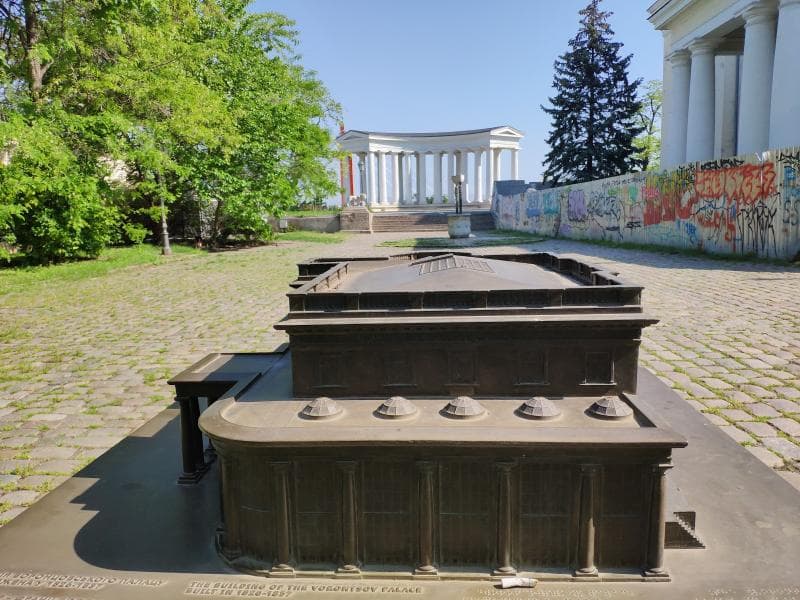
Explore the historic Vorontsov Palace in Odessa, Ukraine. Discover its 19th-century architecture, rich history, and stunning Black Sea views.
Overview
Nestled elegantly at the end of Odessa's scenic Prymorskyi Boulevard, the Vorontsov Palace stands as a captivating testament to 19th-century grandeur in Ukraine. This architectural marvel, designed by the renowned Sardinian-born architect Francesco Boffo, offers more than just a glimpse into the past; it provides a commanding and picturesque view over the Black Sea. The palace complex, particularly famous for its iconic white colonnade, is celebrated as one of Odessa's most distinguished architectural landmarks, blending historical significance with an inherent elegance that continues to enchant visitors.
Originally conceived as a lavish residence, the Vorontsov Palace has adapted through various eras, yet its aristocratic charm endures. Its prominent position overlooking the sea makes it a focal point along the city's historical waterfront, inviting curious travelers to explore its rich narrative and admire its enduring beauty.
History & Cultural Background
The construction of the Vorontsov Palace took place between 1827 and 1830, commissioned by Russian Prince Mikhail Semyonovich Vorontsov, who served as the Governor-General of Novorossiya. The palace was strategically built upon the remnants of a former Turkish fortress known as Khadjibey, a site steeped in earlier historical significance.
Boffo's design for the palace showcases a sophisticated blend of classical and early romantic influences, often described as Empire style, reflecting the refined tastes prevalent during its era. The original complex was quite extensive, featuring not only the main palace building but also stables, a kitchen corps, the now-famous colonnade, and a sprawling garden that descended towards the sea.
Over its long history, the palace has weathered significant events. It sustained damage during the Crimean War in 1854 when Anglo-French forces shelled Odessa, targeting its elevated position. Legend holds that a cannonball from this bombardment remains embedded in one of the palace walls to this day. Following these events, the palace transitioned through various functions. In the early 20th century, it served as an engineering school, and by 1917, it became a headquarters for the Soviet Red Guards. In 1936, it was acquired by the Young Pioneers movement and renamed the Children's Palace, a role that, in a modified form, it continues to serve today as the City Palace of Children's and Youth Creativity.
What Makes It Special
What truly sets the Vorontsov Palace apart is its harmonious combination of architectural beauty, historical depth, and its unparalleled location. The palace's neoclassical facade, with its graceful lines, arched windows, and intricate details, speaks volumes of 19th-century design prowess.
However, the crown jewel of the complex is undoubtedly its white Colonnade, also known as the Belvedere. This magnificent structure, comprising ten pairs of columns, stands proudly at the edge of the Primorsky Boulevard. It was originally envisioned as a viewing terrace, linking the palace gardens with the city's waterfront, and perhaps even as a greenhouse. Today, it remains one of Odessa's most photographed sights, offering spectacular panoramic views of the Black Sea and the bustling port below, especially mesmerizing during sunrise and sunset.
The palace's transformation from an exclusive aristocratic residence to a public institution reflects the city's own evolving narrative, adding layers to its cultural significance. Its ability to retain its aristocratic charm and architectural integrity despite changes in ownership and function makes it a living piece of history.
Stories, Fun Facts & Local Details
The story of Vorontsov Palace is rich with intriguing details. Mikhail Vorontsov was so impressed with Francesco Boffo's architectural talents that he also commissioned him to design the iconic Potemkin Stairs, a landmark now synonymous with Odessa.
The palace was once home to an exceptionally rich private library, which was frequented by none other than the celebrated poet Alexander Pushkin. This valuable collection was later donated to the local university, where it is still preserved as the 'Vorontsov Fund.' During the Crimean War shelling, Vorontsov reportedly considered his rare book collection more valuable than the palace itself and had it secured, a decision that saved it from destruction.
In the palace's courtyard, visitors can find the 'Day and Night' fountain, a sculpture created by Mikhail Reva in 1994, though it has not held water since 1999. Beneath the main building, a network of dungeons exists, with some parts accessible through official guided tours, adding a touch of mystery to the elegant structure.
An interesting local anecdote relates to a part of the original complex, the 'Orlov wing,' which housed lavish apartments and outbuildings. It was humorously nicknamed the 'Orlovsky outhouse' before its demolition in 1929, underscoring how even grand estates can have their less glamorous sides.
Visitor Perspective
For any traveler exploring Odessa, the Vorontsov Palace is an indispensable stop. Its prime location at 1 Prymorsky Boulevard makes it easily accessible, just a short and pleasant walk from the city center. Visitors primarily enjoy admiring the palace's striking exterior and its magnificent colonnade, which offers a perfect vantage point for photographers and sightseers alike.
The peaceful courtyard provides a tranquil space for reflection, contrasting with the vibrant history embodied by the surrounding architecture. While the interior now serves as a center for children's and youth creativity, the exterior and accessible grounds provide an evocative reminder of Odessa's 'golden age' — a period when the city flourished as a significant Black Sea port. The palace truly serves as a meeting point where empire, art, and the sea converge, offering a profound sense of place and history.
Coordinates: 30.73882, 46.49014
View on Google Maps💬 How Travelers Describe This Place
Based on community votes
Photogenic
753Must See
747Beautiful
302Interesting
172Unique
79
Traveler Stories
Discover memorable experiences shared by travelers who have visited this place.
No traveler stories yet.
Be the first traveler to share what made this place memorable.
Things to see at Vorontsov Palace



Tour
By
Spot
Discover amazing places around the world. Your journey starts here.
Explore
© 2026 TourBySpot. All rights reserved.