Interior Halls
Odessa, Ukraine
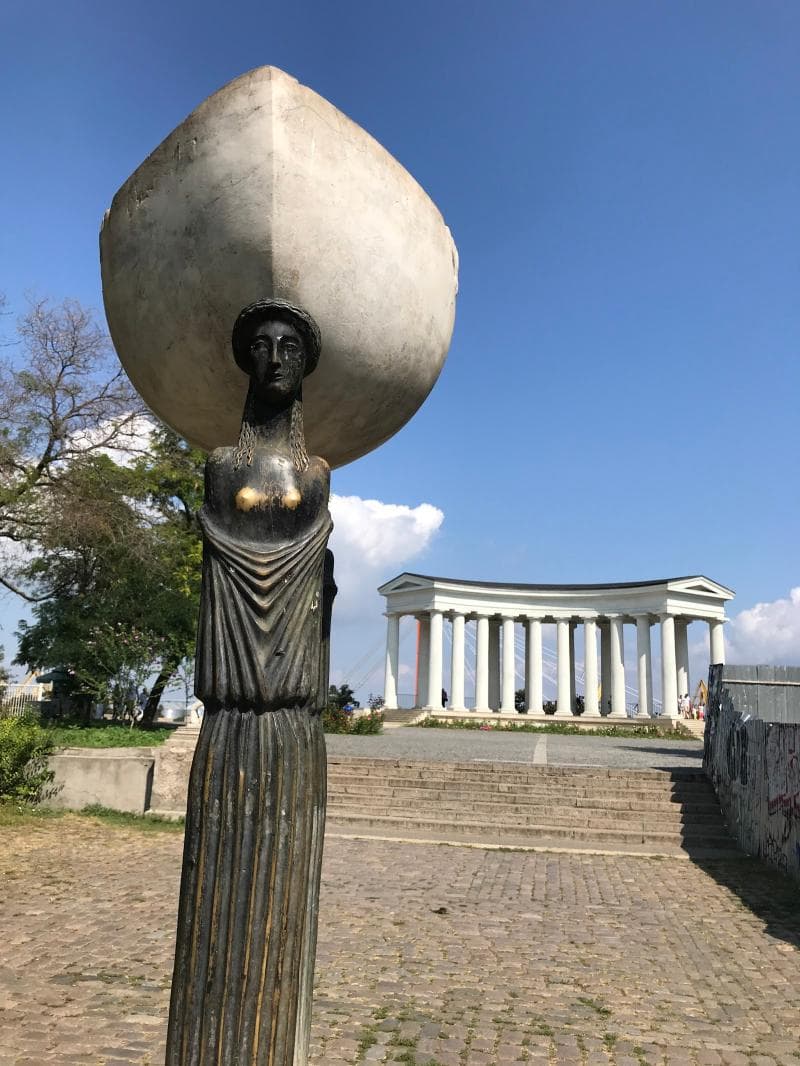
Explore the opulent Interior Halls of Vorontsov Palace in Odessa, Ukraine, a 19th-century marvel of Empire style architecture and lavish design.
Overview
Stepping into the Interior Halls of Vorontsov Palace in Odessa, Ukraine, is like taking a journey back to the opulent 19th century. This architectural masterpiece, designed by the Sardinian-born Francesco Boffo, was completed between 1827 and 1830 and served as the lavish residence of Prince Mikhail Semyonovich Vorontsov, the Governor-General of Novorossiya. The palace's grandeur was, in its prime, said to rival even some Italian palaces, boasting lavish interiors, gilded decor, statues, and intricate stucco work. Situated on the scenic Primorsky Boulevard, overlooking the Black Sea, the palace complex today tells a compelling story of shifting fortunes and enduring beauty, offering a glimpse into the sophisticated tastes of its original inhabitants. While the palace has served many purposes throughout its history, from an engineering school to the headquarters of the Soviet Red Guards, its ceremonial halls have largely preserved their original splendor.
History & Cultural Background
The Vorontsov Palace stands on a site steeped in history, once occupied by a Turkish fortress. Its construction marked a period of immense prosperity and cultural blossoming for Odessa, reflecting the city's growing importance as a Black Sea port. The palace's exterior embraced the classical and Empire styles, while its interiors were crafted with a touch of romanticism, creating an exquisite blend of architectural expressions. Throughout the years, the palace endured significant challenges, including partial damage during the Crimean War in 1854, when cannon fire from the Anglo-French fleet struck its walls, leaving a cannonball famously embedded to this day.
Despite subsequent transformations into various public institutions, the palace's internal structure and decorative elements have miraculously maintained much of their aristocratic charm. Notable examples include the library, once one of the region's richest private collections and used by Alexander Pushkin, which Prince Vorontsov famously ordered saved over the palace itself during wartime. This library's collection was later donated to the local university, where it remains known as the 'Vorontsov Fund'.
What Makes It Special
The true magic of the Interior Halls lies in the meticulous detail and craftsmanship that defined 19th-century luxury. The ceremonial halls, in particular, captivate with their preserved original decoration. Imagine the lavish ground floor, designed to impress, featuring guest rooms, a billiard room, a grand ball hall, and the famed library. The billiard room, for instance, housed paintings by Dutch, Flemish, Italian, and German artists, with a mahogany billiard table crafted by the English firm Barrow and Watt.
The State Dining Room is a highlight, resembling the knightly halls of medieval castles, adorned with rich wood carvings and monumental panels by the renowned French artist Hubert Robert. It once boasted a unique fountain in the shape of a fireplace and a balcony for musicians, while its furniture and buffets were specifically ordered from England and France. The 'Blue living room' offers another breathtaking example, distinguished by its exquisite stucco ornament of flowers and leaves, a masterpiece created under the guidance of serf master Roman Furtunov, alongside an elegant carved fireplace of white Carrara marble. Even the Front Office, with its bay window and wood paneling, evokes a traditional English interior, complete with an ebony bookcase, Gothic-carved chairs, and portraits of Vorontsov and his comrades.
Stories, Fun Facts & Local Details
The palace is filled with echoes of fascinating stories. Consider the luxurious marble fireplace in the ball hall, which was brought from St. Petersburg's Michael Palace and reportedly witnessed the assassination of Russian Emperor Paul I. This detail adds a layer of dramatic history, connecting the palace to significant imperial events. Another enduring tale is that of the cannonball from the Crimean War, which, according to local lore, remains embedded in a wall on the ground floor, serving as a tangible reminder of the palace's resilience.
A lesser-known fact is the discovery of an underground passage beneath the palace, a 140-meter-long tunnel that once connected the main building to utility rooms and stables. These dungeons are sometimes accessible as part of official tours, adding an element of mystery to the visit. The palace also played a role in cultural life, with its halls hosting chess competitions after the Civil War, and later transforming into the 'Children's Palace' for young pioneers, a testament to its evolving role in the community.
Visitor Perspective
While the Vorontsov Palace often undergoes reconstruction, making interior access limited at times, its exterior grandeur and historical significance remain undiminished. When accessible, exploring the Interior Halls offers an unparalleled opportunity to immerse oneself in the grandeur and intricate artistry of 19th-century Odessa. Visitors can walk through rooms where historical figures once entertained, conducted affairs of state, and appreciated fine art and literature. The sheer scale of the decorative work, from the stucco details to the ornate fireplaces and meticulously curated furniture, provides a profound sense of the luxurious lifestyle led within these walls. Even if full interior access is restricted, the journey through the palace's history, glimpsed through its architecture and the stories within, leaves a lasting impression of elegance and historical depth.
Coordinates: 30.73882, 46.49014
View on Google Maps💬 How Travelers Describe This Place
Based on community votes
Beautiful
899Interesting
871Unique
762Photogenic
730Must See
413
Traveler Stories
Discover memorable experiences shared by travelers who have visited this place.
No traveler stories yet.
Be the first traveler to share what made this place memorable.

Tour
By
Spot
Discover amazing places around the world. Your journey starts here.
Explore
© 2026 TourBySpot. All rights reserved.