Vizcaya Museum And Gardens
Miami, United States
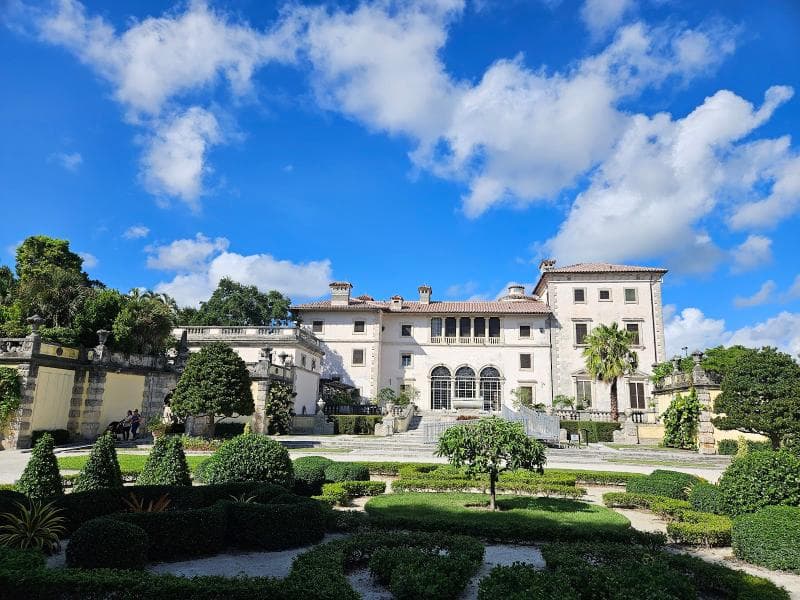
Explore Vizcaya Museum And Gardens in Miami, United States, a National Historic Landmark showcasing European elegance, lush gardens, and Gilded Age history.
Overview
The Vizcaya Museum and Gardens, nestled on the shimmering Biscayne Bay in Miami, United States, stands as a captivating testament to America's Gilded Age. This National Historic Landmark, once known as Villa Vizcaya, was the opulent winter estate of businessman James Deering. Today, it operates as a vibrant museum and sprawling public gardens, inviting visitors to step back in time and experience a unique blend of European grandeur and subtropical charm.
Encompassing a historic main house with original furnishings, ten acres of meticulously sculpted gardens, and a historic village, Vizcaya offers a rich tapestry of art, history, and natural beauty. It's a place where the architectural splendor of an 18th-century Italian villa meets the lush landscape of South Florida, creating an atmosphere that is both historical and uniquely Miamian.
History & Cultural Background
The vision for Vizcaya began with James Deering, a prominent industrialist from the Deering McCormick-International Harvester fortune. In 1912, Deering embarked on an ambitious project to create a winter retreat that would rival the grand estates of Europe, choosing the then-unfashionable Miami as his location. Construction commenced in 1914, with Deering officially taking residence on Christmas Day 1916. The main house was largely completed by 1922, and the extensive Italian Renaissance gardens and village followed by 1923.
Deering collaborated with a talented team to bring his dream to life: architect F. Burrall Hoffman, design director Paul Chalfin, and landscape architect Diego Suarez. Together, they created a magnificent estate influenced by Italian Renaissance and Mediterranean Revival styles, drawing inspiration from Venetian and Tuscan models. After Deering's death in 1925, the estate faced challenges, including hurricane damage and rising maintenance costs. In 1952, Miami-Dade County acquired the main house and formal gardens for $1 million, with Deering's heirs donating the valuable furnishings and antiquities. Vizcaya opened to the public as the Dade County Art Museum in 1953 and was later designated a National Historic Landmark in 1994, solidifying its place as a significant cultural institution.
What Makes It Special
Vizcaya's exceptional appeal lies in its seamless integration of European artistry with its distinctive subtropical setting. The estate is a stunning example of how historical European aesthetic traditions were adapted to South Florida's unique environment, blending imported French and Italian garden designs with native plants and Cuban limestone. The main house boasts over seventy architecturally pleasing rooms, 34 of which are open to the public, filled with an impressive collection of European decorative art and furniture dating from the 15th to the early 19th centuries.
The ten acres of formal gardens are a true masterpiece, designed to feel like an expansive outdoor room. They feature classical statues, elaborate fountains, and intricate parterre patterns, yet also embrace indigenous elements, creating a captivating dialogue between nature and design. Beyond its aesthetic grandeur, Vizcaya is a carefully preserved Gilded Age estate, offering a rare glimpse into the lifestyle and technological innovations of the early 20th century.
Stories, Fun Facts & Local Details
James Deering's personal touches and a passion for collecting are evident throughout Vizcaya. For instance, the collection includes ceramics intended for the estate that tragically sank with the Titanic; Deering, however, had foresight and insurance, allowing for their replacement. The villa's design subtly evokes different Italian cities, with rooms inspired by Milan, Palermo, and Venice.
Despite its historic appearance, Vizcaya was remarkably modern for its time. It featured Gilded Age technology like an automated telephone switchboard, a central vacuum-cleaning system, and even a dumbwaiter. Notably, its telephone system was the first in Miami-Dade County. Deering himself arrived at Vizcaya for his first winter residency aboard his yacht, the Nepenthe, marking a grand beginning to his time there. The estate's emblem, 'The Caravel,' commemorates the ships of the Age of Exploration, reflecting Deering's adventurous spirit and a desire to connect Vizcaya to the region's rich maritime history.
Visitor Perspective
Visiting Vizcaya Museum and Gardens is an immersive journey that allows for both leisurely exploration and deeper historical understanding. Guests can wander through the ornate main house, admiring the diverse art collections and architectural details that reflect centuries of European design. The sprawling gardens offer endless paths for discovery, from the tranquil Secret Garden to the grand Fountain Garden, each providing unique vistas and photo opportunities.
Many areas of the Main House and gardens are equipped with interpretive labels, offering descriptive and historical information, while audio tours provide further context to enrich the experience. Vizcaya is not just a static display of history; it's a dynamic cultural hub that engages thousands of visitors annually through educational programs, community events, and public offerings. It's a place where one can connect with the past, appreciate art and nature, and witness the ongoing efforts to preserve this extraordinary landmark for future generations.
Coordinates: -80.2104747, 25.7443866
View on Google Maps💬 How Travelers Describe This Place
Based on community votes
Beautiful
873Interesting
477Unique
422Photogenic
157Must See
53
Traveler Stories
Discover memorable experiences shared by travelers who have visited this place.
No traveler stories yet.
Be the first traveler to share what made this place memorable.
Things to see at Vizcaya Museum And Gardens



Tour
By
Spot
Discover amazing places around the world. Your journey starts here.
Explore
© 2026 TourBySpot. All rights reserved.