Barge Landing
Miami, United States
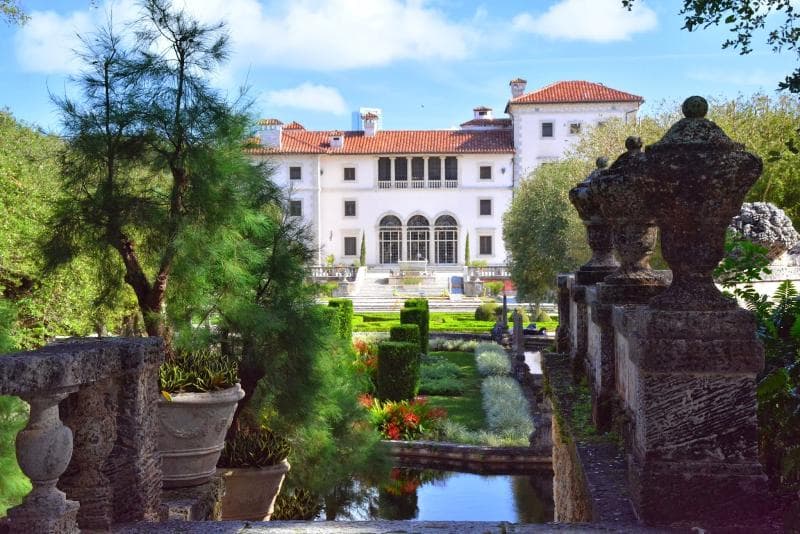
Discover the historic Barge Landing at Vizcaya Museum And Gardens in Miami, United States – a unique artistic breakwater with rich history.
Overview
Nestled within the sprawling beauty of Vizcaya Museum And Gardens in Miami, United States, lies a marvel of both engineering and artistry known as the Barge Landing. This unique structure, often simply referred to as 'the Barge,' is a concrete edifice playfully designed to resemble a boat or a Spanish galleon. It serves a triple purpose: a crucial breakwater, a captivating work of art, and historically, a lavish leisure space for the estate's original owner, James Deering. Adorned with intricate sculptures by American artist Alexander Stirling Calder, the Barge Landing stands as a testament to Vizcaya's distinctive blend of European grandeur and subtropical charm. While its primary role has always been protection from the forces of Biscayne Bay, its ornate design and rich history make it an integral, fascinating part of the Vizcaya experience.
History & Cultural Background
The Barge Landing was constructed in 1916 as part of James Deering's ambitious vision for his winter estate, Vizcaya. Deering, an industrialist, embarked on building Vizcaya between 1914 and 1922, aiming to create an Italian Renaissance-inspired villa and gardens in the heart of Miami. The design director, Paul Chalfin, played a pivotal role in shaping the estate's overall aesthetic, including the fanciful concept for the Barge.
Crafted from reinforced cast concrete and clad in native coral stone, the Barge's construction was both innovative and practical. Its most vital function was, and still is, to act as a formidable breakwater, shielding the estate's main house and terraces from the relentless waves and frequent storms of Biscayne Bay. Beyond its protective role, Deering envisioned the Barge as an extension of his opulent lifestyle, a place where guests could be entertained. It was originally furnished with landscaping, fountains, and even a 'Summer House,' a wooden trellis structure providing shade. Guests arriving by boat to Vizcaya would often be ferried to the Barge by gondola, emphasizing its role as a grand reception and party venue.
What Makes It Special
What truly sets the Barge Landing apart is its remarkable fusion of practicality and profound artistic expression. It is not merely a utilitarian breakwater; it is a monumental piece of art that fulfills a critical protective function. The structure's design, playfully mimicking a boat or Spanish galleon, transforms a necessity into a captivating architectural feature.
Adding to its allure are the exquisite sculptures commissioned from American artist Alexander Stirling Calder in 1915. These intricate works include humanoid figures, marine mythological beings, obelisks, and decorative reliefs, all crafted from local limestone. The use of this soft, porous coral stone, while contributing to the aesthetic, also means the Barge is constantly engaged in a battle against erosion from the saltwater and storms of Biscayne Bay, underscoring its enduring resilience over more than a century.
Stories, Fun Facts & Local Details
The Barge Landing holds a trove of fascinating stories and details that breathe life into its history. Imagine James Deering's guests arriving by water, disembarking from elegant vessels, and being transported by a gondola to this opulent floating party space. The Barge was the envisioned setting for elaborate, 'Gatsby-esque' parties, an extravagant flourish in a bygone era of unparalleled luxury.
A notable fun fact concerns the Barge's mermaid sculptures. An anecdote preserved in Vizcaya's archives recounts Deering expressing concern to his artistic director, Paul Chalfin, that the mermaids were 'too well endowed.' This led to a 'sculptural adjustment,' making the mermaids a unique testament to Deering's particular tastes. Unfortunately, the original Summer House and much of the landscaping were tragically lost during the devastating Great Miami Hurricane of 1926.
In a remarkable conservation effort in 2001, the original Calder statues were carefully removed and replaced with meticulously crafted replicas, with the originals safely preserved. This initiative drew inspiration from similar protective measures undertaken for ancient artifacts on the Acropolis of Athens. The Barge continues to face the challenges of its marine environment; its lower landing steps are frequently submerged due to rising waters, and the structure has undergone significant restoration following hurricanes, particularly Hurricane Irma in 2017, which caused substantial damage to its statuary and architectural elements.
Visitor Perspective
For today's curious traveler, while the delicate nature and ongoing preservation efforts mean that visitors are generally unable to step directly onto the Barge Landing itself, its grandeur is still very much accessible. The best way to experience this historic landmark is from the Lower East Terrace of the main villa, which offers breathtaking panoramic views of the Barge against the backdrop of Biscayne Bay.
From this vantage point, you can appreciate the intricate details of Calder's sculptures, the imaginative design, and the historical significance of its protective role. For those wishing to delve deeper or explore its features more closely, Vizcaya Museum and Gardens also offers virtual tours, allowing for an immersive experience from afar. The Barge Landing is not just a structure; it is a focal point of Vizcaya's rich narrative, inviting visitors to reflect on a unique blend of art, history, and resilience in a stunning Miami setting.
Coordinates: -80.2104747, 25.7443866
View on Google Maps💬 How Travelers Describe This Place
Based on community votes
Photogenic
915Beautiful
211Interesting
123Unique
74Must See
20
Traveler Stories
Discover memorable experiences shared by travelers who have visited this place.
No traveler stories yet.
Be the first traveler to share what made this place memorable.

Tour
By
Spot
Discover amazing places around the world. Your journey starts here.
Explore
© 2026 TourBySpot. All rights reserved.