Užupis
Vilnius, Lithuania
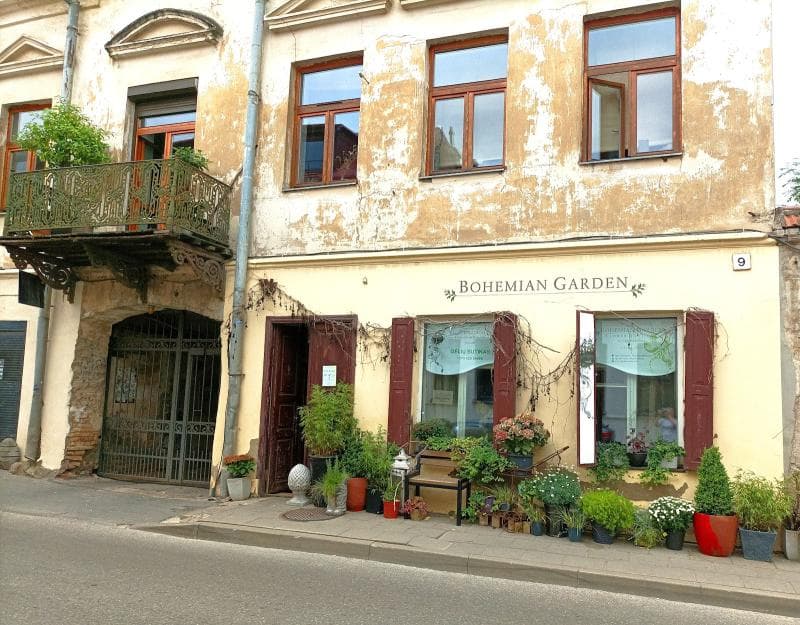
Explore Užupis, a bohemian artists' republic in Vilnius, Lithuania, known for its quirky constitution, vibrant art, and unique free spirit.
Overview
Nestled across the Vilnelė River from Vilnius's Old Town, Užupis is not merely a district; it is a self-proclaimed independent republic, a haven for artists, dreamers, and free spirits. Its name, meaning 'beyond the river' in Lithuanian, perfectly encapsulates its distinct identity, physically separated yet intimately connected to the heart of Lithuania's capital. Often likened to Paris's Montmartre or Copenhagen's Freetown Christiania, Užupis is a small but profoundly characterful area, covering less than one square kilometer, where creativity flourishes and unconventional charm reigns supreme.
History & Cultural Background
Užupis boasts a history as colorful as its present-day street art. Mentioned in sources as early as the 15th century, it was historically a working-class suburb, often regarded as one of Vilnius's poorer and more neglected areas. During and after World War II, particularly under Soviet rule, the district fell into significant disrepair, becoming a desolate place characterized by abandoned buildings, high crime rates, and general undesirability.
However, the collapse of the Soviet Union in 1990 marked a turning point. Artists and students from the nearby Vilnius Academy of Arts, drawn by the cheap rents and available spaces, began to move into the district. They saw an opportunity to transform the dilapidated area into a vibrant hub of artistic expression and community. This influx of creative energy led to a remarkable revival, culminating in a playful yet significant act: on April 1, 1998, the residents of Užupis collectively declared their independence, establishing the 'Republic of Užupis.' This declaration, timed for April Fool's Day, underscored its unique blend of humor, seriousness, and a deep-seated desire for creative freedom.
What Makes It Special
The Republic of Užupis distinguishes itself through its embrace of artistic liberty and its distinctive self-governing status. It famously possesses its own flag, a president, an anthem, and even a small, now-retired army.
- The Užupis Constitution: Perhaps its most iconic feature is its Constitution, a whimsical yet profound document displayed on mirrored plaques along Paupio Street in dozens of languages. It comprises 41 articles that outline not only human rights but also the rights of animals and even the Vilnelė River itself. Articles such as 'Everyone has the right to be unique,' 'Everyone has the right to be lazy or do nothing,' and 'A dog has the right to be a dog' reflect the district's ethos of individuality, tolerance, and artistic freedom.
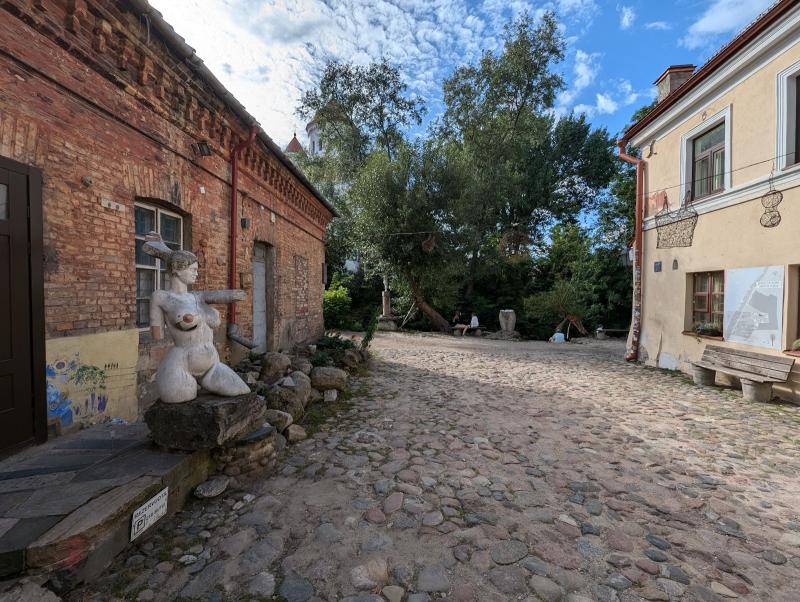
- Artistic Landscape: Užupis is an open-air gallery, with its streets, cafes, and riverbanks adorned with sculptures, murals, and installations. The district is home to numerous art studios and galleries, fostering a continuous display of contemporary works.
- The Angel of Užupis: Standing prominently in the main square, the bronze statue of the Angel of Užupis, blowing a trumpet, symbolizes the district's artistic rebirth and serves as its guardian.
- The Užupis Mermaid: Tucked away by the Vilnelė River, the mysterious Užupis Mermaid is said to beckon visitors, enchanting them to remain in Užupis forever.
Stories, Fun Facts & Local Details
The spirit of Užupis is encapsulated in numerous charming anecdotes and local traditions. Its Independence Day, celebrated annually on April 1st, is a lively affair complete with border checkpoints where visitors can get their passports stamped, music, and festive gatherings. It is a day that blends genuine celebration with the district's characteristic good-natured humor.
For a unique souvenir, some local establishments historically offered a special 'Užis' currency, which could be used on specific occasions, notably Independence Day. Another quirky highlight is the 'Swing of Destiny' found beneath one of the bridges over the Vilnelė River, inviting playful interaction. Legend also has it that on April 1st, a specific drinking fountain near the Angel of Užupis flows with beer, adding to the festive and whimsical atmosphere. The district's creative revival was heavily influenced by students and faculty from the Vilnius Academy of Arts. Even the 14th Dalai Lama is an honorary citizen and has visited, planting a tree in Tibet Square, further cementing Užupis's reputation as a globally recognized haven for peace and artistic expression.
Visitor Perspective
Visiting Užupis is an experience that transports a traveler into a vibrant, alternative dimension just a stone's throw from Vilnius's historic center. Easily accessible by a short walk across a bridge from the Old Town, it's a place best explored on foot. As you wander through its cobbled streets, you'll encounter a tapestry of visual delights – from evolving street art and unique installations to cozy cafes and artisan boutiques. The bohemian atmosphere is palpable, encouraging visitors to slow down, engage with the local art, and simply soak in the distinctive ambiance. Many visitors enjoy seeking out the famous Constitution wall, trying to find a translation in their native language, or simply marveling at its unique articles. Stopping at the Užupis information center can even allow you to get a special stamp in your passport, a tangible memento of your visit to this quirky republic. Užupis offers a refreshing contrast to traditional sightseeing, providing a memorable glimpse into a community that prioritizes creativity, freedom, and a spirited outlook on life.
Coordinates: 25.2915, 54.675
View on Google Maps💬 How Travelers Describe This Place
Based on community votes
Must See
995Unique
839Beautiful
388Interesting
289Photogenic
141
Traveler Stories
Discover memorable experiences shared by travelers who have visited this place.
No traveler stories yet.
Be the first traveler to share what made this place memorable.
Things to see at Užupis




Tour
By
Spot
Discover amazing places around the world. Your journey starts here.
Explore
© 2026 TourBySpot. All rights reserved.