Art Galleries
Vilnius, Lithuania
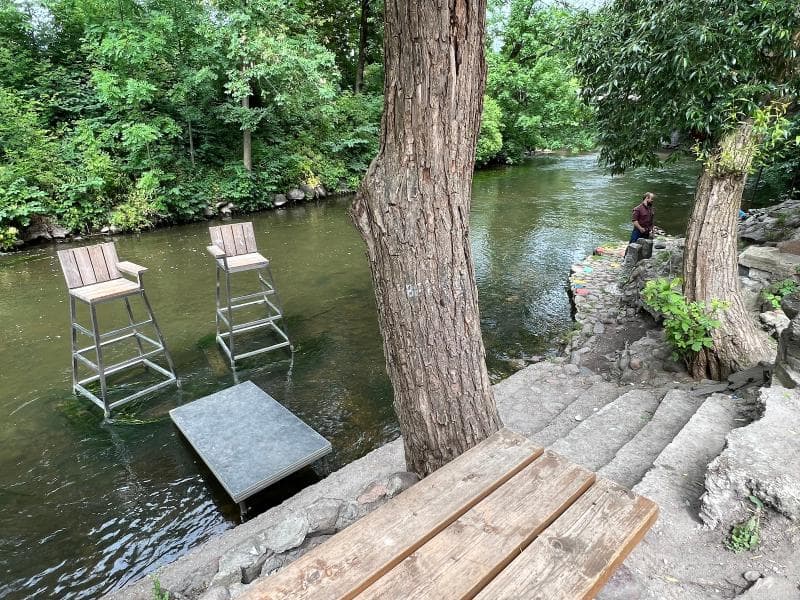
Explore the vibrant art galleries of Užupis, Vilnius, Lithuania, a bohemian republic brimming with creativity, unique exhibitions, and a spirited artistic community.
Overview
Tucked away across the Vilnelė River from Vilnius' historic Old Town, Užupis is not merely a district; it's a self-proclaimed republic, a bohemian enclave where artistic expression thrives. This unique neighborhood, whose name translates to 'beyond the river,' has cultivated a distinct identity centered around creativity and an unconventional spirit. While Užupis itself is often described as an open-air gallery due to its pervasive street art and sculptures, its formal art galleries serve as vital anchors for the community's vibrant artistic scene, showcasing both established and emerging talents.
Visitors stepping into Užupis will quickly sense a departure from the conventional, where every corner seems to whisper a story of artistic freedom and individuality. The district’s galleries are not just spaces for display; they are active participants in its cultural narrative, reflecting the whimsical, thought-provoking, and often humorous ethos that defines this independent spirit. From contemporary installations to traditional Lithuanian art, the galleries here offer a window into the soul of a community that truly lives and breathes art.
History & Cultural Background
Užupis was once a neglected and dilapidated area, particularly during the Soviet era. Its transformation began after Lithuania regained independence in 1990, when artists, drawn by cheap rents and a desire for creative freedom, started to reclaim its abandoned buildings. This influx of creative energy culminated dramatically on April 1, 1997, when the district playfully, yet symbolically, declared itself the 'Republic of Užupis.'
Complete with its own president, anthem, flag, and a charmingly eccentric constitution, Užupis cemented its status as a haven for artists and free thinkers. The Užupis Constitution, displayed on Paupio Street in numerous languages, embodies the district's core values, with articles proclaiming rights such as 'Everyone has the right to be unique,' 'Everyone has the right to love and take care of the cat,' and 'Everyone has the right to be happy and to be unhappy.' These declarations underscore a profound commitment to individuality, tolerance, and artistic liberty, shaping the very fabric of its cultural landscape and influencing the character of its art galleries.
What Makes It Special
The art galleries of Užupis stand out not only for the works they house but for their embodiment of the district's distinctive philosophy. Unlike traditional, perhaps more formal, institutions, galleries in Užupis often mirror the playful and experimental nature of the republic itself. The Užupis Art Incubator, for instance, established in 2002 and built upon the foundation of the earlier Galera Gallery from 1995, is a prime example. It serves as a vital hub, fostering collaboration and providing a dynamic space for visual artists and creative startups. It's more than just an exhibition venue; it's a living, breathing workshop where art is created, discussed, and celebrated, continually pushing boundaries.
Beyond dedicated gallery spaces, Užupis itself functions as a sprawling, unconventional gallery. Street art, murals, and sculptures are integral to the urban landscape, creating an immersive artistic experience that blurs the lines between indoor and outdoor exhibitions. This makes visiting the galleries in Užupis a holistic cultural journey, where the art found within complements the art experienced outside on the cobblestone streets. The Lithuanian Art Centre TARTLE also adds to this richness, focusing on collecting and showcasing Lithuanian art treasures and historical artifacts, offering a deeper dive into the nation's artistic heritage within the avant-garde setting of Užupis.
Stories, Fun Facts & Local Details
The spirit of Užupis is perhaps best encapsulated by the 'Angel of Užupis,' a towering statue unveiled in the main square in 2002. This iconic angel, blowing a trumpet, symbolizes the district's revival and its commitment to artistic freedom, watching over the community. Interestingly, before the angel arrived, a temporary sculpture of an egg stood in its place, with a whimsical story that the angel would 'hatch' from it. This playful detail perfectly illustrates the unique humor and imaginative approach embedded in Užupis's identity. The funds for the angel's creation were even raised by selling miniature copies of the sculpture, further cementing its community roots.
Another endearing local detail is the annual celebration of Užupis Independence Day on April 1st. While a nod to April Fool's Day, it's a genuinely festive occasion where residents and visitors embrace the republic's unique character with parades, music, and various artistic performances. This celebratory atmosphere often extends to the galleries, which might host special events, transforming the entire district into a lively festival of art and community spirit. The very act of crossing one of the bridges into Užupis is considered a symbolic entry into a different world, a 'portal into a quirky unknown,' where an open mind is the only passport required.
Visitor Perspective
Exploring the art galleries in Užupis offers a deeply personal and enriching experience. Visitors should approach the district with an open mind, ready to wander and discover. Start by crossing the bridge that leads into Užupis, feeling the shift in atmosphere as street art and quirky installations begin to appear. The galleries themselves, while varied, share a common thread of passion and authenticity.
A visit to the Užupis Art Incubator is essential to grasp the contemporary pulse of the district, where one can often witness artists at work or engage with new exhibitions. For a glimpse into broader Lithuanian art history, the Lithuanian Art Centre TARTLE provides a comprehensive and thoughtfully curated collection. Beyond these formal spaces, allow ample time to simply stroll. The art is not confined to four walls; it spills out onto the streets, adorns cafes, and surprises you in unexpected courtyards. Engaging with the locals, many of whom are artists themselves, can provide even deeper insights into the stories behind the art and the unique spirit of Užupis. It’s an immersion into a place where creativity isn't just a pursuit, but a way of life.
Coordinates: 25.2954, 54.6806
View on Google Maps💬 How Travelers Describe This Place
Based on community votes
Beautiful
673Photogenic
219Interesting
186Must See
143Unique
80
Traveler Stories
Discover memorable experiences shared by travelers who have visited this place.
No traveler stories yet.
Be the first traveler to share what made this place memorable.

Tour
By
Spot
Discover amazing places around the world. Your journey starts here.
Explore
© 2026 TourBySpot. All rights reserved.