Vilnia River Bridges
Vilnius, Lithuania
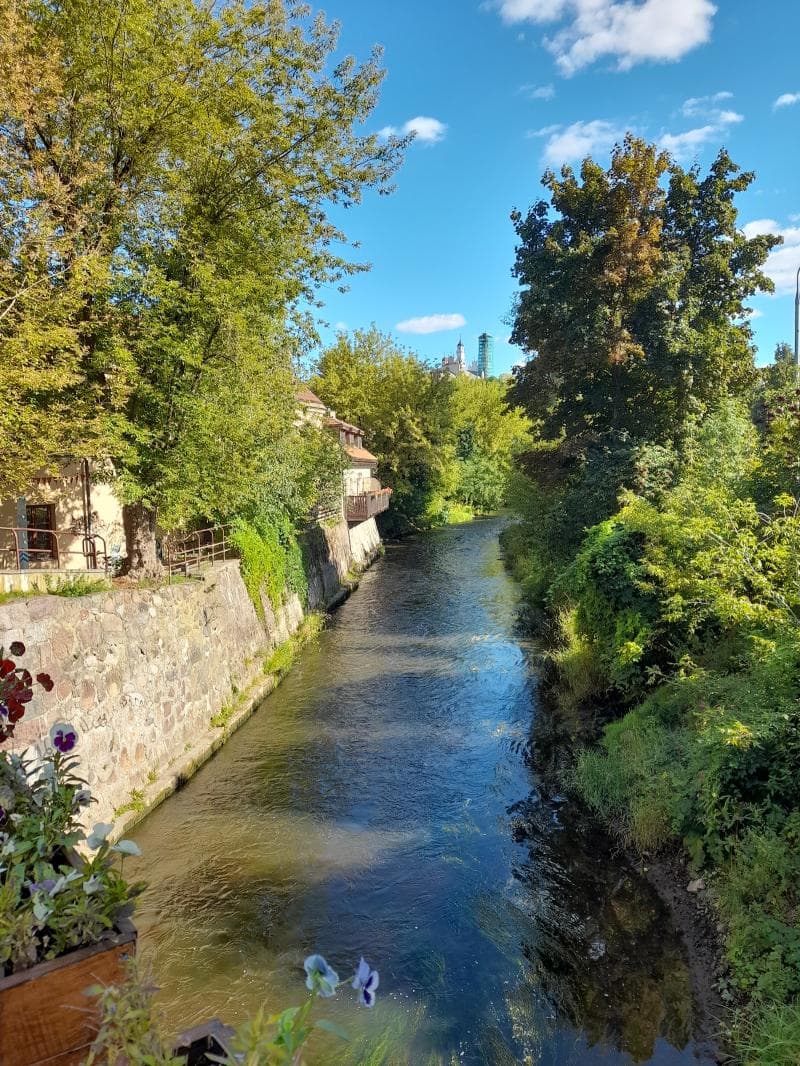
Discover the unique Vilnia River Bridges in Užupis, Vilnius, Lithuania, gateways to a bohemian republic of artists with rich history and quirky charm.
Overview
The Vilnia River, often affectionately called Vilnelė by locals, is the natural artery that defines Užupis, a distinct and bohemian district nestled within Vilnius, Lithuania. This charming waterway is not merely a geographical feature; it is an integral part of Užupis' identity, lending its name to the district itself, which translates to 'beyond the river' or 'the other side of the river'. The various bridges spanning the Vilnia are more than just crossings; they are symbolic gateways to this self-proclaimed republic of artists and dreamers, each carrying its own stories and significance. Visitors traversing these bridges are not just moving from one bank to another, but entering a realm where creativity, freedom, and a unique spirit thrive.
Among these crossings, the main Užupis Bridge stands out as the most recognized entrance, often adorned with love locks and offering picturesque views of the river and the surrounding artistic enclave. But it's not the only bridge with character; several others, some named and some nameless, contribute to the district's picturesque charm, connecting different parts of Užupis and the wider city while reflecting the area's rich history and vibrant culture.
History & Cultural Background
The history of the Vilnia River bridges in Užupis is deeply intertwined with the district's evolution. The main Užupis Bridge, central to the district's modern identity, was constructed in 1901 based on V. Malinovsky's design and has withstood numerous historical events. However, the river has been crossed by bridges for centuries. The privilege to build a bridge here was granted by King Sigismund as early as 1538, connecting a vital road towards Moscow.
Other notable crossings include the Castle Bridge (Pilies tiltas), which has roots dating back to the late 18th century, though the current structure was built in 1893 and reconstructed in 1964. Its railings, once bearing the Lithuanian coat of arms (Vytis) and imperial symbols, were restored with Vytis after Soviet times. The Fluxus Bridge, built in 1984, connects the Vilnius Academy of Arts with Bernardine Garden and is Lithuania's only covered pedestrian bridge, receiving its current name in 2007, reflecting the district's artistic leanings. The Bernardine Bridge, near Malūnų Street, has a history extending back to the 16th century with wooden structures, eventually leading to a metal bridge around 1880. These bridges have not only facilitated passage but have also been silent witnesses to battles and historical shifts, contributing to the rich tapestry of Vilnius' past.
What Makes It Special
The Vilnia River Bridges are special because they serve as literal and metaphorical crossings into the whimsical Republic of Užupis. This micro-nation, declared on April 1st, 1997 or 1998, with a blend of seriousness and humor, boasts its own president, government, constitution, and even an unofficial currency. The main Užupis Bridge is famously known as one of the world's great 'love lock' bridges, where couples affix padlocks to symbolize their enduring affection.
Beneath this bridge resides the enchanting Mermaid of Užupis, a sculpture that, according to local legend, holds the power to entice visitors to stay in Užupis forever if they gaze upon her too long. The bridges also play a central role in the district's Independence Day celebrations on April 1st, when a border crossing point is symbolically established, and visitors can even get their passports stamped. This unique blend of history, artistic expression, and quirky self-governance transforms simple river crossings into vibrant cultural landmarks.
Stories, Fun Facts & Local Details
Užupis itself means 'beyond the river,' a direct reference to its location across the Vilnia River. The Vilnia (or Vilnelė) River is so significant that it even gave Vilnius its name. The district's declaration of independence on April Fools' Day highlights its irreverent and artistic spirit, a characteristic celebrated on the bridges, especially during the annual festivities.
Along the river, near the main bridge, visitors might spot the 'Swing of Destiny,' an opportunity to test their fate. The bridges are not just structures but stages for artistic expression; street art and installations frequently adorn them, reflecting Užupis' vibrant creative community. One particularly interesting detail is the Fluxus Bridge, a covered pedestrian bridge near the Vilnius Academy of Arts, which stands as Lithuania's only one of its kind. The very act of crossing these bridges feels like stepping into a different world, a testament to the district's unique atmosphere, often compared to Montmartre in Paris or Christiania in Copenhagen.
Visitor Perspective
For a curious traveler, the Vilnia River Bridges offer an immersive and memorable entry into Užupis. The experience begins as you step onto the main Užupis Bridge, perhaps adding a love lock or admiring those already there, and looking down to greet the Mermaid of Užupis. The journey across any of the Vilnia bridges signifies leaving the historical heart of Vilnius and entering a distinct, bohemian enclave where creativity is paramount.
Visitors can enjoy scenic views of the river and the district's unique architecture, feeling the lively ambiance that pervades Užupis. Walking tours often highlight these bridges, providing insights into their history and the vibrant artistic community they serve. Beyond the main bridge, exploring the other, sometimes more modest, crossings reveals different facets of the river's charm and offers quieter moments for reflection. The accessibility is free, making it an enjoyable visit for all, and the short walk from Vilnius city center ensures it's an easy and rewarding exploration.
Coordinates: 25.2915, 54.675
View on Google Maps💬 How Travelers Describe This Place
Based on community votes
Photogenic
551Interesting
547Unique
336Beautiful
219Must See
186
Traveler Stories
Discover memorable experiences shared by travelers who have visited this place.
No traveler stories yet.
Be the first traveler to share what made this place memorable.

Tour
By
Spot
Discover amazing places around the world. Your journey starts here.
Explore
© 2026 TourBySpot. All rights reserved.