Trevi Fountain
Rome, Italy
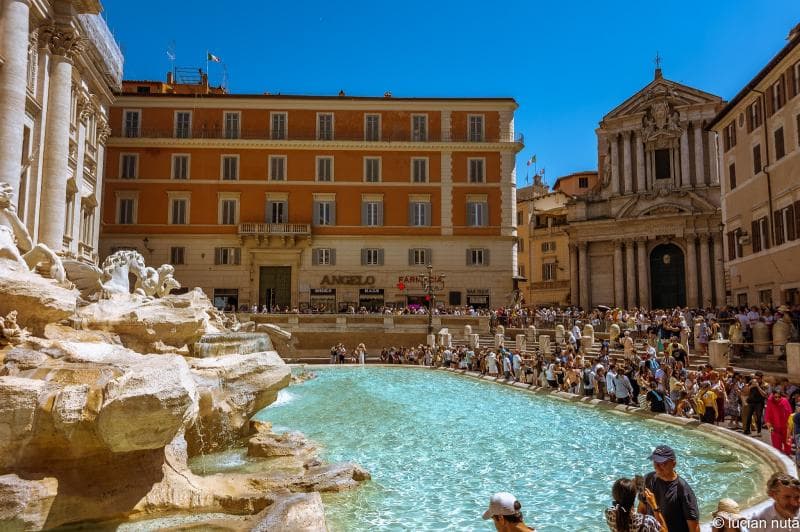
Discover Rome's iconic Trevi Fountain, a Baroque masterpiece. Learn its history, legends, and the famous coin-tossing tradition in Italy.
Overview
The Trevi Fountain, or Fontana di Trevi, is Rome's most magnificent Baroque fountain, a theatrical marvel nestled in the heart of the Eternal City. Standing an impressive 26.3 meters (86 feet) high and 49.15 meters (161.3 feet) wide, it is not merely a water feature but a grand architectural sculpture that captivates millions of visitors annually. Located at the junction of three roads, which gave it its name 'tre vie', the fountain is a breathtaking blend of artistry and engineering. It's an iconic landmark, known worldwide for its dramatic sculptures, the sound of rushing water, and the enduring legend of coin tossing that promises a return to Rome.
As the largest Baroque fountain in Rome, it serves as the terminal point of the ancient Aqua Virgo aqueduct, a testament to Roman ingenuity that still supplies its waters today. Its grandeur and intricate details make it a must-see for anyone exploring Rome, inviting visitors to immerse themselves in its beauty, history, and the many stories it holds.
History & Cultural Background
The origins of the Trevi Fountain stretch back to ancient Roman times, specifically to 19 BCE, with the construction of the Aqua Virgo aqueduct. This aqueduct was named after a legendary young virgin who, according to lore, led thirsty Roman soldiers to a pristine water source, which still feeds the fountain. While a simpler fountain existed at this site for centuries, the elaborate masterpiece we see today began to take shape much later.
The current Trevi Fountain was commissioned by Pope Clement XII in the 18th century, with a design competition held in 1730. Though Nicola Salvi initially lost to a Florentine architect, public outcry for a Roman designer led to Salvi winning the commission. Construction commenced in 1732, transforming the back of Palazzo Poli into a dramatic stage for the fountain. Salvi dedicated himself to the project until his death in 1751, and it was ultimately completed by Giuseppe Pannini in 1762. Made predominantly from Travertine stone, quarried near Tivoli, the fountain was officially inaugurated by Pope Clement XIII.
What Makes It Special
Beyond its sheer scale, the Trevi Fountain is special due to its rich symbolism and mythological narrative. The central figure is Oceanus, the Titan god of all water, not Neptune as often mistakenly assumed. He stands triumphantly on a shell-shaped chariot, pulled by two sea horses, each guided by a Triton. One horse is restless, symbolizing the turbulent sea, while the other is calm, representing tranquil waters, collectively depicting the diverse moods of the ocean.
Flanking Oceanus are allegorical statues of Abundance, holding a cornucopia, and Salubrity (Health). Above these, bas-reliefs illustrate the legend of the Aqua Virgo aqueduct, including the virgin leading soldiers to the water source and Agrippa ordering its construction. The fountain's primary theme is the 'taming of the waters', an intricate blend of natural elements, classical mythology, and Baroque drama. Its integration with the Palazzo Poli creates a unified, spectacular facade, making the architecture and sculpture inseparable.
Stories, Fun Facts & Local Details
The most famous tradition at the Trevi Fountain is the coin toss, popularized by films like 'Three Coins in the Fountain'. With your back to the fountain, toss a coin over your left shoulder with your right hand. One coin is said to ensure your return to Rome; two coins promise you'll find love in Rome; and three coins guarantee marriage or divorce. An estimated 3,000 Euros are thrown into the fountain daily, collected regularly and donated to Caritas, a charity that funds social programs and helps the hungry in Rome.
The fountain has also graced the silver screen in iconic moments, most notably in Federico Fellini's 'La Dolce Vita', where Anita Ekberg famously waded into its waters. Interestingly, the architect Nicola Salvi included a hidden 'ace of cups' sculpture on the fountain to block the view of a barber who had annoyed him during construction. While the water circulating in the fountain is not potable, you can find traditional drinking fountains, known as 'nasoni', nearby that offer fresh, drinkable water from the same ancient source.
Visitor Perspective
Visiting the Trevi Fountain is an unforgettable experience, often described as magical, especially when it's beautifully lit at night. However, it's also one of Rome's most popular attractions, meaning crowds are common, particularly from noon until evening. For a more serene experience, consider visiting very early in the morning or late at night.
While viewing the fountain from the Piazza di Trevi remains free, please note that starting February 1, 2026, a €2 access fee will apply for non-residents who wish to go down into the basin area closer to the water. This measure aims to manage crowds and support the fountain's maintenance. Remember, swimming or bathing in the fountain is strictly prohibited and carries hefty fines. Beyond its visual splendor, taking a moment to appreciate the history, the artistry, and the legends makes a visit to the Trevi Fountain truly special, connecting you to centuries of Roman heritage.
Coordinates: 12.4766, 41.9005
View on Google Maps💬 How Travelers Describe This Place
Based on community votes
Must See
886Beautiful
564Unique
201Interesting
121Photogenic
87
Traveler Stories
Discover memorable experiences shared by travelers who have visited this place.
No traveler stories yet.
Be the first traveler to share what made this place memorable.
Things to see at Trevi Fountain



Tour
By
Spot
Discover amazing places around the world. Your journey starts here.
Explore
© 2026 TourBySpot. All rights reserved.