Star Ferry
Hong Kong, China
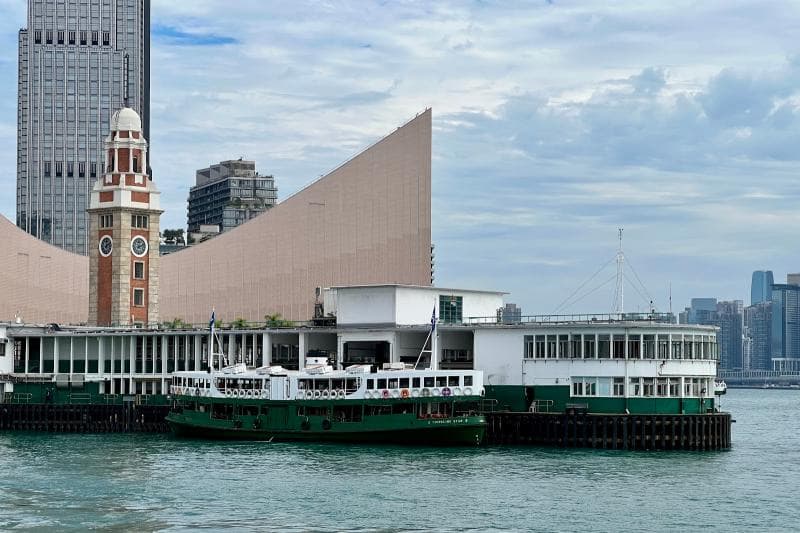

Experience Hong Kong's iconic Star Ferry, connecting Kowloon and Hong Kong Island across Victoria Harbour. Discover its rich history and stunning views.
Overview
The Star Ferry in Hong Kong is more than just a mode of transport; it is a cherished icon and an integral part of the city's identity. For over a century, these distinctive green and white double-deck ferries have gracefully traversed Victoria Harbour, connecting Hong Kong Island with the Kowloon Peninsula. It's a journey that offers breathtaking panoramic views of one of the world's most spectacular skylines, making it a must-do experience for both locals and visitors alike. National Geographic Traveler famously recognized the Star Ferry crossing as one of the '50 places of a lifetime'.
Operating multiple routes across the harbour, the primary services link Tsim Sha Tsui with Central and Wan Chai. While the journey is brief, typically lasting around 8-10 minutes, it provides a unique water-level perspective of Hong Kong's dynamic urban landscape. Its enduring charm and incredible value have solidified its place in the hearts of millions, offering a glimpse into the city's past while remaining a vital part of its present.
History & Cultural Background
The story of the Star Ferry begins in 1880, when a Parsee cook named Dorabjee Naorojee Mithaiwala initiated a steam-powered ferry service across Victoria Harbour with his vessel, the Morning Star. This informal service eventually led to the founding of the Kowloon Ferry Company in 1888. Initially, crossings were lengthy, taking 40 minutes to an hour on coal-powered vessels.
A significant turning point came in 1898 when British-Armenian businessman Sir Catchick Paul Chater acquired the Kowloon Ferry Company. He subsequently renamed it The Star Ferry Company, a nod to the celestial names of its growing fleet, which included Morning Star, Evening Star, Rising Star, and Guiding Star. The company quickly became a vital link between Hong Kong Island and Kowloon. Until the opening of the Cross-Harbour Tunnel in 1972, the Star Ferry was the primary means of public transportation across the harbour, carrying millions of passengers annually.
The Star Ferry has endured significant historical events, including the Japanese occupation during World War II, when some of its vessels were commandeered and even sunk. Post-war, the service resumed, demonstrating its resilience. In 1966, a fare increase by the Star Ferry Company even sparked widespread riots, highlighting its deep cultural and economic importance to the Hong Kong populace. Its enduring presence and service have cemented its status as a historical and cultural heritage of Hong Kong.
What Makes It Special
Beyond its utilitarian function, the Star Ferry offers a remarkably special experience. Its distinct green-and-white double-deck design, largely unchanged for decades, is instantly recognizable. The ferries are ingeniously double-ended, meaning they can be piloted from either end without needing to turn around, a design feature introduced as early as 1897 that enhances efficiency. Another charming detail is the reversible wooden chairs found on board, which passengers can flip to face the direction of travel or the stunning harbour views.
What truly sets the Star Ferry apart is the unparalleled perspective it offers. For a remarkably low fare, often described as one of the best value-for-money sightseeing trips in the world, passengers are treated to iconic views of Victoria Harbour's skyscraper-studded shores. This brief journey allows travelers to feel the sea breeze and witness the constant movement of the harbour, providing a unique sense of place that is distinct from land-based observation decks.
Stories, Fun Facts & Local Details
The naming of the ferries after stars stems from founder Dorabjee Naorojee Mithaiwala's admiration for Alfred Lord Tennyson's poem 'Crossing the Bar', which includes the line, 'Sunset and evening star, and one clear call for me!'. The iconic deep green color of the ferries, as well as many other historical objects in Hong Kong, is said to be a legacy of the post-World War II era when cheap dark green military-grade paint became widely available.
Over the years, land reclamation projects have reshaped Hong Kong's shoreline, gradually reducing the crossing time of the Star Ferry. What once took 25 minutes now typically takes only 8-10 minutes for standard routes, reflecting the city's continuous evolution. Despite its efficiency as a commuter service, many locals and seasoned travelers choose the lower deck for its open-air feel and closer proximity to the water, offering a different sensory experience. The demolition of the much-loved Edinburgh Place Ferry Pier in Central in 2006, with its iconic clock tower, for reclamation purposes, was a significant event that sparked public controversy and nostalgia, leading to the current Central Pier No. 7, which was designed to echo the style of earlier piers.
Visitor Perspective
For visitors, a ride on the Star Ferry is often highlighted as one of the most enjoyable and authentic Hong Kong experiences. The journey provides a peaceful contrast to the bustling city streets, offering a moment of calm meditation as one glides across the water. The views are spectacular at any time of day, but many recommend timing a trip to coincide with sunset or the nightly 'A Symphony of Lights' show at 8 PM, which transforms the harbour into a dazzling spectacle of lights and music.
The main piers – Tsim Sha Tsui on Kowloon and Central Pier No. 7 on Hong Kong Island, along with the Wan Chai pier – are conveniently located near major attractions and transport hubs. From the Tsim Sha Tsui pier, visitors can easily access the Avenue of Stars, the Hong Kong Cultural Centre, and various museums. The Central Pier provides connections to other islands and is close to the financial district. Whether it's for a quick commute or a leisurely scenic tour, the Star Ferry remains a simple yet profound way to connect with the soul of Hong Kong.
Coordinates: 114.1686, 22.294
View on Google Maps💬 How Travelers Describe This Place
Based on community votes
Unique
995Photogenic
839Beautiful
603Must See
581Interesting
388
Traveler Stories
Discover memorable experiences shared by travelers who have visited this place.
No traveler stories yet.
Be the first traveler to share what made this place memorable.
Things to see at Star Ferry



Tour
By
Spot
Discover amazing places around the world. Your journey starts here.
Explore
© 2026 TourBySpot. All rights reserved.