St. Peter’s Church
Riga, Latvia
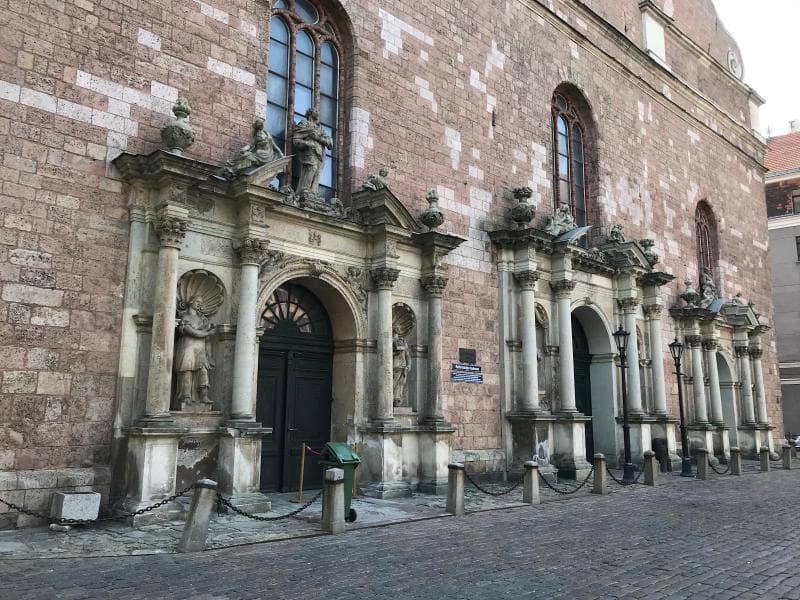
Explore St. Peter's Church in Riga, Latvia, a historic Lutheran church known for its towering spire, panoramic city views, and centuries of rich history and architectural grandeur.
Overview
St. Peter's Church, or Svētā Pētera Baznīca in Latvian, stands as a magnificent Lutheran church dedicated to Saint Peter, proudly gracing the skyline of Riga, Latvia. Situated in the heart of Riga's historic center, a UNESCO World Heritage Site, this architectural marvel is recognized as one of the oldest and most significant sacred buildings of medieval monumental architecture across the Baltic States. Its iconic, towering spire is an unmistakable landmark, drawing the eye upwards and offering a profound sense of history. First mentioned in historical records dating back to 1209, St. Peter's Church has witnessed centuries of Riga's vibrant life unfold beneath its watchful gaze. Today, it serves not only as a spiritual landmark but also as a cultural hub, providing visitors with unparalleled panoramic views of the city from its impressive observation platform.
History & Cultural Background
The story of St. Peter's Church is intricately woven into the fabric of Riga's past, reflecting the city's resilience and enduring spirit. Its first documented mention in 1209 notably states that its masonry construction allowed it to survive a devastating city fire that same year, highlighting its early significance. Throughout the centuries, this venerable structure has played a central role in Riga's spiritual and civic life, evolving through numerous reconstructions driven by fires, wars, and the shifting tides of architectural fashion.
The church's architectural journey can be broadly divided into three distinct periods: two associated with Gothic and Romanesque styles, and a third with the early Baroque era. The middle section of the church dates back to the 13th century, with remnants of this original period still visible in the outer nave walls and some interior pillars. By 1470, it had been rebuilt into a grand basilica featuring three aisles and vaulted ceilings. A particularly notable chapter in its history was the construction of a new 148-meter copper-roofed steeple in 1690, which, at the time, was considered the tallest wooden construction in Europe. Tragically, the church suffered severe damage during World War II, with its spire being destroyed in 1941. However, demonstrating Riga's unwavering spirit, the spire was meticulously reconstructed in 1973 using reinforced concrete and steel, restoring its grandeur. In 2006, St. Peter's Church was officially returned to the ownership of the Evangelical Lutheran Church of Latvia.
What Makes It Special
St. Peter's Church is distinguished by several remarkable features that set it apart. As the highest church in Riga, its towering spire, reaching an impressive 123.25 meters, is an iconic beacon in the city's skyline. The true highlight for many visitors is the opportunity to ascend to the observation platform, located at a height of 72 meters. From this vantage point, a breathtaking panorama unfolds, encompassing the red rooftops of Old Town, the winding Daugava River, and even the distant Gulf of Riga.
Inside, the church reveals a rich tapestry of architectural details that span centuries, showcasing influences from late Gothic foundations to later Baroque embellishments. Visitors can explore fascinating historical elements, including ancient tombs, carefully restored stone and wooden memorial plaques, and a particularly impressive giant bronze seven-branched candlestick dating back to 1596. Beyond its historical and architectural significance, St. Peter's Church is also a vibrant cultural venue. Its renowned acoustics make it a popular setting for art exhibitions and concerts, enriching the city's cultural life.
Stories, Fun Facts & Local Details
St. Peter's Church holds many charming stories and unique local details that add to its allure. It is said that the church's first mention in 1209, specifically noting its survival of a city fire, is a testament to its robust masonry construction even in its earliest form. A fascinating tradition dictates that the tower clock historically has only an hour hand, a quaint detail that speaks to a different perception of time.
Since 1976, the church's bells play the beloved Latvian folk melody 'Rīga dimd' five times a day, with hourly chimes resonating through the Old Town, providing a distinctive local soundtrack. The weathercock atop the spire is not merely decorative; it carries a long tradition, having been replaced multiple times over the centuries, with six different wind vane roosters adorning the spire between the 15th century and 1941. For those seeking a touch of local lore, it's believed that touching a worn 17th-century carving in the church's crypt brings good luck.
Visitor Perspective
For any traveler exploring Riga's Old Town, St. Peter's Church is an absolute must-see destination. The ascent to the observation platform is a journey in itself, with an elevator taking visitors most of the way up after a short climb of a few floors. This experience offers a 'uniquely elevated perspective on Riga's heritage and beauty,' making it highly recommended for enthusiasts of history, architecture, and religion.
To make the most of your visit, especially if you wish to avoid larger tour groups at the viewing platform, it is advisable to arrive before 10:00 or after 16:00. Comfort is key, so wearing comfortable shoes is recommended, particularly if navigating the initial stairs. Given the height and exposure, even on warmer days, the wind at the top can be brisk, so bringing a light jacket is a thoughtful preparation for enjoying the breathtaking views without discomfort.
Coordinates: 24.10944, 56.9475
View on Google Maps💬 How Travelers Describe This Place
Based on community votes
Interesting
989Unique
613Photogenic
581Must See
514Beautiful
207
Traveler Stories
Discover memorable experiences shared by travelers who have visited this place.
No traveler stories yet.
Be the first traveler to share what made this place memorable.
Things to see at St. Peter’s Church



Tour
By
Spot
Discover amazing places around the world. Your journey starts here.
Explore
© 2026 TourBySpot. All rights reserved.