Bell Tower
Riga, Latvia
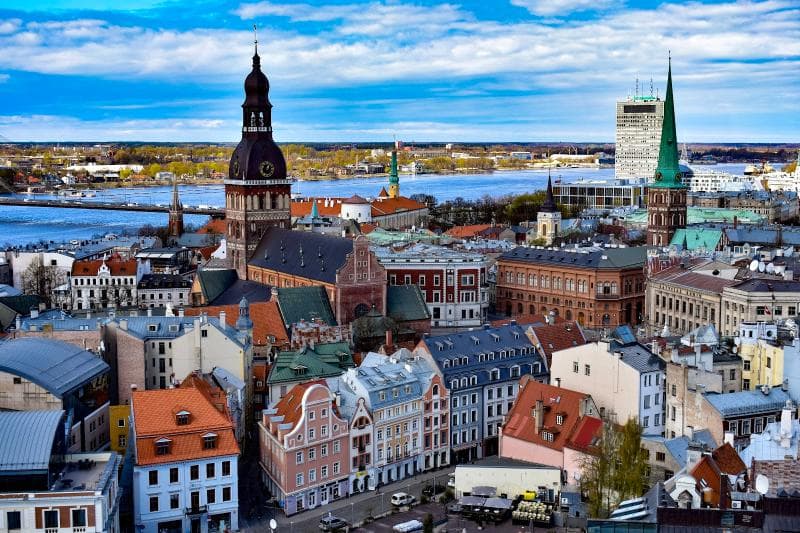
Ascend St. Peter's Bell Tower in Riga, Latvia, for panoramic views of the city's historic Old Town and Daugava River. Discover its dramatic history.
Overview
Soaring majestically above Riga's Old Town, the Bell Tower of St. Peter's Church is an iconic landmark and a testament to the city's enduring spirit. As the highest point in Riga, it offers unparalleled panoramic views, captivating visitors with a sweeping perspective of the historic red rooftops, the meandering Daugava River, and the modern city skyline stretching towards the distant Riga Bay. The church itself, a magnificent example of Gothic architecture with Baroque influences, dates back to the early 13th century, making it one of the oldest and most significant historical structures in the Baltics. While the church serves as an active Evangelical Lutheran place of worship, its tower has evolved into a prominent cultural attraction, inviting travelers to delve into centuries of history and soak in breathtaking vistas.
History & Cultural Background
The history of St. Peter's Church and its magnificent tower is a dramatic narrative of resilience, repeatedly rising from ashes. The church was first mentioned in historical records in 1209, with a tower documented as early as 1297, which even housed Riga's first public clock by 1352. The original late Gothic tower, completed in 1491, stood approximately 136 meters (446 feet) tall before its catastrophic collapse in 1666, tragically claiming eight lives.
A new Baroque tower, painstakingly rebuilt, was completed in 1677, only to be destroyed by a city-wide fire that same year. Undeterred, reconstruction led to an even grander 148-meter (486 feet) copper-roofed steeple in 1690, designed by Rupert Bindenshu, which proudly held the title of the tallest wooden construction in Europe at the time. However, fate intervened again in 1721 when lightning struck, causing another devastating fire. Russian Tsar Peter I himself famously ordered its renovation. The tower faced its greatest challenge during World War II, when artillery fire in 1941 completely destroyed the wooden spire. The meticulous reconstruction, which began in 1967 and saw the new steeple completed in 1970, resulted in the modern metal structure with an elevator that visitors experience today.
What Makes It Special
What truly sets St. Peter's Bell Tower apart is its remarkable history of rebirth and its iconic status as Riga's vertical emblem. Standing at 123.25 meters (about 404 feet), it is not only the highest church in Riga but also features a modern elevator that whisks visitors to an observation platform at 72 meters (236 feet). From this vantage point, the city unfolds beneath you like a living map, offering an unparalleled orientation to Riga's medieval layout and its contrasting modern districts.
Beyond the views, the tower is crowned by a magnificent golden rooster weathervane, a symbol deeply ingrained in Riga's identity. This striking rooster, weighing 158 kilograms and gilded with 140 grams of gold, is not merely decorative; it is a historical beacon. Furthermore, the tower houses bells that play the beloved Latvian folk melody 'Rīga dimd' five times a day, a charming cultural detail that adds to the tower's unique appeal and connects visitors to local traditions.
Stories, Fun Facts & Local Details
The history of the Bell Tower is rich with fascinating tales. Did you know that the iconic golden rooster perched atop the spire is not the first, nor the second, but the seventh rooster to adorn the church? Each previous one faced a dramatic demise, whether bent by a storm, blown down, or collapsing with the tower itself. The current rooster, erected in 1970, carries the legacy of its predecessors.
One intriguing detail from the tower's past is its hour hand-only clock, a tradition maintained on certain old towers. The musical bells, which play 'Rīga dimd' daily, were installed in 1976, adding an auditory charm to the visual splendor. Historically, the tower's wooden iteration in 1690 was not just tall, but it was the tallest wooden structure in all of Europe, a testament to the ambitious engineering of its time. This constant rebuilding and adaptation truly mirrors Riga's own turbulent yet resilient history.
Visitor Perspective
Visiting the Bell Tower offers a memorable experience for any traveler. The journey to the observation platform is effortless, thanks to the modern elevator, making it accessible for most. Once at 72 meters, you'll find yourself amidst the crisp Baltic air, gazing upon a breathtaking 360-degree panorama. It's an ideal spot for photographers seeking to capture the charming blend of medieval and modern Riga.
While the panoramic views are the main draw, consider allocating extra time to explore the church's interior. St. Peter's hosts art exhibitions and concerts, allowing visitors to appreciate its grand hall and historical artifacts. For the best experience, plan your visit for a weekday morning to avoid larger crowds and enjoy softer natural light for photography. Be aware that the church, and thus the tower, is typically closed on Mondays. A small admission fee grants access to the tower, a worthwhile investment for a truly unique perspective of this captivating Latvian capital.
Coordinates: 24.1094, 56.9475
View on Google Maps💬 How Travelers Describe This Place
Based on community votes
Photogenic
995Interesting
964Beautiful
926Must See
646Unique
482
Traveler Stories
Discover memorable experiences shared by travelers who have visited this place.
No traveler stories yet.
Be the first traveler to share what made this place memorable.

Tour
By
Spot
Discover amazing places around the world. Your journey starts here.
Explore
© 2026 TourBySpot. All rights reserved.