Skadarlija
Belgrade, Serbia
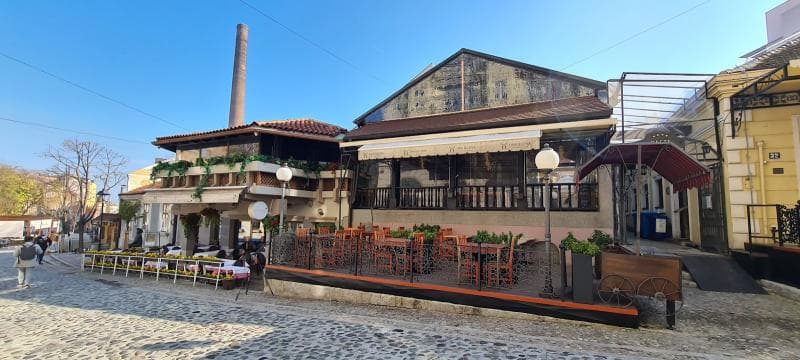
Discover Skadarlija, Belgrade's vibrant bohemian quarter. Explore cobblestone streets, traditional kafanas, live music, and rich artistic history in Serbia.
Overview
Nestled in the heart of Belgrade, Serbia, Skadarlija is a charming cobblestone street and urban neighborhood often celebrated as the city's bohemian quarter. Frequently likened to Montmartre in Paris, Skadarlija offers a unique blend of history, culture, and entertainment that makes it the second most visited tourist attraction in Belgrade, after the historic Kalemegdan Fortress. This distinctive area, centered around the winding Skadarska Street, has been officially protected as a spatial cultural-historical unit since 1967, preserving its traditional urban architecture, lively kafanas (traditional Serbian taverns), live music, and vibrant art scene.
History & Cultural Background
Skadarlija's origins trace back to the early 19th century, with initial settlements recorded around 1825-1830 by Gypsy families in abandoned trenches. By 1835, Serbs and Turks began building proper houses with gardens, transforming the area. For a period, it was colloquially known as the 'Gypsy Quarter' or 'Cigan-mala' before being officially named Skadarska Street in 1872. This name honors Skadar, a city now in Albania, which once held significance as a capital of a Serbian medieval state.
The quarter truly blossomed into its bohemian character in the late 19th and early 20th centuries. A pivotal moment occurred in 1901 when the popular Dardaneli inn, a gathering place for Belgrade's writers and actors near the National Museum, was demolished. Its patrons, seeking new haunts, relocated to Skadarlija's taverns, infusing the street with an artistic and intellectual spirit. Consequently, Skadarlija became a hub for renowned Serbian writers and poets, including Đura Jakšić, Jovan Jovanović Zmaj, Branislav Nušić, and Bora Stanković, whose presence shaped the district's legendary status.
To safeguard its unique heritage, a significant restoration project was undertaken in the mid-1960s, which helped restore its original charm, complete with cobblestone streets and vintage streetlights. Further solidifying its cultural importance, Skadarlija was formally twinned with Paris's Montmartre on October 22, 1977, in a ceremony that celebrated their shared bohemian soul.
What Makes It Special
Skadarlija's undeniable allure lies in its distinctive atmosphere, which effortlessly transports visitors back in time. The street is lined with traditional urban architecture, art galleries, and antique shops. Its most iconic feature is the array of traditional Serbian kafanas, some of which have been operating for over a century. Legendary establishments like 'Tri šešira' (Three Hats), founded in 1864, and 'Dva jelena' (Two Deer) continue to draw crowds with their authentic ambiance.
These taverns are renowned for serving hearty, authentic Serbian cuisine, including grilled meats (roštilj), ćevapčići, sarma (cabbage rolls), kajmak, and ajvar, often accompanied by local drinks like rakija and pivo (beer). The lively spirit of Skadarlija is further enhanced by traditional Serbian music, particularly from tamburica players, and various street performers who add to the district's vibrant tapestry of sounds and sights. Another notable landmark is the Sebilj fountain, a decorative public fountain that stands as a gift from Sarajevo, mirroring its famous counterpart in Baščaršija.
Stories, Fun Facts & Local Details
Skadarlija's rich history is peppered with fascinating tales and anecdotes. Over the decades, its famous kafanas have hosted an impressive list of international and local luminaries, including Jimi Hendrix, George H.W. Bush, Josip Broz Tito, King Juan Carlos I of Spain, and Catherine Deneuve. A popular local rumor even suggests that the famous film director Alfred Hitchcock momentarily abandoned his diet while indulging in the culinary delights of Skadarlija.
At the end of the street lies the area known as the Skadarlija atrium, which once housed a historic brewery belonging to the influential Bajloni family. This brewery was famed for producing 'Aleksandar' beer, uniquely brewed with water from a thermal spring located in its backyard. Intriguingly, underground galleries and catacombs are said to exist beneath the brewery. As you wander through Skadarlija, you might encounter costumed women selling roses, actors performing impromptu scenes, fortune tellers, or drummers announcing local news, all contributing to the street's theatrical charm.
The house of the celebrated Serbian painter and poet Đura Jakšić, located at number 34, stands as a cultural monument. It now functions as an art gallery and a gathering place for contemporary artists and writers, ensuring that the bohemian spirit continues to thrive. The street's distinctive cobblestones, or 'kaldrma', are an integral part of its character. When plans to pave the street with imported stones were revealed, it sparked a public outcry, underscoring the deep affection locals hold for their historic quarter.
Visitor Perspective
Visiting Skadarlija is an immersive experience, akin to stepping into a living museum that pulsates with the energy of Belgrade's past and present. While the street is a pedestrian-only zone, its narrow and uneven cobblestones make comfortable footwear a wise choice. The ambiance shifts throughout the day; mornings offer a quieter, more contemplative charm, perfect for enjoying a coffee and soaking in the historic surroundings. As the day progresses, particularly in the evenings, Skadarlija truly comes alive, filled with the sounds of live music, laughter, and dining.
Whether you are a history enthusiast, a culinary adventurer, an art lover, or simply a curious traveler, Skadarlija offers something special. It's a popular destination for couples seeking a romantic evening and families looking for an authentic cultural outing. Many restaurants accommodate guests year-round, but the outdoor dining experience and street performances are particularly vibrant from spring through autumn. For those wishing to dine at a specific historic kafana, making a reservation is highly recommended to secure a spot in this beloved Belgrade hotspot.
Coordinates: 20.4643, 44.8178
View on Google Maps💬 How Travelers Describe This Place
Based on community votes
Beautiful
898Unique
667Must See
308Photogenic
190Interesting
32
Traveler Stories
Discover memorable experiences shared by travelers who have visited this place.
No traveler stories yet.
Be the first traveler to share what made this place memorable.
Things to see at Skadarlija



Tour
By
Spot
Discover amazing places around the world. Your journey starts here.
Explore
© 2026 TourBySpot. All rights reserved.