Schlossberg
Graz, Austria
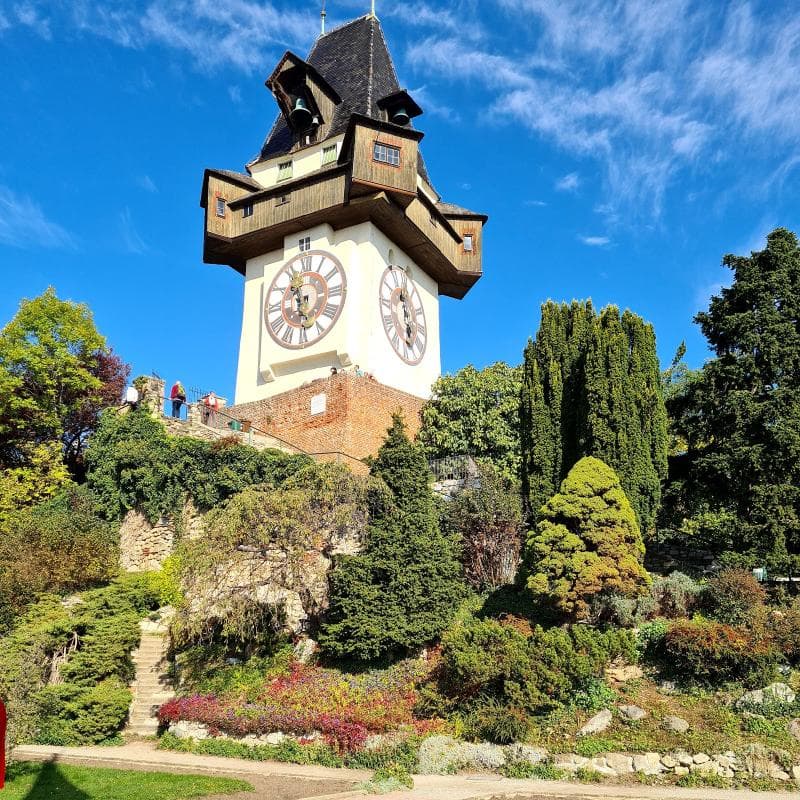
Discover Schlossberg in Graz, Austria – a historic hill with iconic Clock Tower, panoramic city views, unique slide, and rich cultural stories.
Overview
Towering majestically above the heart of Graz, Austria, Schlossberg is more than just a hill; it is a captivating landmark steeped in history and offering unparalleled views of the city's red-tiled rooftops and the surrounding landscape. Rising approximately 473 meters (1,552 ft) above sea level, this tree-clad elevation, whose name translates to 'Castle Hill,' is now a cherished public park and a focal point for both locals and curious travelers. Historically, it is believed that the city of Graz itself derives its name from the Slavic word 'Gradec,' meaning 'small castle,' referring to the early fortifications on this very hill. Visitors can reach the summit through various enchanting routes: by ascending some 260 steps, via the scenic Schlossbergbahn funicular, or through the modern Schlossberglift, a glass elevator traversing the mountain's interior.
History & Cultural Background
The story of Schlossberg is intricately woven into the fabric of Graz's past, with fortifications dating back to at least the 10th century. The first documented fort appeared on this strategically vital hill in the 12th century, chosen for its commanding panoramic views essential for defense. Over centuries, especially in the 16th century, the fortress underwent significant expansion under the guidance of Italian architects, evolving into what was once considered one of the strongest and most impenetrable strongholds in the world. Remarkably, the Schlossberg fortress was never conquered in battle. However, its fate changed after Napoleon's victory over the Habsburgs. Following the Treaty of Schönbrunn in 1809, Napoleonic forces began the dismantling of the fortress. In a testament to civic pride and determination, the citizens of Graz collectively paid a substantial ransom to save two of their most beloved structures: the iconic Clock Tower (Uhrturm) and the majestic Bell Tower (Glockenturm), preserving them for future generations. From 1839 onwards, the former fortress grounds were lovingly transformed into the public park we know today.
What Makes It Special
Schlossberg's allure lies not only in its rich history but also in its unique attractions that blend nature, heritage, and modern entertainment. The most recognizable symbol of Graz, the Uhrturm or Clock Tower, stands proudly on the summit, distinguishing itself with its reversed clock hands – the larger hand indicates hours, and the smaller one indicates minutes – a historical quirk reflecting the need to see the hour from afar in earlier times. Nearby, the 1588 Bell Tower houses the 'Liesl,' Graz's heaviest bell, whose resonant chimes have marked time for centuries. Beneath the mountain surface, an extensive tunnel system, originally constructed as air-raid shelters during World War II, now offers intriguing experiences, including a fairytale train ride and event spaces. For thrill-seekers, the Schlossberg slide, reportedly the tallest underground slide in the world, offers a unique 170-175 meter journey through the rock. Visitors can delve deeper into the hill's past at the Graz Museum Schlossberg, which provides comprehensive insights into its eventful history. Other notable features include the serene Chinese Pavilion and the Turkish Well, a remarkable 94-meter deep well dug in the 16th century to ensure water supply during sieges.
Stories, Fun Facts & Local Details
The very name 'Graz' echoes the hill's early significance, stemming from the Slavic 'Gradec,' meaning 'small castle,' a direct reference to the first fortifications that once crowned this peak. The peculiar design of the Clock Tower's hands is a fascinating detail: in a time before widespread literacy, it was more important for the larger, more visible hand to signify the hour, as minute precision was less crucial for daily life. The 'Liesl' bell in the Bell Tower carries its own mystery; its name's origin is debated, possibly linked to an earlier chapel dedicated to Saint Elisabeth or even the word 'Verlies,' meaning dungeon, due to a brutal prison once located in the fortress's basement vault. The heroic act of Graz's citizens pooling their resources to ransom the Clock and Bell Towers from Napoleon's destruction in 1809 is a powerful testament to their deep affection for these landmarks and their city's heritage. Beyond its military past, Schlossberg has evolved into a cultural hub, hosting open-air stages like the Kasemattenbühne for concerts and performances. Tranquil spots like the Herbersteingarten, with its Mediterranean flora, offer peaceful retreats, while the Cerrini Castle, built post-1809, now serves as the 'House of Authors,' providing temporary refuge and workspace for writers and artists.
Visitor Perspective
Exploring Schlossberg is an experience designed for every type of traveler. For those who enjoy a challenge, the traditional 260 steps provide an invigorating ascent, rewarding effort with gradually unfolding views. A more leisurely option is the Schlossbergbahn funicular, offering panoramic vistas as it glides up the steep incline. For quick and barrier-free access, the Schlossberglift, a glass elevator tunneling through the rock, delivers visitors directly to the summit, providing a unique 'mountain view from within.' Once at the top, visitors are welcomed into a lush green oasis, perfect for strolls along shaded paths, offering a refreshing escape from the city below. Numerous cafes and restaurants, including the Schlossberg restaurant, a beer garden, Starcke Haus, and Aiola Upstairs, provide delightful culinary experiences with breathtaking views across Graz. While access to the park and its scenic viewpoints is free, certain attractions such as the funicular, lift, and the engaging fairytale railway require tickets. Schlossberg stands as a perfect blend of natural beauty, historical significance, and modern enjoyment, inviting all to discover its charm.
Coordinates: 15.43722, 47.07611
View on Google Maps💬 How Travelers Describe This Place
Based on community votes
Photogenic
551Interesting
547Unique
336Beautiful
219Must See
186
Traveler Stories
Discover memorable experiences shared by travelers who have visited this place.
No traveler stories yet.
Be the first traveler to share what made this place memorable.
Things to see at Schlossberg



Tour
By
Spot
Discover amazing places around the world. Your journey starts here.
Explore
© 2026 TourBySpot. All rights reserved.