Schlossberg Lift
Graz, Austria
Experience the Schlossberg Lift in Graz, Austria: a unique, glass-cabin elevator inside the mountain offering quick, panoramic access to the historic Schlossberg.
Overview
Perched majestically above the charming city of Graz, Austria, lies the historic Schlossberg hill, a destination brimming with history and panoramic vistas. While many paths lead to its summit, the Schlossberg Lift offers a truly unique and swift journey. This innovative vertical lift, inaugurated in 2000, carves its way through the very heart of the mountain, providing an efficient and accessible route from Schlossbergplatz at the foot of the hill directly to the prominent Clock Tower area at the top.
The Schlossberg Lift is more than just a means of transport; it's an experience in itself. Its modern, glass-paneled cabins allow passengers to gaze into the illuminated rock interior as they ascend, transforming a simple ride into an engaging adventure. In mere seconds, typically around 30, the lift transports visitors approximately 77 meters upwards, making it the fastest connection to the Schlossberg's elevated attractions. Designed with inclusivity in mind, the lift is fully accessible, welcoming wheelchair users, families with strollers, and those with reduced mobility, ensuring everyone can comfortably reach the summit.
History & Cultural Background
The Schlossberg, meaning 'Castle Hill' in German, is central to Graz's identity, its origins tracing back to at least the 10th century when a small fort gave the city its Slavic name 'Gradec,' meaning 'little castle.' In the mid-16th century, Italian architects significantly expanded the fortifications, creating what was once regarded as one of the strongest and most impenetrable fortresses globally. This formidable stronghold stood unconquered for centuries, a testament to its strategic design.
However, its fate changed in 1809 following Napoleon's victory over the Habsburgs. Under the Treaty of Schönbrunn, the fortress was largely demolished by Napoleonic forces. Yet, two iconic symbols of Graz were spared: the Uhrturm (Clock Tower) and the Glockenturm (Bell Tower). These beloved landmarks were saved from destruction through an extraordinary act of local patriotism, as the citizens of Graz collectively paid a ransom to Napoleon's troops for their preservation. The modern Schlossberg Lift, along with other contemporary developments on the hill, emerged in the lead-up to Graz's tenure as the European Capital of Culture in 2003, further enhancing accessibility and drawing new visitors to this historically rich site.
What Makes It Special
The Schlossberg Lift stands out not just for its modernity but for its innovative integration within the natural landscape. The journey through the mountain's core offers an unusual perspective, revealing the ancient rock formations that underpin the hill. Its role as a quick, barrier-free ascent makes it an invaluable asset for anyone wishing to experience the Schlossberg's beauty without the physical exertion of climbing hundreds of stairs or the slower pace of the funicular.
Beyond its primary function, the lift serves as a gateway to several other unique attractions nestled within and around the Schlossberg. It provides direct access to the 'Dom im Berg,' an incredible underground event venue carved out of the rock, renowned for hosting concerts and cultural events. Furthermore, it is intrinsically linked to 'The Slide Graz,' the world's largest underground slide. This exhilarating 170-meter-long slide winds around the lift shaft, offering a speedy and thrilling descent at speeds of up to 25 km/h, making the Schlossberg a hub of both serene beauty and adventurous fun.
Stories, Fun Facts & Local Details
The Schlossberg's history with lifts dates back further than many realize; records indicate a cable-hauled lift was used between 1528 and 1595 to transport construction materials for the fortress. This early example highlights a long-standing desire to overcome the hill's steep incline.
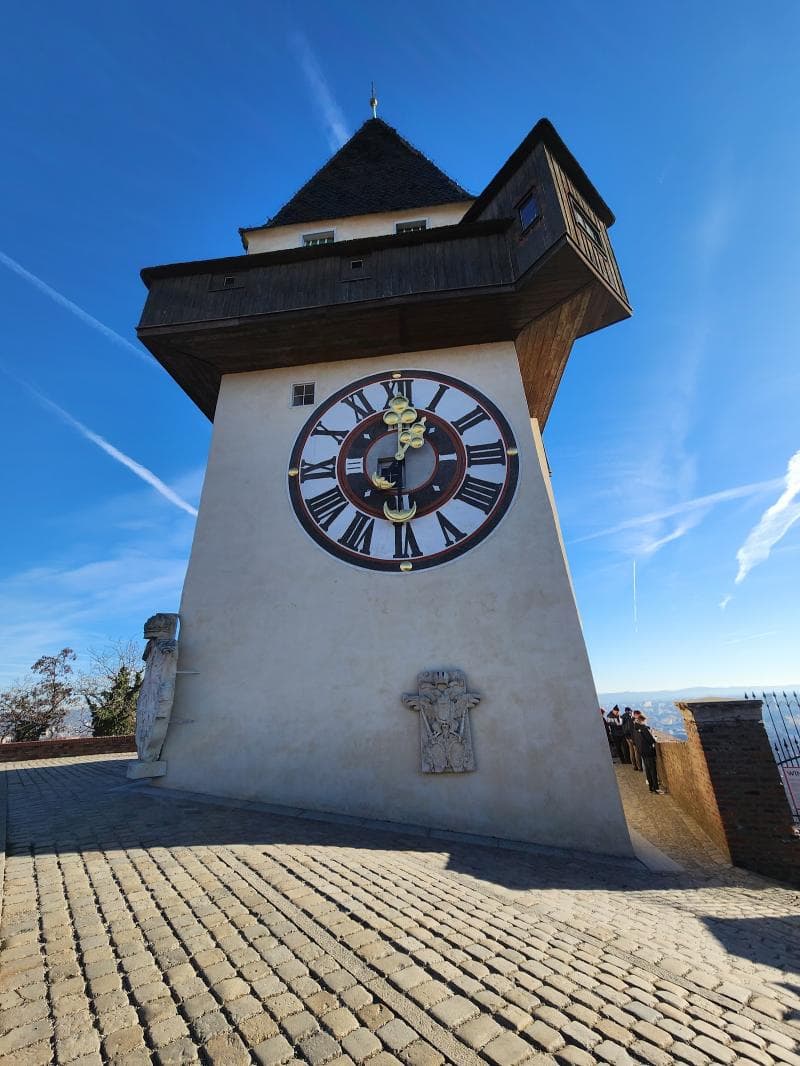
The iconic Uhrturm, Graz's most recognizable landmark, holds a charming peculiarity: its clock hands are reversed, with the larger hand indicating the hours and the smaller one marking the minutes. This unique feature often surprises first-time visitors. Nearby, the Glockenturm houses 'Liesl,' Graz's heaviest bell, adding another layer of historical resonance to the hilltop. Deep within the Schlossberg lies an extensive network of tunnels, originally created during World War II to protect the civilian population from aerial bombing. Some of these tunnels remain accessible today, hinting at a hidden world beneath the public park. On the plateau, a massive 16th-century cistern capable of holding 900,000 liters of water speaks to the fortress's self-sufficiency.
Visitor Perspective
For many travelers, the Schlossberg Lift is the ideal starting point for exploring Graz's most beloved landmark. The quick, comfortable ride sets the tone for a relaxed visit, offering an immediate sense of arrival at the summit. Once at the top, visitors are rewarded with breathtaking 360-degree panoramic views of Graz, its sea of red-tiled roofs, and the rolling Styrian landscape stretching into the distance.
The area around the Clock Tower offers various attractions, from cafes with stunning views to the Graz Museum Schlossberg, which delves into the hill's rich past. Families particularly enjoy the Schlossberg experience, with the option to combine the lift ride with the exhilarating Schlossberg Slide or even a whimsical fairytale train journey. With its long operating hours, typically from early morning until after midnight, the Schlossberg Lift seamlessly fits into any travel itinerary, providing a convenient and memorable way to discover the enduring charm and history of the Schlossberg.
Coordinates: 15.43761, 47.07654
View on Google Maps💬 How Travelers Describe This Place
Based on community votes
Beautiful
915Interesting
873Photogenic
422Must See
123Unique
53
Traveler Stories
Discover memorable experiences shared by travelers who have visited this place.
No traveler stories yet.
Be the first traveler to share what made this place memorable.

Tour
By
Spot
Discover amazing places around the world. Your journey starts here.
Explore
© 2026 TourBySpot. All rights reserved.