Reina Sofía Museum
Madrid, Spain
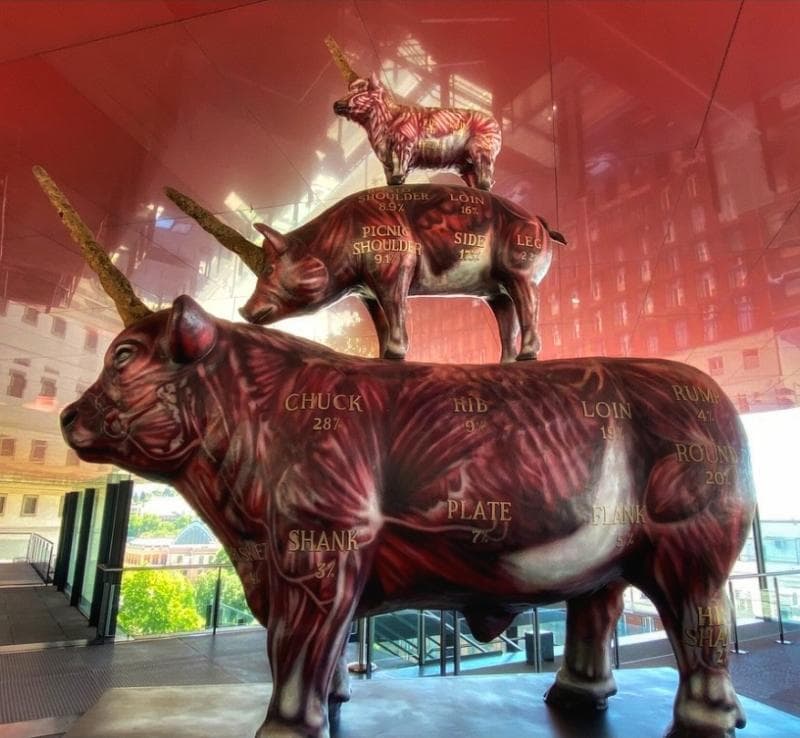
Explore the Reina Sofía Museum in Madrid, Spain, home to Picasso's iconic 'Guernica' and masterpieces by Dalí and Miró. Discover Spain's 20th-century avant-garde art and rich history.
Overview
The Reina Sofía Museum, officially the Museo Nacional Centro de Arte Reina Sofía, is Spain's leading institution for 20th-century art. Located in Madrid, it is a key component of the 'Golden Triangle of Art,' alongside the renowned Museo del Prado and the Museo Thyssen-Bornemisza, all conveniently situated near the Atocha train station.
Most famously, the museum permanently houses Pablo Picasso's monumental anti-war painting, 'Guernica.' Its extensive collections also feature masterpieces by Spanish greats like Salvador Dalí and Joan Miró, alongside works by Juan Gris and a significant array of international modern and contemporary art. With roughly 25,000 pieces from the late 19th century to the present, the Reina Sofía provides a profound exploration of artistic movements, with a strong emphasis on the Spanish avant-garde.
History & Cultural Background
The Reina Sofía Museum's central structure, the Sabatini Building, began its life as Madrid's General Hospital in the 18th century. Its neoclassical design was largely overseen by architect Francisco Sabatini, under King Charles III. The site historically centralized hospitals since the 16th century under King Philip II. After serving as a hospital until 1965, its historical and artistic value led to its designation as a national monument in 1977.
Restoration started in 1980, and the Centro de Arte Reina Sofía opened in 1986. It gained national museum status in 1988, and on September 10, 1992, was officially inaugurated by King Juan Carlos and Queen Sofía, taking her name. Noteworthy architectural additions include Ian Ritchie's distinctive glass and steel elevator towers from 1989, which offer a striking contrast to the historical facade. A major expansion by French architect Jean Nouvel in 2005 added new exhibition spaces, auditoriums, and a library, harmonizing contemporary design with the historic structure.
What Makes It Special
The Reina Sofía Museum's distinctiveness stems from its focus on 20th-century Spanish art, particularly through Pablo Picasso's 'Guernica'. This monumental 1937 painting, in powerful black, white, and grey, is a poignant protest against war, depicting the bombing of the Basque town of Guernica during the Spanish Civil War. Its Cubist and Surrealist elements create a universal emblem of human suffering.
'Guernica's' return to Spain in 1981, after decades at New York's MoMA under Picasso's condition that it return only with democracy, marked a moment of profound national significance. Beyond this icon, explore Salvador Dalí's imaginative works like 'The Face of the Great Masturbator,' and Joan Miró's abstract, poetic canvases such as 'Man with a Pipe.' The museum also features Cubist pioneers like Juan Gris and the visionary early Surrealist Ángeles Santos, whose 'A World' was created at just 17. The architectural blend of 18th-century neoclassical, modern glass towers, and Nouvel's red extension provides a dynamic setting, reflecting the continuous evolution of art.
Stories, Fun Facts & Local Details
The journey of 'Guernica' back to Spain is a compelling story of art intertwined with national history. Picasso's firm stance that the painting remain abroad until Spanish democracy was re-established made its 1981 return a powerful symbol of freedom and reconciliation. Its meticulous transfer to the Reina Sofía in 1992, involving custom crates and special transport, underscored the museum's role in safeguarding Spain's modern artistic heritage.
The museum building itself offers a unique historical narrative, transforming from an 18th-century General Hospital to a vibrant art institution. Additionally, the Reina Sofía extends its cultural footprint to two elegant, often free, exhibition spaces in Retiro Park: the Palacio de Velázquez and Palacio de Cristal, which frequently host contemporary installations.
For those craving deeper insight, the museum houses a vast, free-access art library, boasting over 100,000 books, numerous recordings, and videos—an invaluable resource. Affectionately dubbed 'Sofida' by some Madrileños, drawing an analogy to Paris's Pompidou Centre, highlights its contemporary and accessible spirit. Jean Nouvel's modern expansion, with its distinctive red canopy and stylish bar-restaurant, offers inviting communal spaces for visitors to relax and reflect on their cultural journey.
Visitor Perspective
A visit to the Reina Sofía Museum provides an enriching immersion into 20th-century and contemporary art. The museum is open Monday, Wednesday through Saturday from 10 am to 9 pm, and Sundays from 10 am to 2:30 pm, with closure on Tuesdays. A typical visit requires two to three hours, though dedicated art enthusiasts may easily spend longer, especially with temporary exhibitions.
For budget-conscious travelers, free entry is available during specific evening hours (e.g., Mon, Wed-Sat from 7 pm to 9 pm) and Sunday afternoons (12:30 pm to 2:30 pm), as well as on certain national holidays. Booking free tickets online in advance is recommended. The main entrance is via the Sabatini Building (Plaza de Juan Goytisolo), but online ticket holders might find the Nouvel Building entrance (Ronda de Atocha) more convenient.
While 'Guernica,' located on the second floor of the Sabatini Building, is a must-see, don't miss the museum's other treasures. The fourth floor, featuring excellent post-war and contemporary galleries, often offers a quieter, equally captivating experience. The Reina Sofía ensures accessibility for wheelchair users, strollers, and service animals. Comfortable rest areas, cafes, and a bookshop are available to enhance your cultural exploration.
Coordinates: -3.6946, 40.40805
View on Google Maps💬 How Travelers Describe This Place
Based on community votes
Unique
836Interesting
797Photogenic
286Beautiful
255Must See
86
Traveler Stories
Discover memorable experiences shared by travelers who have visited this place.
No traveler stories yet.
Be the first traveler to share what made this place memorable.
Things to see at Reina Sofía Museum



Tour
By
Spot
Discover amazing places around the world. Your journey starts here.
Explore
© 2026 TourBySpot. All rights reserved.