Surrealism Collection
Madrid, Spain
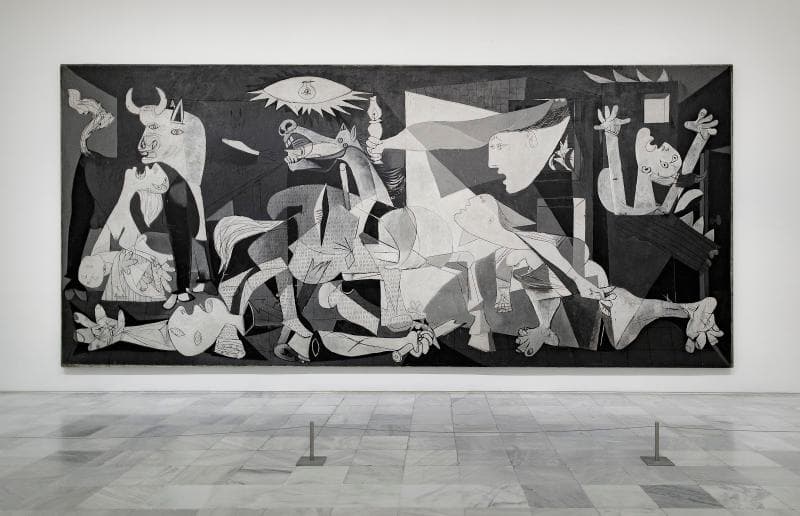
Explore the captivating Surrealism Collection at Madrid's Reina Sofía Museum, featuring masterpieces by Dalí, Miró, and Magritte. Dive into dreamlike art and cultural history.
Overview
Stepping into the Reina Sofía Museum in Madrid is an immersion into the vibrant and often startling world of 20th-century art, with its Surrealism Collection standing as a captivating highlight. This national museum, housed in a magnificent former hospital building, is a cornerstone of Spain's 'Golden Triangle of Art' and offers an unparalleled journey through modern and contemporary artistic movements. While the iconic 'Guernica' by Pablo Picasso often draws the most attention, the museum's dedication to Surrealism showcases a profound segment of artistic innovation, particularly through the works of Spanish masters like Salvador Dalí and Joan Miró, alongside international figures such as René Magritte.
The collection provides a rich tapestry of dreamlike landscapes, psychological explorations, and unexpected juxtapositions that define the Surrealist movement, making it a must-see for anyone curious about the depths of human imagination and the art it inspires.
History & Cultural Background
Surrealism emerged in Europe in the aftermath of World War I, a period of profound social and psychological upheaval. Rooted in literary circles, the movement gained its foundational principles with André Breton's 'First Manifesto of Surrealism' in 1924. Its core ambition was to reconcile the seemingly contradictory states of dream and reality into an 'absolute reality' or 'surreality' by allowing the unconscious mind to express itself freely.
Artists and writers, deeply influenced by Sigmund Freud's theories on the subconscious, sought to bypass rational thought through techniques like automatic writing and symbolic automatism. This revolutionary spirit wasn't confined to aesthetics; Surrealism also adopted strong political stances, often aligning with revolutionary causes and criticizing societal norms, reflecting the turbulent interwar period. Spanish artists, in particular, enthusiastically embraced these ideas. The Spanish Civil War, erupting later, further impacted many Surrealist artists, serving as a powerful, albeit tragic, wellspring of themes and expressions within their work.
What Makes It Special
The Reina Sofía boasts one of Europe's most significant Surrealist collections, distinguished by its thematic and chronological presentation that tells a compelling narrative of art responding to history. Rather than simply displaying masterpieces in isolation, the museum expertly places works within their historical and intellectual context, allowing visitors to understand the evolution and impact of Surrealism.
Among its treasures are seminal works that encapsulate the essence of the movement. Salvador Dalí's 'The Face of the Great Masturbator' (1929) is a powerful, autobiographical reflection of his deepest obsessions and dreamlike universe, showcasing his unique paranoiac-critical method. Joan Miró's 'Snail, Woman, Flower, Star' (1934), part of his 'wild paintings' series, conveys a raw emotional response to the rising fascism of the era through vibrant, symbolic figures. Visitors can also ponder the enigmatic compositions of René Magritte, such as 'Grelots roses, ciels en lambeaux' (1930), which challenge perception with unexpected juxtapositions. The collection also features works by other key artists like Max Ernst, André Masson, and Óscar Domínguez, providing a comprehensive view of the movement's diverse expressions.
Stories, Fun Facts & Local Details
The Surrealism Collection is rich with personal stories and fascinating details. Salvador Dalí, known for his eccentric persona as much as his art, often infused his works with Freudian symbolism and personal narratives. 'The Great Masturbator,' for instance, is a deeply personal piece influenced by his complex relationship with his muse, Gala, whom he met around the time of its creation.
Joan Miró's contribution to Surrealism, while distinct from Dalí's, also carries profound meaning. His 'wild paintings,' created in the mid-1930s, are a stark artistic response to the escalating political tensions and the pre-war anxieties in Spain, transforming internal turmoil into vibrant, often unsettling, imagery. Beyond these celebrated figures, the collection highlights contributions from Spanish women Surrealist artists like Maruja Mallo and Ángeles Santos, whose monumental work 'Un Mundo' occupies an entire wall, inviting close inspection of its distorted perspectives and myriad details.
The museum itself has an intriguing past, having originally served as Madrid's General Hospital in the 18th century. Its transformation into a cutting-edge art institution adds another layer to its cultural significance, juxtaposing historical architecture with revolutionary art.
Visitor Perspective
To fully appreciate the Surrealism Collection, visitors should head to the second floor of the Sabatini Building, where 'Collection 1 (1900–1945)' is primarily housed. The museum's layout is designed to guide you through the artistic developments of the early 20th century, placing Surrealism in dialogue with other avant-garde movements like Cubism. Allow ample time, perhaps two to three hours for a focused visit, to delve into the Surrealist galleries and their surrounding context. The experience is not just about observing individual artworks but understanding the cultural and historical currents that shaped these dreamlike visions. Standing before these imaginative pieces, one can truly feel the artists' quests to explore the uncharted territories of the human psyche and challenge conventional reality.
Coordinates: -3.6945569020794147, 40.408104261382604
View on Google Maps💬 How Travelers Describe This Place
Based on community votes
Must See
836Beautiful
797Photogenic
695Interesting
396Unique
286
Traveler Stories
Discover memorable experiences shared by travelers who have visited this place.
No traveler stories yet.
Be the first traveler to share what made this place memorable.

Tour
By
Spot
Discover amazing places around the world. Your journey starts here.
Explore
© 2026 TourBySpot. All rights reserved.