Puerta del Sol
Madrid, Spain
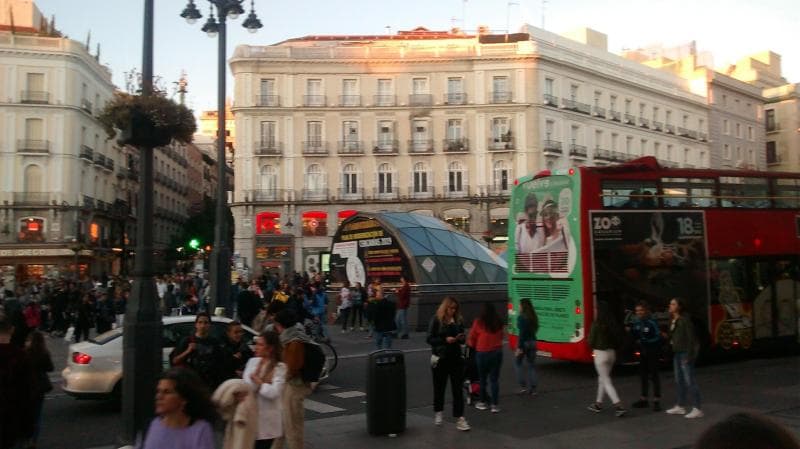
Discover Puerta del Sol, Madrid's historic heart and Spain's 'Kilometer Zero.' Explore iconic landmarks, rich history, and vibrant culture.
Overview
Puerta del Sol, or 'Gate of the Sun,' stands as the vibrant, beating heart of Madrid, Spain. More than just a bustling public square, it is a historical crossroads and a central meeting point that encapsulates the spirit of the Spanish capital. Its distinctive semi-circular shape and prime location make it a natural junction for many of Madrid's most significant and historical streets. For travelers and locals alike, Puerta del Sol serves as an indispensable reference point and a focal hub for exploring the city's rich tapestry of culture and daily life.
The square is instantly recognizable by several iconic landmarks that hold deep meaning for Madrid and Spain. These include the historic Real Casa de Correos with its famous clock, the symbolic 'Kilómetro Cero' plaque, and the beloved 'El Oso y el Madroño' statue. Each element contributes to the square's unique character and its reputation as a dynamic public space where history, tradition, and modernity converge.
History & Cultural Background
The origins of Puerta del Sol trace back to the 15th century when it was one of the city gates in Madrid's defensive wall. Its name, 'Gate of the Sun,' is believed to derive from a rising sun motif that adorned the entry, as the gate was oriented towards the east.
Over centuries, the square evolved from a simple gate into a pivotal social and political center. By the 17th and 19th centuries, it had become a crucial gathering place, particularly due to the presence of the Royal House of the Post Office (Real Casa de Correos). Built between 1766 and 1768 by French architect Jacques Marquet, this imposing building initially served as the central post office and is now the seat of the Presidency of the Madrid Community.
Puerta del Sol has borne witness to numerous defining moments in Spanish history. It was the site of the 'Dos de Mayo' uprising in 1808 against Napoleon's troops, an event that ignited the Peninsular War. Later, it saw the proclamation of the Second Republic in 1931 and served as a focal point for the 15-M anti-austerity movement in 2011, demonstrating its enduring role as a platform for public expression and significant national events.
What Makes It Special
What truly sets Puerta del Sol apart is its status as the symbolic center of Spain. In front of the Real Casa de Correos lies the 'Kilómetro Cero' (Kilometer Zero) plaque, a small stone marker on the pavement from which all distances on Spain's radial road network are officially measured. This spot signifies Madrid's historical role as the country's central communication and administrative hub, making it a popular photo opportunity for travelers who wish to stand at the 'heart' of Spain.
Another distinguishing feature is the iconic clock tower of the Real Casa de Correos. This clock plays a starring role in Spain's most cherished New Year's Eve tradition: the 'Twelve Grapes.' Every December 31st, thousands gather in the square, and millions more watch on television, to eat one grape with each of the twelve chimes at midnight, symbolizing good luck for the coming year. This tradition has been televised live since 1962, cementing Puerta del Sol's place in the national consciousness as the epicenter of New Year celebrations.
The square is also home to 'El Oso y el Madroño' (The Bear and the Strawberry Tree), a bronze statue that represents the heraldic symbol of Madrid. This statue is not only a work of art but also a beloved meeting spot for locals and visitors. Furthermore, an equestrian statue of King Charles III stands prominently in the square, honoring the monarch often referred to as 'Madrid's best mayor' for his significant urban reforms during his reign.
Stories, Fun Facts & Local Details
Delving into Puerta del Sol reveals intriguing stories and local quirks. It was notably the first square in Spain to be equipped with electric street lighting in 1883, showcasing Madrid's embrace of modernity.
The 'Kilómetro Cero' plaque itself has an interesting history. While it officially marks the start of the radial roads, it has also become a traditional spot where Madrileños believe good luck is bestowed upon those who step on it. It also serves as the reference point for street numbering in Madrid, with numbers beginning closest to Puerta del Sol.
The square is a constant stage for Madrid's daily life. You'll often see street performers, artists, and political gatherings contributing to its lively atmosphere. The area surrounding Puerta del Sol is also known for its historic taverns and bustling commercial streets, making it a hub for both traditional Spanish life and modern shopping.
Visitor Perspective
For visitors, Puerta del Sol offers a truly immersive Madrid experience. It is easily accessible, with a major Metro station directly beneath the square, making it a convenient starting point for exploring the city.
Walking through the square, one can feel the pulse of Madrid, observing the mix of tourists capturing photos at Kilómetro Cero and locals hurrying to their destinations. It's an ideal place to simply sit and people-watch, soaking in the energetic ambiance. Nearby attractions, such as the Plaza Mayor and Gran Vía, are just a short stroll away, further cementing Puerta del Sol's role as an essential stop on any Madrid itinerary. Whether you are interested in history, cultural traditions, or simply the vibrant daily life of the city, Puerta del Sol provides a comprehensive and unforgettable glimpse into the heart of Madrid.
Coordinates: -3.7033, 40.4169
View on Google Maps💬 How Travelers Describe This Place
Based on community votes
Must See
673Photogenic
336Interesting
219Unique
186Beautiful
80
Traveler Stories
Discover memorable experiences shared by travelers who have visited this place.
No traveler stories yet.
Be the first traveler to share what made this place memorable.
Things to see at Puerta del Sol



Tour
By
Spot
Discover amazing places around the world. Your journey starts here.
Explore
© 2026 TourBySpot. All rights reserved.