Tío Pepe Sign
Madrid, Spain
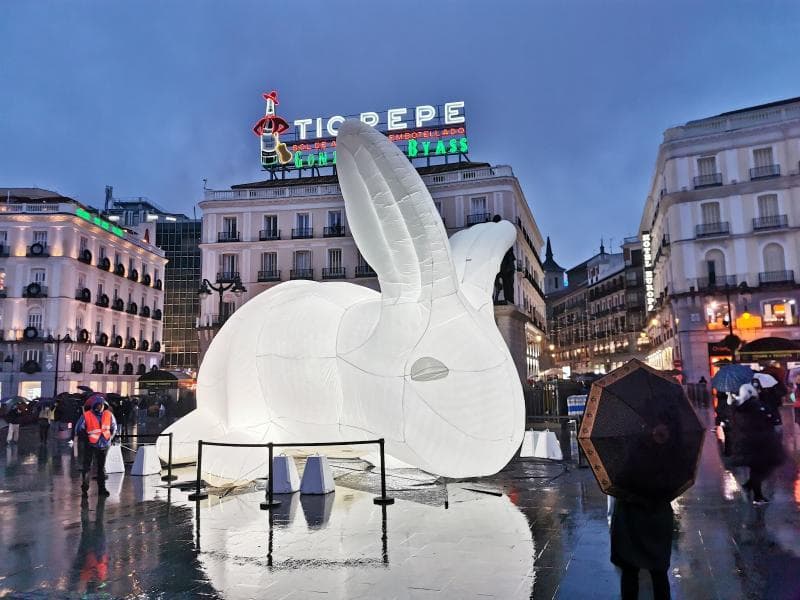
Discover the iconic Tío Pepe Sign in Puerta del Sol, Madrid, Spain. Learn its history, cultural significance, and why this luminous sherry bottle is a cherished city symbol.
Overview
Towering proudly above Madrid's bustling Puerta del Sol, the Tío Pepe Sign is far more than just a neon advertisement; it's a beloved cultural icon and an enduring symbol of the city itself. This illuminated beacon, showcasing a bottle of Tío Pepe sherry personified as a cheerful Andalusian gentleman, captures the essence of Spanish heritage and modern urban charm. Adorned with a wide-brimmed hat, a short red waistcoat, and often holding a guitar, the sherry bottle radiates warmth and hospitality across the square. Its memorable slogan, 'Sol de Andalucía embotellado' (Bottled Sun of Andalucía), further cements its connection to the rich sherry-making traditions of Southern Spain. For both Madrileños and visitors, the sign is an unmistakable landmark, a point of reference, and a testament to a unique blend of commercial artistry and historical significance that has become an integral part of the Puerta del Sol skyline.
History & Cultural Background
The story of the Tío Pepe Sign began in 1935 or 1936, when it was first installed atop the Hotel Paris in Puerta del Sol. Commissioned by the González Byass winery to celebrate its centennial, the sign was originally one among many commercial advertisements that populated the square. However, as municipal ordinances were later introduced to clear the city's facades of such billboards, the Tío Pepe sign gained an exceptional pardon, recognized for its growing historical and cultural value. It valiantly withstood the Spanish Civil War and decades of political and social change, becoming an unofficial national monument in the hearts of Madrid's citizens.
A significant chapter in its history unfolded in 2011 when the Hotel Paris building, its longtime home, was slated for renovation to become an Apple Store. The sign was dismantled, leading to widespread public dismay. A massive public outcry ensued, with over 50,000 online signatures collected, demanding its return to the Puerta del Sol. This powerful demonstration of affection by the people of Madrid proved instrumental. Following extensive restoration and a 'makeover' that included new neon lights and a lighter structure, the sign made a triumphant return in 2014. It was reinstalled on a new building at Puerta del Sol 11, strategically positioned just across from its original location and the historic Casa de Correos, ensuring its continued presence in Madrid's most iconic square.
What Makes It Special
The Tío Pepe Sign's unique charm lies in its remarkable resilience and its transformation from a mere advertisement into a cherished cultural artifact. Its very survival in an era when most commercial billboards were banned is a testament to its special status. The public's passionate campaign for its return after its temporary removal highlights the deep emotional connection Madrileños have with this illuminated figure.
Visually, its distinctive Art Deco design, depicting a friendly, anthropomorphic sherry bottle, stands out against the more classical architecture of Puerta del Sol. It beautifully blends the commercial origins of the product with an artistic flair that has allowed it to transcend its initial purpose. Much like other Spanish icons, such as the Osborne bulls that line the country's highways, the Tío Pepe sign has earned a protected cultural status, distinguishing it as a landmark rather than just a brand promotion. Its continued presence in such a prominent location speaks volumes about Madrid's appreciation for its history, even in its most unexpected forms.
Stories, Fun Facts & Local Details
- The Iconic Character: The Tío Pepe figure is more than just a bottle; it's a personality. It represents a fino wine bottle donned in traditional Andalusian attire, complete with a Cordovan hat, a short red 'chaquetilla' jacket, and a guitar, embodying the festive spirit of its origins.
- A Slogan that Sings: The phrase 'Sol de Andalucía embotellado' (Bottled Sun of Andalucía) isn't just a marketing tagline; it's a poetic descriptor that connects the golden hue of the sherry with the vibrant sun of its homeland.
- Early Animation: When it was first installed, the original neon sign was even more dynamic, reportedly featuring an animation that showed the bottle pouring sherry, adding to its early appeal.
- Guardian of the Square: The Tío Pepe sign oversees some of Spain's most important symbols within Puerta del Sol, including the 'Kilometer Zero' plaque, marking the center of Spain's radial road network, and the statue of the Bear and the Strawberry Tree, the heraldic symbol of Madrid.
- Popular Photo Opportunity: It's a rite of passage for many visitors to capture a photograph with the Tío Pepe sign in the background, a testament to its status as a quintessential Madrid experience.
Visitor Perspective
For any curious traveler exploring Madrid, the Tío Pepe Sign is an unmissable sight in the heart of Puerta del Sol. Its luminous glow, especially captivating as dusk falls, adds a magical dimension to the already vibrant square. Standing beneath its cheerful light, one can't help but feel a connection to Madrid's enduring spirit and its knack for preserving even commercial history with such affection. It offers a tangible link to the city's past, reminding visitors of a time when advertising signs were works of art and landmarks in their own right. The sign serves as an excellent backdrop for memorable photos, encapsulating the lively atmosphere of the Puerta del Sol. Its presence encourages travelers to ponder the cultural narratives embedded in urban landscapes and appreciate the unique ways a city chooses to honor its heritage, making a simple neon sign a profound point of interest. The area is easily accessible via the Sol metro station, making it a convenient and rewarding stop on any Madrid itinerary.
Coordinates: -3.70379, 40.41721
View on Google Maps💬 How Travelers Describe This Place
Based on community votes
Interesting
989Unique
613Photogenic
581Must See
514Beautiful
207
Traveler Stories
Discover memorable experiences shared by travelers who have visited this place.
No traveler stories yet.
Be the first traveler to share what made this place memorable.

Tour
By
Spot
Discover amazing places around the world. Your journey starts here.
Explore
© 2026 TourBySpot. All rights reserved.