Neutrality Monument
Ashgabat, Turkmenistan
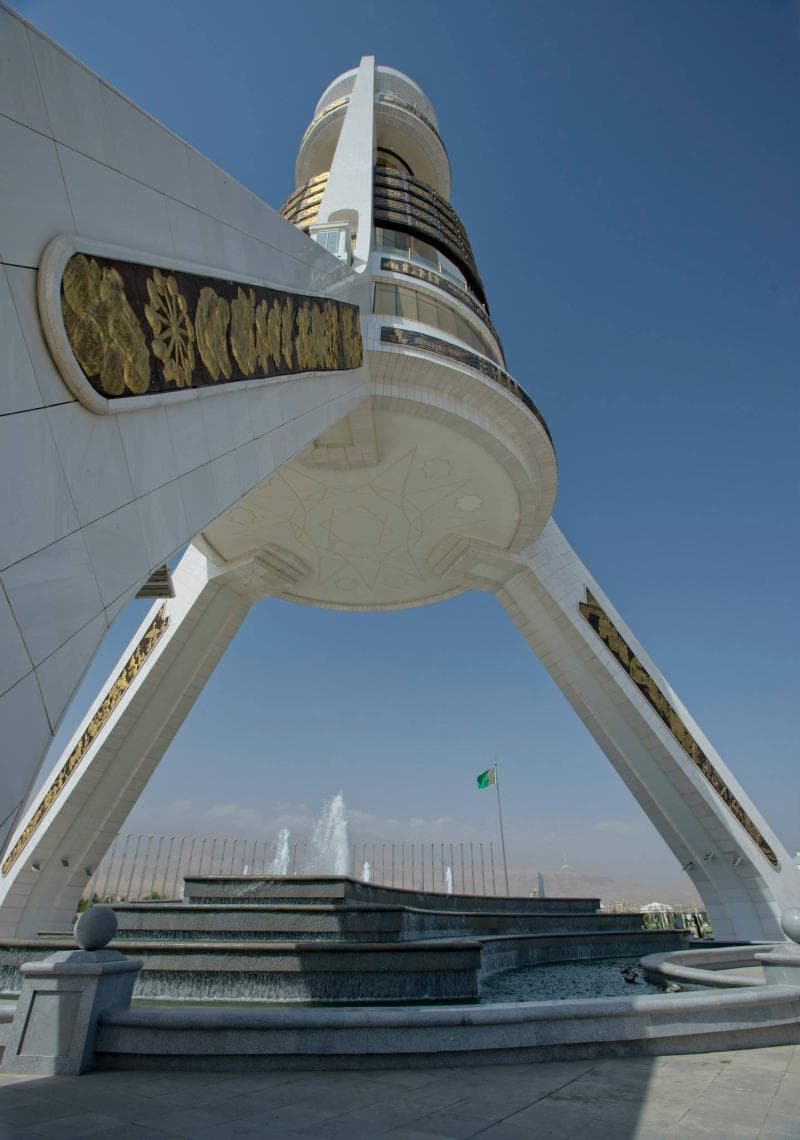
Discover the towering Neutrality Monument in Ashgabat, Turkmenistan. Explore its unique architecture, rich history, and cultural significance.
Overview
Soaring majestically above the white-marbled cityscape of Ashgabat, Turkmenistan, stands the Neutrality Monument, a profound symbol of the nation's unique commitment to peace and non-interference in global affairs. This impressive structure, once known as the Arch of Neutrality, was erected to commemorate Turkmenistan's internationally recognized status of permanent neutrality, a designation granted by the United Nations General Assembly on December 12, 1995. Dominating the skyline at 95 meters tall, it offers not just a striking architectural marvel but also panoramic vistas of the capital and the surrounding Kopetdag Mountains.
Originally unveiled in 1998 in the heart of Ashgabat, the monument underwent a significant relocation and height expansion between 2010 and 2011. It now proudly stands in the southern part of the city, along Bitarap Turkmenistan Avenue, inviting curious travelers to delve into the rich history and cultural narratives it embodies.
History & Cultural Background
The genesis of the Neutrality Monument is intrinsically linked to Turkmenistan's declaration of permanent neutrality. Following the dissolution of the Soviet Union, the newly independent nation, under its first president Saparmurat Niyazov, sought a distinct international identity. The United Nations' recognition of Turkmenistan's neutral status on December 12, 1995, was a monumental diplomatic achievement, signifying a policy of non-involvement in military conflicts and non-interference in the internal affairs of other states.
To immortalize this pivotal moment, the idea for a grand monument was conceived. Construction began in 1996 by the Turkish firm 'Polimeks' and concluded with its inauguration on December 12, 1998, the third anniversary of neutrality. Originally 75 meters high and situated in central Ashgabat, the monument was subsequently dismantled and reassembled at its current, taller form of 95 meters in the city's southern suburbs. This relocation, completed in 2011, marked its renaming to the Neutrality Monument.
What Makes It Special
The Neutrality Monument is a feast for the eyes and a testament to Turkmen ingenuity. Its most distinctive feature is its three-legged arch design, often affectionately nicknamed 'The Tripod' by locals. This design is not merely aesthetic; the three massive pylons are inspired by the traditional Turkmen 'tagan' – a hearth stand, symbolizing the foundational strength of the state, home, and hearth.
Clad in gleaming white marble, the monument's exterior is adorned with intricate bas-relief fragments that narrate the rich tapestry of Turkmen history. Further adding to its cultural depth are five bronze rings, positioned vertically along the pylons, each featuring national ornaments derived from Turkmen carpet patterns. These rings symbolically represent the five major Turkmen tribes, underscoring the nation's unity and heritage.
At its apex, the monument is crowned with a remarkable 12-meter tall, gold-plated statue of President Saparmurat Niyazov, depicted with outstretched arms. The structure also boasts multiple observation decks. Funiculars transport visitors to a café-bar at 21.5 meters, offering an initial breathtaking panorama, while a transparent elevator ascends to an upper sky deck at 50 meters, providing even more expansive views of Ashgabat.
Stories, Fun Facts & Local Details
Perhaps one of the most talked-about features of the original Arch of Neutrality was the golden statue of President Niyazov. It was engineered to slowly rotate 360 degrees over a 24-hour period, ensuring that it always faced the sun. While this iconic rotation has since ceased, with the statue now permanently facing the city, the story of its sun-tracking movement remains a captivating detail that adds to the monument's mystique.
Inside the monument, visitors can explore the Museum of Neutrality. This museum is dedicated to showcasing the pages of Turkmenistan's recent history, particularly its foreign policy and the significance of its neutral status. Surrounded by a meticulously landscaped park zone featuring fountains and green spaces, the monument becomes a vibrant hub, especially in the evenings when it glows with colorful lighting.
December 12 is celebrated annually as Neutrality Day in Turkmenistan, a national holiday that underscores the enduring importance of this policy to the nation's identity. The monument is often at the heart of these festivities.
Visitor Perspective
Approaching the Neutrality Monument, travelers are immediately struck by its colossal scale and gleaming white facade, a characteristic often associated with Ashgabat's unique architecture. The monument serves as a striking landmark, visible from various points across the capital. Many find it to be a key starting point for understanding Turkmenistan's modern identity and its place in the world.
The journey up to the observation decks, whether by funicular or panoramic elevator, is an experience in itself, revealing the city's vastness and architectural grandeur layer by layer. From these vantage points, one can truly appreciate Ashgabat's distinct urban planning and the stark contrast between the city's modern monuments and the distant, rugged beauty of the Kopetdag mountains. The surrounding park offers a peaceful setting for a stroll, allowing visitors to reflect on the monument's symbolism and enjoy its architectural details up close.
Coordinates: 58.38, 37.93694
View on Google Maps💬 How Travelers Describe This Place
Based on community votes
Must See
951Beautiful
491Unique
414Photogenic
310Interesting
277
Traveler Stories
Discover memorable experiences shared by travelers who have visited this place.
No traveler stories yet.
Be the first traveler to share what made this place memorable.
Things to see at Neutrality Monument



Tour
By
Spot
Discover amazing places around the world. Your journey starts here.
Explore
© 2026 TourBySpot. All rights reserved.