Matka Canyon
Skopje, North Macedonia
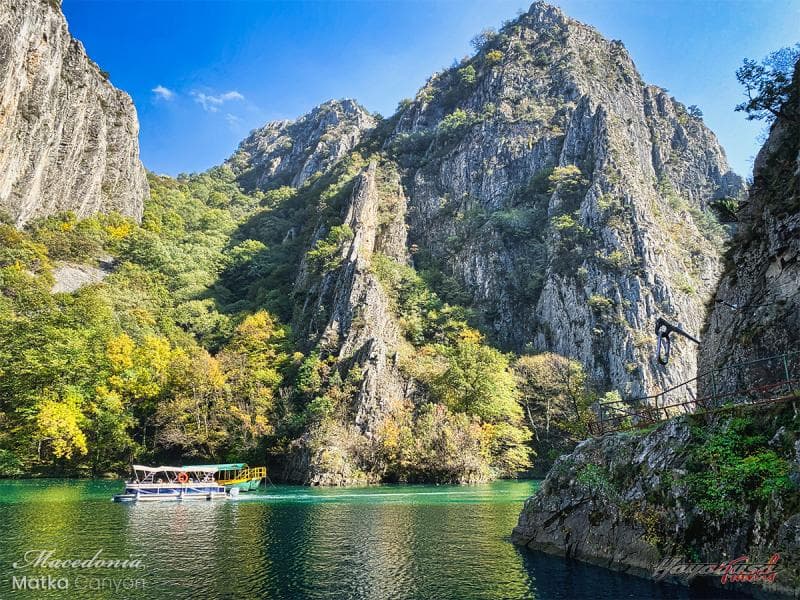
Discover Matka Canyon in Skopje, North Macedonia: a stunning gorge with a deep lake, ancient monasteries, unique caves, and rich biodiversity.
Overview
Nestled just a short drive west of Skopje, North Macedonia, Matka Canyon is a breathtaking natural wonder carved by the Treska River, a tributary of the Vardar. This dramatic gorge, protected as a Monument of Nature since 1994, stretches for approximately 5 kilometers, with vertical limestone cliffs soaring over 100 meters above the water. At its heart lies Matka Lake, North Macedonia's oldest artificial lake, formed in 1938 when a dam was constructed across the Treska River. The canyon encompasses an area of roughly 5,000 to 6,576 hectares, presenting a unique mosaic of geological, hydrological, and biological features. It's renowned not only for its stunning landscapes but also for its rich biodiversity, intricate cave systems, and a collection of ancient medieval monasteries.
History & Cultural Background
The human presence in the Matka area dates back to prehistoric times, with archaeological evidence hinting at early settlements along the canyon's rim. Over centuries, the canyon became a spiritual retreat, evident in the numerous medieval monasteries that dot its rugged terrain, including the Monastery of St. Andrew, St. Nikola Šiševski, and the Matka Monastery. These sacred sites offer a glimpse into the region's deep cultural and religious heritage, often featuring ancient frescoes and architectural styles that speak volumes about past eras. A significant modern development was the construction of the Matka Dam in 1935, which led to the creation of Matka Lake, launching the Matka Hydroelectric Power Plant in 1938. This engineering feat not only generated electricity but also played a crucial role in irrigation and flood control for the surrounding areas, notably saving Skopje from severe flooding on several occasions. The dam's conceptual author and designer, Miladin Pećinar, famously declared, 'If the dam goes, let the man who designed it go with it!' upon its completion, underscoring the monumental effort and pride associated with the project.
What Makes It Special
Matka Canyon stands out as one of Europe's most biodiverse locations, a true 'hot spot' of natural heritage. Its varied habitats, from sheer cliffs to dense forests and mysterious caves, host over 1,000 plant species, approximately 20% of which are endemic or relict, found nowhere else. The canyon is also a haven for insects, boasting an astonishing 77 endemic butterfly species, with 18 more new to science. Its geological formations are equally compelling; carved through Precambrian and Cambrian marble and limestone dating back 500-600 million years, the canyon is extensively karstified, featuring more than ten caves and vertical shafts. The crown jewel among these is Vrelo Cave, which was recognized as one of the top 77 natural sites in the New7Wonders of Nature project. Vrelo Cave is notable for its intricate stalactite and stalagmite formations, including a large 'Pine Cone' stalagmite, and its two internal lakes. With surveyed depths exceeding 200 meters, Vrelo Cave is considered one of the deepest underwater caves in Europe, and possibly the world, with its full extent still being explored.
Stories, Fun Facts & Local Details
Folklore and local legends often describe Matka Canyon as a place of creation, fertility, and spiritual renewal, inspiring visitors and locals alike for centuries. A fascinating geological detail is that speleologists believe the water within Vrelo Cave, including its lakes, may have entered only after the construction of the Matka reservoir in 1936, a theory supported by the presence of submerged stalactites. Despite the warm summer months outside, the waters of Matka Lake remain remarkably cool, typically between 7-9°C, offering a refreshing contrast. The canyon serves as an important habitat for a diverse array of wildlife. Birdwatchers can spot impressive raptors like the Egyptian vulture, peregrine falcon, and eagle owl nesting on the cliffs, while cormorants fish the lake's surface. The caves provide refuge for large bat populations, and the surrounding forests are home to wild boar and fox. However, visitors should be aware that the canyon is also home to the horned viper, one of the most venomous snakes in Southern Europe. For those who appreciate unique plant life, the canyon is a glacial refugium, hosting species like the Kosani violet and Nataly's Ramonda, which are Tertiary relics.
Visitor Perspective
Matka Canyon is an ideal destination for travelers seeking a blend of natural beauty, historical exploration, and outdoor adventure, easily reachable from Skopje within about 30 minutes by car or public bus. A popular activity is taking a tranquil boat tour along the emerald-green waters of Matka Lake, often including a visit to the stunning Vrelo Cave, accessible only by water. Adventurous visitors can rent kayaks to paddle through the canyon, or explore the numerous hiking trails that wind along the lake and into the surrounding wilderness. The canyon is also a prime spot for sport climbing and mountaineering, with various routes catering to different skill levels. The best time to experience Matka Canyon's full splendor and engage in outdoor activities is typically from May through September, with May and September offering pleasant weather and fewer crowds than peak summer. While there is no entrance fee to the canyon itself, boat tours and certain activities may have costs. Several restaurants are available on-site, providing opportunities to relax and enjoy a meal with picturesque views of the canyon.
Coordinates: 21.29942, 41.95029
View on Google Maps💬 How Travelers Describe This Place
Based on community votes
Interesting
804Photogenic
733Unique
563Must See
100Beautiful
63
Traveler Stories
Discover memorable experiences shared by travelers who have visited this place.
No traveler stories yet.
Be the first traveler to share what made this place memorable.
Things to see at Matka Canyon



Tour
By
Spot
Discover amazing places around the world. Your journey starts here.
Explore
© 2026 TourBySpot. All rights reserved.