Maria-Theresien-Strasse
Innsbruck, Austria
Explore Maria-Theresien-Strasse in Innsbruck, Austria – a historic boulevard known for its Baroque architecture, St. Anne's Column, and vibrant atmosphere.
Overview
Maria-Theresien-Strasse, a grand boulevard in Innsbruck, Austria, is much more than just a street; it is the beating heart of the city, a vibrant artery pulsating with history, culture, and daily life. This iconic thoroughfare, stretching approximately 500 meters, elegantly links the historic Old Town with the southern parts of Innsbruck. It's a place where majestic Baroque and Rococo architecture lines pedestrian-friendly stretches, offering a dynamic blend of old-world charm and modern vibrancy. As you wander its granite-paved expanse, you're enveloped by an atmosphere rich in historical significance, flanked by bustling shops, inviting cafes, and a constant flow of locals and visitors alike. Looking north, the street offers a truly breathtaking vista of the imposing Nordkette mountain range, a stunning natural backdrop that perfectly encapsulates the unique Tyrolean blend of urbanity and alpine grandeur.
History & Cultural Background
The history of Maria-Theresien-Strasse stretches back centuries, long before it bore its current illustrious name. First documented in the 1300s as 'Neue Straße' or 'Vorstadt' (New Town or Suburb), this area was originally situated outside Innsbruck's medieval city walls. Its strategic location, connecting vital north-south trading routes through the Alps, ensured its early importance as a focal point for trade and travel. Wealthy merchants and aristocratic families recognized its potential, building elegant townhouses and palaces here, which contribute to the street's rich architectural tapestry of Baroque, Rococo, and Renaissance facades today. The street was officially renamed in 1809 in honor of Empress Maria Theresa, the influential Habsburg monarch who reigned in the 18th century and significantly contributed to urban development during her time. This area also bore witness to significant historical events, including protests during the Tyrolean freedom struggle and other key moments in Austrian history.
What Makes It Special
What sets Maria-Theresien-Strasse apart is its seamless fusion of historical grandeur, architectural beauty, and a pulsating contemporary energy. The street is a living museum, showcasing a rich mixture of architectural styles, from the ornate Baroque Spitalskirche (Hospital Church) to the exquisite Palais Lodron and Palais Trapp, many designed by notable architects of their time. The northern section, largely pedestrianized between 2009 and 2011, has transformed into a spacious and inviting promenade, designed with elegant granite paving and brass elements that encourage leisurely strolls and social interaction. At its southern end stands the magnificent Triumphal Arch (Triumphpforte), commissioned by Empress Maria Theresa herself in 1765 to celebrate the marriage of her son. Uniquely, the arch also bears carvings commemorating the simultaneous death of her husband, Emperor Francis I Stephen, blending symbols of joy and sorrow. Further along, the striking St. Anne's Column (Annasäule), erected in 1706 from red Tyrolean marble, commemorates the withdrawal of Bavarian troops from Tyrol during the War of the Spanish Succession. Topped with a statue of the Virgin Mary, and flanked by statues of Saints Anne, George, Cassian, and Vigilius, it serves as a powerful symbol of local history and faith.
Stories, Fun Facts & Local Details
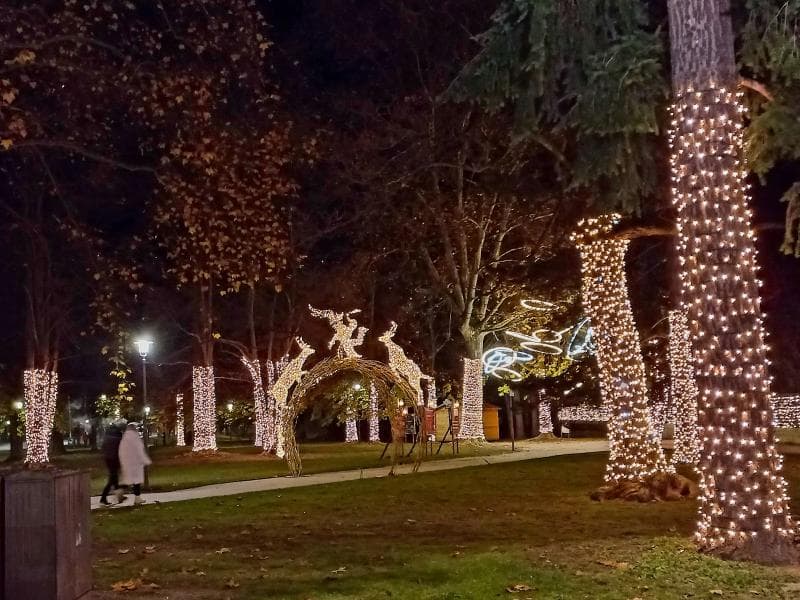
Maria-Theresien-Strasse holds countless stories within its ancient stones. Imagine it as a bustling passage for travelers centuries ago, crossing from Italy towards Germany, with a thick wall once separating it from the Old Town. Today, its character is often described as a 'never-ending carnival,' alive with street musicians, vibrant cafes spilling onto sidewalks, and a palpable sense of festivity. Almost every Austrian names it as their favorite shopping destination, drawn to its diverse array of international brands and local boutiques. The street's status as a protected historical monument since 2006 ensures its magnificent character is preserved for generations to come. During the winter months, Maria-Theresien-Strasse transforms into a magical wonderland, hosting one of Innsbruck's cherished Christmas markets, adorned with lights and festive stalls. Although not directly on Maria-Theresien-Strasse, a short walk will lead you to the Golden Roof (Goldenes Dachl) in the adjacent Old Town, a landmark often associated with the area, gleaming with its 2,657 fire-gilded copper tiles commissioned by Emperor Maximilian I.
Visitor Perspective
For any curious traveler, Maria-Theresien-Strasse offers a captivating experience. It's a place where you can easily spend an hour or two, simply absorbing the atmosphere. Whether you're interested in shopping for souvenirs or high fashion, enjoying a coffee at a sidewalk cafe, or indulging in some delicious ice cream, the street caters to all. The magnificent architecture invites you to gaze upwards, admiring the intricate details of centuries-old facades and the numerous ornate oriel windows. For those with a keen eye, looking north reveals the stunning silhouette of the Nordkette mountains, while to the south, the distinctive peak of the Serles mountain provides another majestic view. The blend of a lively urban environment with the dramatic Alpine backdrop makes for unforgettable photographic opportunities. Walking down Maria-Theresien-Strasse is to tread in the footsteps of nobles and emperors, experiencing a living piece of Austrian heritage that continues to evolve while honoring its past.
Coordinates: 11.394465, 47.265426
View on Google Maps💬 How Travelers Describe This Place
Based on community votes
Photogenic
980Unique
963Beautiful
663Must See
503Interesting
201
Traveler Stories
Discover memorable experiences shared by travelers who have visited this place.
No traveler stories yet.
Be the first traveler to share what made this place memorable.
Things to see at Maria-Theresien-Strasse



Tour
By
Spot
Discover amazing places around the world. Your journey starts here.
Explore
© 2026 TourBySpot. All rights reserved.