Triumphal Arch
Innsbruck, Austria
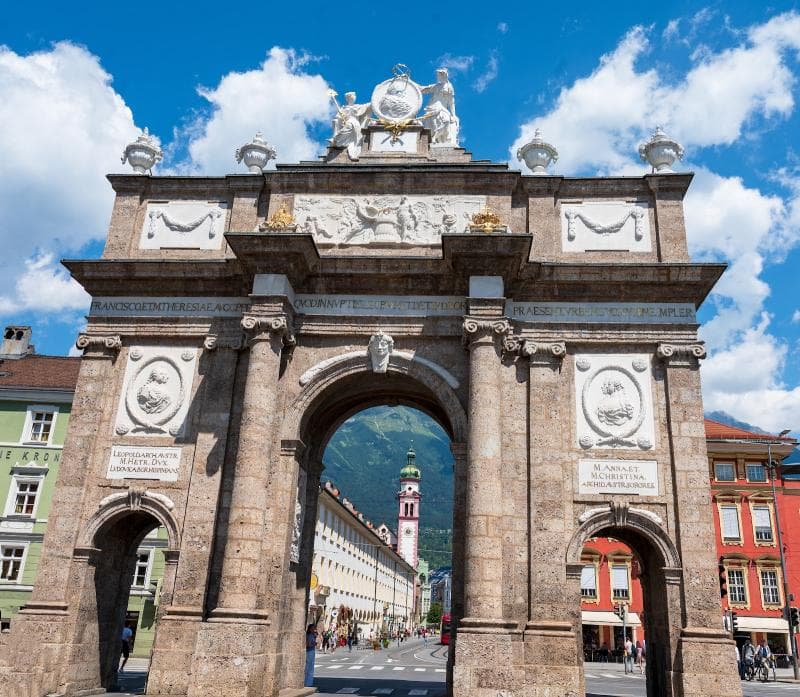
Discover Innsbruck's Triumphal Arch on Maria-Theresien-Strasse, a unique 18th-century monument in Austria symbolizing both royal wedding joy and imperial grief.
Overview
At the bustling southern end of Maria-Theresien-Strasse in Innsbruck, Austria, stands the magnificent Triumphal Arch, a monument steeped in history and poignant emotion. Erected in 1765 under the command of Empress Maria Theresa, this impressive structure serves not as a symbol of military conquest, but rather as a unique testament to both profound joy and deep sorrow within the imperial Habsburg family. Its central location makes it an unmissable landmark for anyone exploring the heart of Innsbruck, seamlessly connecting the old town with the newer parts of the city.
History & Cultural Background
The Triumphal Arch was commissioned in 1765 to commemorate a joyous occasion: the wedding of Empress Maria Theresa's son, Archduke Leopold (later Emperor Leopold II), to the Spanish Princess Maria Luisa. Innsbruck was chosen as the festive location, undergoing significant preparations, including street repairs and improved lighting, to host the grand celebrations. However, tragedy struck just days after the wedding when Emperor Francis I Stephen, Maria Theresa's beloved husband, unexpectedly passed away in Innsbruck. This sudden death dramatically altered the monument's purpose. Empress Maria Theresa, in her grief, ordered the arch to be transformed into a dual memorial. While one side would celebrate the happy union, the other would express the empire's mourning for her late husband.
The arch was constructed using ashlar blocks from the demolished city gates that once stood at the southern entrance of Innsbruck. Initially, sculptor Johann Baptist Hagenauer created stucco reliefs for the arch. However, in 1774, these were replaced with more durable and artistic marble sculptures by Balthasar Moll, which still adorn the arch today.
What Makes It Special
What truly sets Innsbruck's Triumphal Arch apart from its counterparts across Europe is its singular duality. Unlike most triumphal arches that celebrate military victories or singular triumphs, this monument is a striking representation of conflicting emotions—joy and sorrow, celebration and mourning—etched into stone. On its southern face, visitors can admire reliefs depicting the wedding festivities of Archduke Leopold and Maria Luisa, brimming with symbols of jubilation and imperial grandeur. In stark contrast, the northern face is dedicated to the memory of Emperor Francis I Stephen, adorned with somber motifs of grief and loss, such as funeral urns and draped figures. This profound architectural juxtaposition makes the Triumphal Arch a unique 'stone diary' of a pivotal moment in Habsburg history, eloquently capturing the fragility of happiness and the weight of imperial responsibility.
Stories, Fun Facts & Local Details
The story of the Triumphal Arch is intertwined with the personal anguish of Empress Maria Theresa. It is said that she was so devastated by her husband's death that she thereafter wore mourning clothes for the rest of her life. The rapid transformation of the arch's design, from a purely celebratory structure to one incorporating deep mourning, speaks volumes about her immediate and profound grief. The use of local Höttinger Breccia stone, sourced from the former city gates, is another interesting detail, highlighting a practical approach to construction while imbuing the monument with a deeper connection to Innsbruck's urban fabric. The arch stands as a physical gateway, marking the historical transition point where the old medieval city ended and the road led out into the wider world, adding to its symbolic significance within the urban landscape.
Visitor Perspective
Visiting the Triumphal Arch in Innsbruck is a straightforward and rewarding experience for any traveler. Located prominently at the end of Maria-Theresien-Strasse, it is easily accessible on foot from most central accommodations and other major attractions. As a public, open-air monument, it is freely accessible 24 hours a day, year-round, requiring no tickets or special entry. While it may not require an extended visit, taking the time to observe both its southern and northern facades allows for a full appreciation of its unique dual symbolism. Early mornings are often recommended for clearer photographs and a more peaceful experience, away from the bustling traffic that surrounds it during the day. It serves as a beautiful backdrop for photos and a thoughtful moment of reflection on Innsbruck's rich imperial past, offering a tangible link to a powerful human story carved in stone.
Coordinates: 11.393439, 47.262506
View on Google Maps💬 How Travelers Describe This Place
Based on community votes
Beautiful
944Unique
638Photogenic
409Must See
396Interesting
363
Traveler Stories
Discover memorable experiences shared by travelers who have visited this place.
No traveler stories yet.
Be the first traveler to share what made this place memorable.

Tour
By
Spot
Discover amazing places around the world. Your journey starts here.
Explore
© 2026 TourBySpot. All rights reserved.