St. Anne’s Column
Innsbruck, Austria
Discover St. Anne's Column, a historic Baroque monument on Maria-Theresien-Strasse in Innsbruck, Austria, commemorating a 1703 Tyrolean victory.
Overview
Standing proudly in the heart of Innsbruck, on the bustling Maria-Theresien-Strasse, St. Anne’s Column, known locally as Annasäule, is an unmissable landmark. This majestic monument, crafted from striking red Kramsach marble, serves as a central meeting point and a captivating piece of the city's rich history. It draws the eye with its elegant Baroque design and offers a compelling focal point amidst the vibrant urban landscape.
Erected in the early 18th century, the column is not merely an architectural adornment but a profound symbol of Tyrolean pride and resilience. Its intricate sculptures and commanding presence invite visitors to pause and delve into the narratives etched into its stone, revealing tales of historical defiance and deep-seated faith.
History & Cultural Background
The story of St. Anne’s Column begins in 1703, a pivotal year for Tyrol during the War of the Spanish Succession. On July 26th, the feast day of Saint Anne, Tyrolean forces achieved a significant victory, successfully repelling invading Bavarian troops in an event known as the 'Bavarian Rummel.'
In a profound act of gratitude and remembrance, the provincial estates of Tyrol vowed to erect a monument. The esteemed sculptor Cristoforo Benedetti from Trento was commissioned for the task, and the column was ultimately consecrated on July 26, 1706.
Interestingly, the column carries a delightful 'name mystery.' While dedicated to St. Anne due to the significant date of the victory, the statue crowning the column is actually the Virgin Mary, depicted as the 'Woman of the Apocalypse,' standing on a crescent moon. Originally conceived as a Marian column, the strong association with St. Anne's Day led to its enduring popular name.
What Makes It Special
St. Anne’s Column is a masterpiece of Tyrolean Baroque art. The column itself, rising to a height of 13 meters (42 feet), is fashioned from distinctive red Kramsach marble, giving it a warm tone that contrasts with many other monuments in the region.
At its summit stands the golden statue of the Virgin Mary. Below, at the base of the column, are four larger-than-life statues of saints, each strategically placed to represent the regional and spiritual identity of the time. These include St. Anne, the mother of the Virgin Mary and the monument's namesake; St. George, the dragon-slayer and patron saint of Tyrol; St. Cassian, patron of the former Diocese of Brixen; and St. Vigilius, patron of the former Diocese of Trento. These figures collectively symbolize the regional and ecclesiastical affiliations of Tyrol during that period.
An insider detail for visitors is that the statues seen today on the column are replicas. The original statue of the Virgin Mary was moved to the Abbey of Fiecht near Schwaz in 1958 for preservation, and the original figures of the saints from the base are housed in the Altes Landhaus in Innsbruck, allowing for their continued protection and appreciation indoors.
Stories, Fun Facts & Local Details
The column stands as a permanent testament to a deeply felt moment of deliverance for the Tyrolean people. The 'Bavarian Rummel' represented a time of great challenge, and the successful repulsion of the invaders on St. Anne's Day instilled a lasting sense of divine intervention and gratitude. This historical context imbues the column with a powerful narrative of resilience and collective identity.
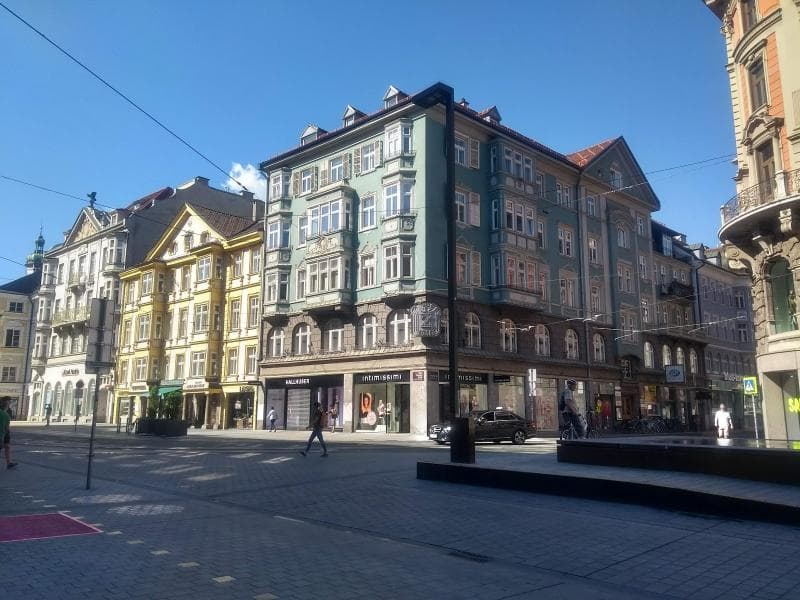
Today, St. Anne's Column is celebrated as one of Innsbruck's most popular photo spots. Standing to the south of the column and looking north offers a breathtaking panorama: the red marble column and its golden statue in the foreground, framed by the colorful historic facades of the Old Town, with the majestic, often snow-capped peaks of the Nordkette mountains towering dramatically in the background.
Beyond its historical and aesthetic value, the area around the column pulsates with urban life. In warmer months, locals and visitors alike gather on its steps, enjoying gelato and the Mediterranean-like atmosphere of the city center. During winter, it transforms into a picturesque centerpiece of the Innsbruck Christmas Market, enveloped in festive lights and the aromas of mulled wine, showcasing its seamless integration into the city's seasonal rhythms.
Visitor Perspective
St. Anne's Column is an easily accessible and welcoming attraction in Innsbruck. Located within the pedestrian zone of Maria-Theresien-Strasse, it is open 24/7 and free to visit, making it a convenient stop on any itinerary.
Visitors are encouraged to take their time to admire the intricate details of the column and its sculptures, reflecting on the profound history it commemorates. Its central location means it's surrounded by numerous boutiques, cafes, and other historical sites, offering a perfect opportunity for a leisurely stroll. The column serves as an excellent starting point for exploring the rest of Innsbruck's charming Old Town and appreciating the vibrant atmosphere of its main street.
Coordinates: 11.39417, 47.26556
View on Google Maps💬 How Travelers Describe This Place
Based on community votes
Beautiful
980Photogenic
396Unique
389Interesting
340Must See
201
Traveler Stories
Discover memorable experiences shared by travelers who have visited this place.
No traveler stories yet.
Be the first traveler to share what made this place memorable.

Tour
By
Spot
Discover amazing places around the world. Your journey starts here.
Explore
© 2026 TourBySpot. All rights reserved.