Landungsbrücken Hamburg
Hamburg, Germany
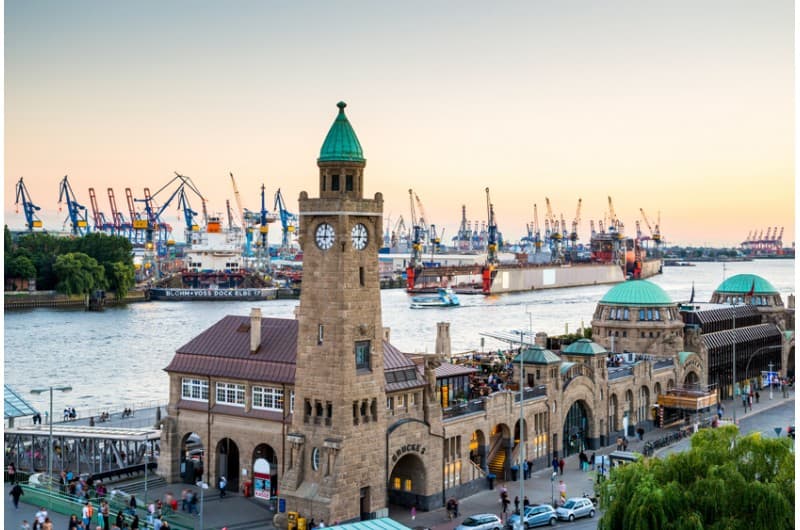
Explore Landungsbrücken Hamburg, Germany's iconic waterfront. Discover its rich maritime history, bustling port, historic architecture, and vibrant atmosphere.
Overview
Landungsbrücken, often referred to as St. Pauli Landungsbrücken, is a quintessential emblem of Hamburg, Germany’s vibrant maritime spirit. Nestled on the banks of the Elbe River, this sprawling waterfront complex is the beating heart of the city’s bustling harbor life and a major tourist magnet. Here, history and modernity converge, creating a lively crossroads where travelers and locals alike gather to watch ships, embark on harbor adventures, and soak in the unique Hanseatic flair. Stretching approximately 700 meters, the floating pontoons that define Landungsbrücken serve as central departure points for ferries, harbor tours, and passenger ships, making it an indispensable transport hub. It offers an unparalleled glimpse into Hamburg’s deep connection with the sea.
History & Cultural Background
The story of Landungsbrücken is intricately woven with Hamburg’s evolution as a global port city. Its origins trace back to 1839 when the first pier was constructed, primarily for safely loading and unloading coal steamers, keeping potential fire hazards away from residential areas. The grand terminal building, an architectural marvel of tuff stone, was erected between 1907 and 1909. This impressive structure, with its distinctive green-domed towers, was originally a sophisticated landing stage for passenger steamers embarking on overseas voyages, including the famed HAPAG liners.
Significantly damaged during the Second World War, its importance led to comprehensive reconstruction between 1953 and 1955, giving it much of its present-day appearance. Since September 15, 2003, the Landungsbrücken building has been recognized as a legally-protected listed monument, underscoring its cultural and historical significance. This enduring landmark stands as a testament to Hamburg's resilience and its continuous role as a 'Gateway to the World'.
What Makes It Special
Landungsbrücken distinguishes itself through a unique blend of architectural grandeur, historical resonance, and its dynamic role as a maritime nerve center. The 205-meter-long terminal building, with its striking green copper roofs and prominent clock tower, is an architectural gem reflecting Hamburg's industrial might and connection to the sea. A fascinating feature is the tall tower at the eastern end, displaying not only the time but also the Elbe River’s water level, with a bell ringing every half-hour.
As a pivotal transportation hub, Landungsbrücken provides easy access to an array of Hamburg's renowned attractions. Visitors can embark on harbor tours past the historic Speicherstadt, modern HafenCity, and impressive container ships. It serves as a departure point for public ferries, such as the popular Line 62, offering an affordable and scenic harbor tour past landmarks like the Fischmarkt. Landungsbrücken is also the gateway to the historic Old Elbe Tunnel, an engineering marvel from 1911, and the mooring site for museum ships like the majestic Cap San Diego and Rickmer Rickmers.
Stories, Fun Facts & Local Details
The vibrant character of Landungsbrücken is enriched by countless stories and local quirks. A favorite tip among locals is to take public ferry Line 62. Operating as part of Hamburg’s public transport system, it offers an incredible, inexpensive 'self-guided harbor tour' that showcases the city's maritime panorama.
The iconic clock tower (often called Pegelturm) is more than just a timepiece; its display of the Elbe’s water level is a practical detail reflecting the tidal nature of the river, a constant reminder of the harbor’s ebb and flow. A visit here would be incomplete without sampling a traditional 'Fischbrötchen' – a fresh fish sandwich from one of the many stalls along the waterfront. These simple yet delicious culinary treats are a true taste of Hamburg's port culture.
Historically, Landungsbrücken served as a poignant departure point for millions of emigrants seeking new lives in the New World during the 19th and early 20th centuries. Situated near the lively St. Pauli district and the famous Reeperbahn, Landungsbrücken acts as a cultural crossroads, where the historical grandeur of the port meets the energetic pulse of modern urban life. Local pride means Hamburg residents often refer to their subway system as 'Hochbahn' (elevated railway) rather than 'U-Bahn' (underground railway), a nod to its original above-ground construction.
Visitor Perspective
For a curious traveler, Landungsbrücken offers an immersive experience into Hamburg’s soul. Strolling along the floating jetties, you'll be enveloped by a lively atmosphere, complete with street performers, diverse shops, and inviting aromas from numerous seafood restaurants. It's a place where you can easily spend hours simply watching the parade of ships – from historic launches to modern container giants – navigate the busy Elbe.
The area serves as an ideal starting point for exploring many adjacent attractions. Beyond ferry tours, the nearby Old Elbe Tunnel invites a unique underground stroll, while the museum ships Cap San Diego and Rickmer Rickmers offer fascinating maritime insights. For an unforgettable vista, consider visiting early morning when the harbor awakens or at sunset, when waterfront lights illuminate the scene. Landungsbrücken is not just a destination; it's an embarkation point for discovering the multifaceted charm of Hamburg.
Coordinates: 9.96667, 53.54611
View on Google Maps💬 How Travelers Describe This Place
Based on community votes
Photogenic
996Must See
953Beautiful
658Interesting
585Unique
69
Traveler Stories
Discover memorable experiences shared by travelers who have visited this place.
No traveler stories yet.
Be the first traveler to share what made this place memorable.
Things to see at Landungsbrücken Hamburg



Tour
By
Spot
Discover amazing places around the world. Your journey starts here.
Explore
© 2026 TourBySpot. All rights reserved.