Ferry Terminals
Hamburg, Germany
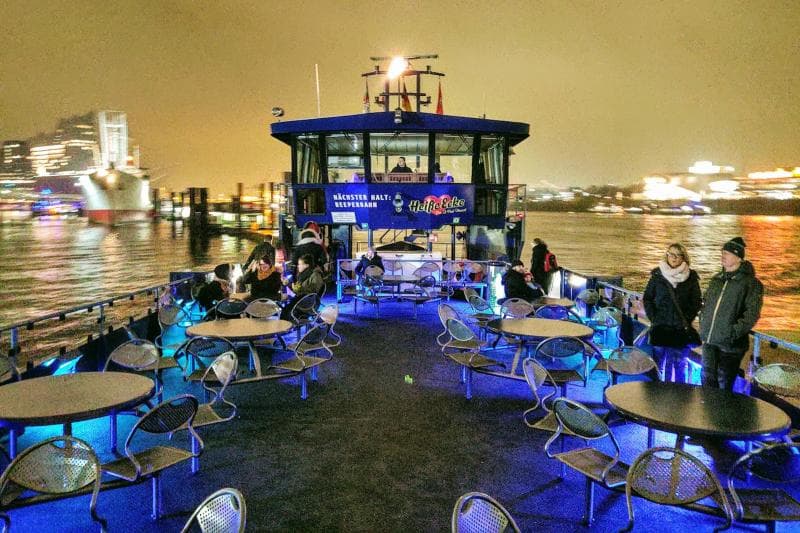
Explore Landungsbrücken Hamburg Ferry Terminals, a vibrant hub in Hamburg, Germany, offering historic charm, Elbe views, and essential transport.
Overview
The Ferry Terminals at Landungsbrücken, also known as St. Pauli Piers, form Hamburg, Germany's vibrant maritime heart. This bustling stretch along the Elbe River is both a crucial transportation hub and a major tourist magnet, attracting visitors with its unique blend of history and contemporary port activity. Stretching approximately 688 to 700 meters, the Landungsbrücken is not a solid pier but a floating pontoon system, ingeniously designed to adapt to the Elbe's significant tidal changes. It serves as the primary departure point for a variety of vessels, including popular harbor cruises, public ferries (like HADAG lines 61, 62, 72, 73, and 75), and passenger ships heading to destinations further afield. The iconic terminal building, a striking structure crafted from volcanic tuff stone, extends for 205 meters and is flanked by two distinctive towers topped with green domes. Numerous movable walkways connect this mainland structure to the floating piers, guiding travelers to their respective embarkation points. Situated in the lively St. Pauli quarter, between the historic lower harbor and the famous Fish Market, the Landungsbrücken offers unparalleled views and an authentic Hamburg experience.
History & Cultural Background
The story of the Landungsbrücken dates back to 1839, when the very first pier was constructed. Its initial purpose was to serve as a safe landing stage for steamships, providing a necessary distance from the city's densely packed buildings due to the inherent fire risk posed by their coal fuel. The present-day terminal building and the associated piers were meticulously built between 1907 and 1909. Designed by the architects Raabe & Wöhlecke, with architectural sculptures by Arthur Bock, the complex was envisioned as a grand, representative shipping station. It was a significant gateway for passenger steamers embarking on overseas voyages, including the impressive HAPAG liners. Tragically, much of the original structure was destroyed during the Second World War. However, its importance to Hamburg's maritime identity led to extensive reconstruction, with the floating piers rebuilt between 1953 and 1955. Recognizing its profound historical and architectural value, the entire complex was officially classified as a historical monument on September 15, 2003. Today, the Landungsbrücken stands as a living testament to Hamburg's enduring maritime heritage, its resilience, and its deep-rooted connection to the wider world. The surrounding St. Pauli area also boasts a rich history, with its origins tracing back to the early 17th century when it was known as 'Hamburger Berg'.
What Makes It Special
What truly sets the Landungsbrücken Ferry Terminals apart is their multifaceted role as the beating heart of Hamburg's harbor, a place that vividly encapsulates the city's dynamic spirit and robust connection to the sea. This location offers breathtaking panoramic views of the entire Port of Hamburg, a spectacle that captivates visitors at any time of day. A distinctive feature is the tall clock tower located at the eastern end of the complex, which not only tells the time but also ingeniously displays the current water level of the Elbe River, a crucial detail given the tidal nature of the port. A ship's bell chimes every half-hour, adding to the authentic maritime ambiance. The Landungsbrücken serves as a convenient access point to many of Hamburg's other renowned attractions. From here, visitors can easily reach the historic Old Elbe Tunnel, marvel at the museum ships like the 'Rickmer Rickmers' and 'Cap San Diego', or take a short ferry ride to the architectural masterpiece, the Elbphilharmonie. For those seeking an immersive, yet affordable, experience, public ferry line 62 operates as a scenic harbor tour, with the journey even included in a standard HVV day pass or the Hamburg CARD. The very design of the piers, with their floating pontoons, is a marvel of engineering, allowing the entire facility to gracefully rise and fall with the Elbe's tides, a constant reminder of the river's powerful influence. Beyond its practical functions, the Landungsbrücken functions as a vibrant cultural crossroads, where diverse people converge, mingle, and experience the pulse of Hamburg.
Stories, Fun Facts & Local Details
Locals often affectionately refer to the Landungsbrücken as the 'Pearl of Hamburg,' a testament to its enduring charm and significance. A unique aspect of visiting is observing the Elbe's tides in action; at low tide, one literally descends towards the ships, while during extreme high tide, a gentle ascent is required to board. Just a stone's throw away lies the Old Elbe Tunnel, an engineering marvel completed in 1911, which still connects central Hamburg with the docks on the southern bank of the Elbe. Another fascinating piece of infrastructure nearby is the 'Stammsiel,' one of Hamburg's oldest and largest sewerage systems, initially designed by William Lindley in 1842. No visit to Landungsbrücken is complete without indulging in a traditional 'Fischbrötchen' – a freshly prepared fish sandwich – readily available from the numerous waterfront stalls, particularly at famous spots like Brücke 10. The elevated railway station at Landungsbrücken, serving the U3 line, is widely regarded as one of Germany's most beautiful, offering stunning views as trains arrive and depart. Furthermore, the Landungsbrücken is the starting point for special shuttle ferries that transport theater-goers across the river to performances, such as the popular 'Lion King' musical. These details, from its practical tidal adaptations to its culinary delights and historic engineering, paint a picture of a place deeply interwoven with Hamburg's identity.
Visitor Perspective
For any curious traveler, stepping onto the Landungsbrücken offers an immediate immersion into a vibrant and energetic atmosphere. It is a place where Hamburg truly comes alive, a bustling stretch of waterfront that pulsates with the rhythm of the city and its harbor. Here, one can witness the ceaseless activity of ferries and ships gliding in and out, observing everything from robust container ships to elegant cruise liners making their way along the Elbe. This constant motion creates a compelling tableau, allowing visitors to feel the pulse of Hamburg's maritime heritage harmoniously blending with modern urban life. The Landungsbrücken is an ideal location for photography enthusiasts, offering countless opportunities to capture panoramic vistas of the port and the striking city skyline, particularly as the day transitions to evening. As dusk falls, the area transforms, with the lamps along the bridges illuminating the waters, creating an unforgettable and romantic scene. Beyond the visual spectacle, the Landungsbrücken provides a sensory feast, with the invigorating scent of the sea air and the lively sounds of the harbor. The area is also well-equipped to cater to visitors, boasting a colorful array of restaurants, cafes, and shops where one can relax, dine, and soak in the unique ambiance. It is a place where the past and present seamlessly coexist, offering a tangible connection to Hamburg's storied history as a global port city.
Coordinates: 9.96667, 53.54611
View on Google Maps💬 How Travelers Describe This Place
Based on community votes
Unique
791Interesting
514Beautiful
457Must See
252Photogenic
207
Traveler Stories
Discover memorable experiences shared by travelers who have visited this place.
No traveler stories yet.
Be the first traveler to share what made this place memorable.

Tour
By
Spot
Discover amazing places around the world. Your journey starts here.
Explore
© 2026 TourBySpot. All rights reserved.