High Line
New York, United States
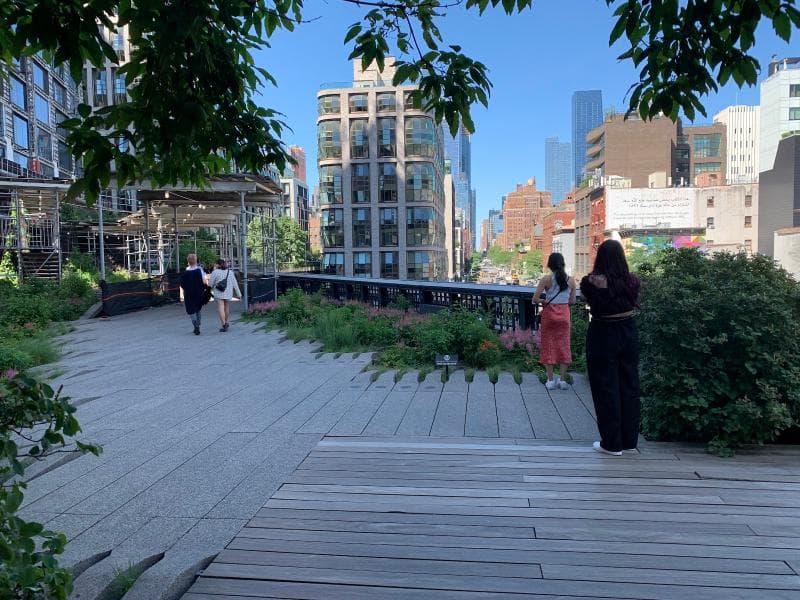
%3Aformat(webp)%2Fcdn.vox-cdn.com%2Fuploads%2Fchorus_image%2Fimage%2F63748975%2FHighline_Guide_Max_Touhey_20190416_0082.0.jpg&w=3840&q=75)
Explore New York City's High Line, an elevated park transformed from historic railway tracks. Discover its unique design, history, and urban views in the United States.
Overview
The High Line is a distinctive urban park in New York City, United States, ingeniously repurposed from an elevated railway line. This 1.45-mile (2.33 km) linear park gracefully winds through Manhattan's West Side, offering a unique blend of nature, art, and urban design. Stretching from Gansevoort Street in the Meatpacking District to West 34th Street, it provides a verdant pathway above the bustling streets, connecting neighborhoods and offering visitors an unparalleled perspective of the city's dynamic landscape.
Once a vital freight rail line, the High Line has been transformed into a celebrated public space, characterized by its innovative design and its thoughtful integration into the urban fabric. It opened in phases, with the first section welcoming visitors in 2009, followed by further extensions in 2011, 2014, and the Moynihan Connector in 2023, continually expanding its reach and accessibility.
History & Cultural Background
The story of the High Line begins in the mid-19th century with street-level railway tracks along Manhattan's West Side. These tracks, operated by the New York Central Railroad, transported goods but were notoriously dangerous, leading to so many accidents that Tenth Avenue earned the grim nickname 'Death Avenue'. To address this peril, the elevated structure was constructed as part of the massive West Side Improvement Project, opening in 1934. This elevated line allowed freight trains, carrying everything from meat and produce to factory goods, to traverse the city safely, often cutting directly through buildings and warehouses.
However, with the rise of interstate trucking, the need for the High Line declined from the 1960s onwards, and the last train rolled along its tracks in 1980. The railway fell into disuse, and nature began to reclaim the abandoned structure, with wild grasses and plants spontaneously growing along the tracks. In 1999, two local residents, Joshua David and Robert Hammond, founded 'Friends of the High Line' with a vision to save the deteriorating structure from demolition and transform it into a public park, drawing inspiration from Paris's Promenade Plantée. Their tireless advocacy, coupled with public support, led to the development of the park, designed by James Corner Field Operations, Diller Scofidio + Renfro, and planting designer Piet Oudolf. Their design intentionally preserved the essence of this unexpected wild landscape that had flourished over two decades of abandonment.
What Makes It Special
The High Line is celebrated globally for its innovative approach to urban renewal, seamlessly blending industrial heritage with contemporary landscape design. It embodies a concept known as 'agri-tecture'—a thoughtful fusion of agriculture and architecture—which preserves the memory of its railway past while creating a vibrant public greenspace. As visitors stroll along, they are treated to spectacular panoramic views of the city skyline, the Hudson River, and the surrounding neighborhoods.
The park's planting scheme is a deliberate nod to the wild, spontaneous flora that colonized the tracks after abandonment, featuring a diverse array of native species. Integrated into its design are various architectural features, such as the 'Viewing Spur,' an observation area with bleacher-like seating, and the unique 10th Avenue Overlook amphitheater, providing distinct vantage points and spaces for reflection. Beyond its natural beauty and design ingenuity, the High Line also serves as an open-air gallery, showcasing rotating public art installations and hosting performances, enriching the cultural experience for all who visit. Its success as a model of adaptive reuse has inspired cities worldwide to transform their own obsolete infrastructure into dynamic public spaces.
Stories, Fun Facts & Local Details
Before the elevated High Line existed, the dangerous street-level trains on 10th Avenue were preceded by 'West Side cowboys' on horseback, waving flags to warn pedestrians of oncoming freight. This vivid historical detail underscores the necessity for the elevated railway that eventually became the park. Interestingly, the High Line is recognized as the first public park in the United States to be built on an elevated rail line. A delicious piece of local history tied to the High Line is that the Oreo cookie was invented in the National Biscuit Company factory, now known as Chelsea Market, which once received flour deliveries via trains on this very railway.
The park's design thoughtfully incorporates remnants of its past; for instance, some of the famous movable chaise lounge chairs on the Sundeck are uniquely installed directly onto the original rail tracks, inviting visitors to engage with the park's history. The profound transformation of the High Line from a derelict structure into a beloved public space has had a significant impact on the surrounding neighborhoods, spurring considerable real estate development and reshaping the urban landscape. Today, this 'park in the sky' draws millions of visitors annually, surpassing the visitation numbers of some of New York's more traditional landmarks.
Visitor Perspective
A walk along the High Line offers a captivating journey through Manhattan's West Side. The entire 1.45-mile length can be traversed in approximately 30 to 40 minutes if walking continuously, but most visitors prefer to take a leisurely 1.5 to 2 hours to fully appreciate its unique features. The park is easily accessible via numerous entry points, including stairs and elevators at various intersections, and ramp access at locations like West 34th Street and 30th Street Hudson Yards. Restrooms are conveniently located at the Gansevoort Street and 16th Street access points.
Many suggest starting your exploration at the southern end, Gansevoort Street, and walking north towards Hudson Yards. This route provides a fascinating visual narrative as the scenery gradually shifts from the historic, low-rise buildings of the Meatpacking District to the modern skyscrapers of Hudson Yards, offering ever-changing views and architectural contrasts. Along the way, visitors can enjoy diverse plant life, seasonal food vendors, and various seating areas designed for relaxation and contemplation. It's important to remember a few park rules to ensure a pleasant visit for everyone: dogs (except service animals) are not permitted, picking flowers is prohibited, and walking on most grass areas is not allowed. The High Line provides an unparalleled 'elevated getaway,' a peaceful respite from the city's ground-level energy, fostering a sense of calm and connection with the urban environment.
Coordinates: -74.005, 40.7483
View on Google Maps💬 How Travelers Describe This Place
Based on community votes
Photogenic
556Must See
422Beautiful
394Unique
269Interesting
145
Traveler Stories
Discover memorable experiences shared by travelers who have visited this place.
No traveler stories yet.
Be the first traveler to share what made this place memorable.
Things to see at High Line



Tour
By
Spot
Discover amazing places around the world. Your journey starts here.
Explore
© 2026 TourBySpot. All rights reserved.