Golden Gate Bridge
San Francisco, United States
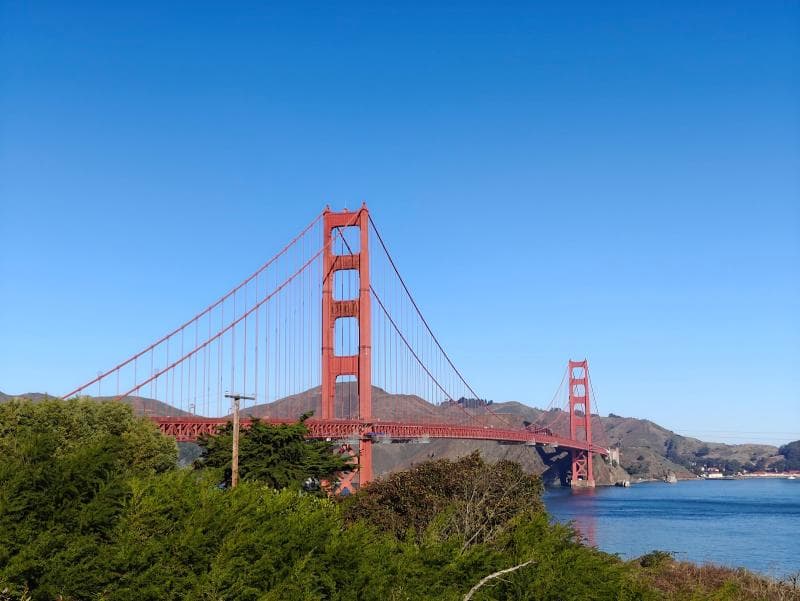
Explore the iconic Golden Gate Bridge in San Francisco, United States. Discover its history, unique International Orange color, and engineering marvel.
Overview
The Golden Gate Bridge, an internationally recognized symbol of San Francisco and California, is a monumental suspension bridge linking the city of San Francisco on the northern tip of the San Francisco Peninsula to Marin County. Spanning the Golden Gate Strait, a mile-wide channel connecting San Francisco Bay to the Pacific Ocean, this iconic structure carries U.S. Route 101 and California State Route 1, alongside dedicated pathways for pedestrian and bicycle traffic.
Completed in 1937, it was once celebrated as both the longest and tallest suspension bridge in the world, a testament to human ingenuity and determination during the challenging era of the Great Depression. Its striking Art Deco design and distinctive 'International Orange' hue make it instantly recognizable and a beloved landmark, attracting millions of visitors annually.
History & Cultural Background
The idea of a bridge across the Golden Gate Strait gained momentum in the early 20th century, with significant planning beginning around 1919. Joseph Strauss, a Chicago engineer, became the chief engineer for the project, although the final design evolved with crucial contributions from consulting engineers like Leon Moisseiff and Charles Ellis, and consulting architect Irving Morrow.
Construction officially commenced on January 5, 1933, amidst skepticism and immense physical challenges posed by the strait's strong tides, frequent storms, and dense fog. Despite the Great Depression, the project was financed through a $35 million bond, supported by local citizens who used their homes and businesses as collateral. After more than four years of intensive labor, the bridge opened to pedestrians on May 27, 1937, and to vehicular traffic the following day. Its completion was not only an engineering triumph but also a powerful symbol of American resolve and progress.
What Makes It Special
What truly sets the Golden Gate Bridge apart is a combination of its innovative engineering, architectural elegance, and iconic color. At the time of its opening, its 4,200-foot main span was the longest in the world, a record it held for over 25 years. The bridge's towers rise an impressive 746 feet above the water, supporting main cables made of 27,572 strands of wire each, enough to circle the Earth over three times if unwound.
Perhaps its most distinctive feature is its 'International Orange' color. Initially, the steel was coated with a red lead primer, and consulting architect Irving Morrow noticed how well this reddish-orange hue complemented the natural surroundings and stood out against the frequent fog. He advocated for this color over traditional gray or black, making the bridge not only aesthetically pleasing but also highly visible to ships, thus enhancing safety. The American Society of Civil Engineers recognizes it as one of the Wonders of the Modern World.
Stories, Fun Facts & Local Details
The construction of the Golden Gate Bridge was a perilous undertaking. A safety net installed beneath the bridge saved the lives of 19 workers who fell, leading them to be known as the 'Half-Way-to-Hell Club.' Tragically, 11 lives were still lost during its construction. The name 'Golden Gate' refers to the strait it crosses, named in 1846, long before the bridge's construction, and not to the bridge's color.
The bridge requires constant maintenance, including ongoing repainting, due to the corrosive effects of the wind, salt air, and fog. On its 50th anniversary in 1987, an estimated 800,000 people crossed the bridge on foot, far exceeding expectations and causing the bridge to flatten at its arch.
Visitor Perspective
Millions visit the Golden Gate Bridge each year to marvel at its grandeur. The Golden Gate Bridge Welcome Center, located on the south side, offers exhibits detailing its history, and sells souvenirs. Visitors can walk or bike across the 1.7-mile span, enjoying breathtaking views of the Pacific Ocean, San Francisco Bay, and the city skyline. There are vista points on both the north and south sides offering prime photographic opportunities. Free walking tours are also available, providing deeper insights into the bridge's construction and history. Due to limited parking, public transit or guided tours are often recommended for accessing the bridge's viewing areas.
Coordinates: -122.4783, 37.8199
View on Google Maps💬 How Travelers Describe This Place
Based on community votes
Photogenic
996Must See
953Beautiful
658Interesting
585Unique
69
Traveler Stories
Discover memorable experiences shared by travelers who have visited this place.
No traveler stories yet.
Be the first traveler to share what made this place memorable.
Things to see at Golden Gate Bridge



Tour
By
Spot
Discover amazing places around the world. Your journey starts here.
Explore
© 2026 TourBySpot. All rights reserved.