Getreidegasse
Salzburg, Austria
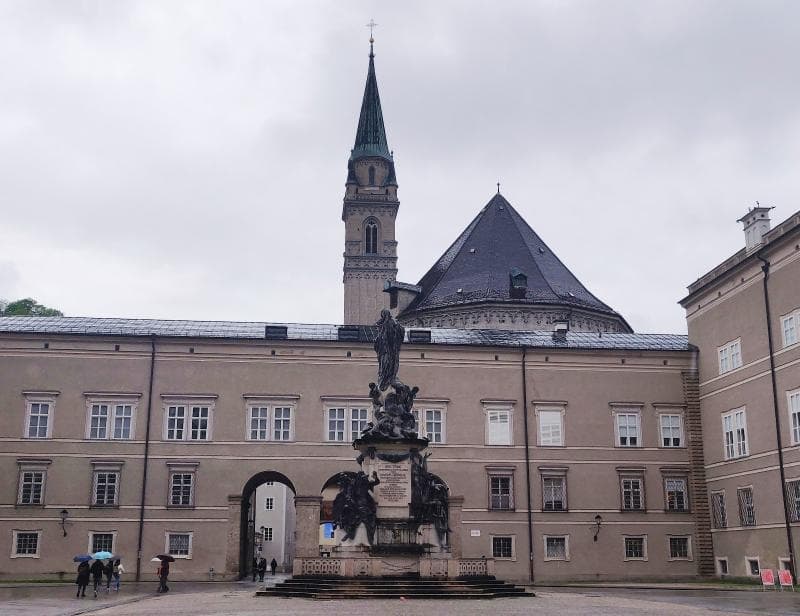
Explore Getreidegasse, Salzburg, Austria's iconic street. Discover Mozart's birthplace, unique wrought-iron signs, and historic passageways.
Overview
The Getreidegasse, often translated as 'Grain Lane,' stands as the vibrant and historic heart of Salzburg's Old Town, a district recognized as a UNESCO World Heritage Site. This bustling street is renowned for its distinctive charm, unique architecture, and as the birthplace of Wolfgang Amadeus Mozart. Nestled between the Mönchsberg mountain and the Salzach River, the Getreidegasse is a picturesque pedestrian zone, inviting visitors to wander through its narrow confines and soak in centuries of history.
Today, it serves as a premier shopping destination, blending international fashion chains with traditional local boutiques, alongside cozy cafes and historic inns. The street's characteristic high, narrow townhouses, adorned with elaborate wrought-iron guild signs, create an unforgettable visual experience.
History & Cultural Background
The history of Getreidegasse stretches back to Roman times when it was a vital trade route connecting Salzburg (then known as Iuvavum) to Bavaria. First documented around 1150 as 'Trabegasse,' derived from 'traben' meaning 'to trot' or 'to hurry,' its original name likely referred to the bustling pace of merchants passing through before the city gates closed. Over centuries, the name evolved through various forms like 'Trav,' 'Traid,' until it became 'Getreidegasse.'
By the 14th century, the street's economic importance soared when prince-archbishops granted staple rights, requiring foreign merchants to display their goods here for days before moving on. This made Getreidegasse a hub for goods like wine, textiles, and spices. Consequently, it became a favored residential area for Salzburg's patricians, public officials, and wealthy merchants, leading to the construction of the tall, narrow townhouses that define its appearance today. These buildings often contain elements from different architectural periods, reflecting continuous adaptation and transformation over time.
What Makes It Special
What truly sets Getreidegasse apart is its captivating visual appeal and unique architectural features. The most iconic are the intricately crafted wrought-iron guild signs that hang above shop windows. In an era before widespread literacy, these signs served as practical advertisements, clearly indicating the trade or craft practiced within each building. Even modern international brands adhere to this tradition, showcasing their logos in the historic, decorative style.
Another distinctive feature is the network of 'Durchhäuser' – picturesque passageways and inner courtyards that cut through the buildings, connecting Getreidegasse with parallel streets like Griesgasse or Universitätsplatz. These arcades not only offered shortcuts but also historically housed smaller shops, workshops, and even acted as part of an ingenious medieval street cleaning system, where water from the Almkanal would flush debris into the Salzach River. Today, they hide charming cafes, boutiques, and art galleries, inviting exploration.
Stories, Fun Facts & Local Details
Undoubtedly, the most famous resident of Getreidegasse was Wolfgang Amadeus Mozart. He was born on January 27, 1756, in the 'Hagenauer House' at Getreidegasse No. 9, and lived there with his family until he was 17 years old. The building is now a world-renowned museum, Mozart's Birthplace, which opened in 1880. Visitors can explore the original rooms of the Mozart family, view historical documents, paintings, and even see Mozart's childhood violin and clavichord, offering a profound insight into the composer's early life.
Beyond Mozart, the street holds other fascinating details. Many buildings feature shrinking windows from the first floor upwards, dates, and names of former residents, or even symbols like the 'eye of God' on their facades. For decades, a well-known 'puppet woman' was a fixture, selling puppets from her basket, adding to the street's lively character. The historical method of street cleaning, utilizing the Almkanal's waters, highlights the innovative urban planning of earlier centuries.
Visitor Perspective
A stroll down Getreidegasse is an immersive journey through Salzburg's past and present. As a visitor, you are met with a lively atmosphere, where the echoes of history blend seamlessly with modern-day commerce. The narrowness of the street, lined with its ornate buildings and the iconic wrought-iron signs, creates a sense of stepping into a bygone era. It's a place for leisurely window-shopping, discovering unique souvenirs, or simply enjoying a coffee in one of the hidden courtyards. The sheer density of historical detail and the palpable connection to figures like Mozart make it more than just a shopping street; it's a living museum. To truly appreciate its beauty, remember to look up at the intricate signs and venture into the mysterious passageways.
Coordinates: 13.0422, 47.8
View on Google Maps💬 How Travelers Describe This Place
Based on community votes
Must See
995Unique
929Photogenic
858Beautiful
730Interesting
275
Traveler Stories
Discover memorable experiences shared by travelers who have visited this place.
No traveler stories yet.
Be the first traveler to share what made this place memorable.
Things to see at Getreidegasse



Tour
By
Spot
Discover amazing places around the world. Your journey starts here.
Explore
© 2026 TourBySpot. All rights reserved.