Gallerie Dell'Accademia
Venice, Italy
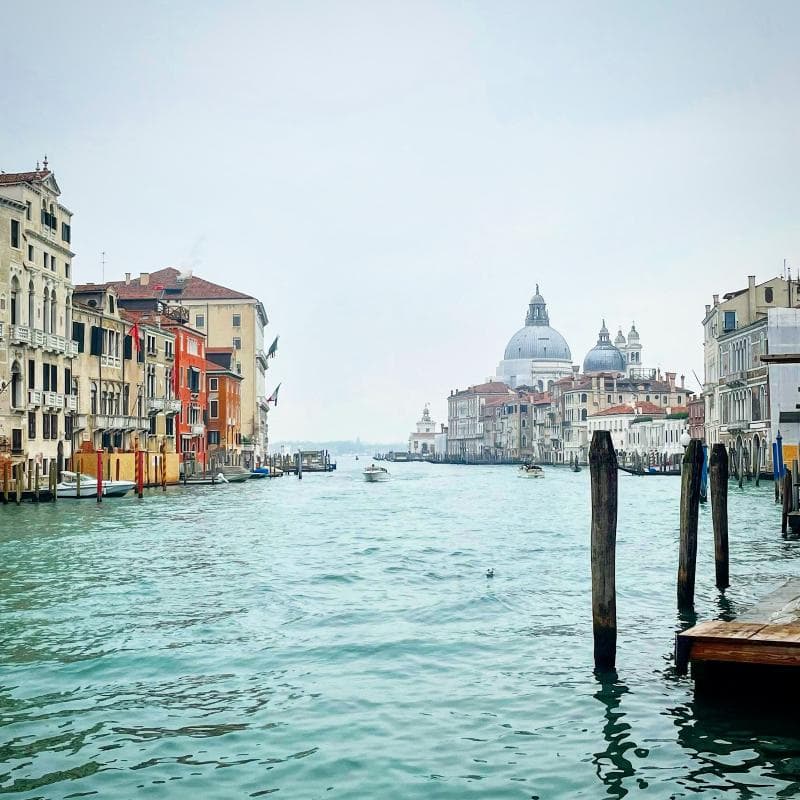
Explore Gallerie Dell'Accademia in Venice, Italy, a treasure trove of pre-19th century Venetian art. Discover masterpieces by Titian, Veronese, and Bellini.
Overview
Nestled along the picturesque Grand Canal in the Dorsoduro district of Venice, Italy, the Gallerie dell'Accademia stands as a paramount institution dedicated to the preservation and display of pre-19th century Venetian art. It is hailed as home to the largest and most significant collection of Venetian art in the world, offering visitors an unparalleled journey through the artistic evolution of the Serenissima from the 14th to the 18th centuries. The museum showcases an extensive collection of over 800 works, featuring masterpieces by celebrated painters such as Titian, Paolo Veronese, Tintoretto, and Giovanni Bellini. For any curious traveler or art enthusiast, a visit to the Accademia is an essential experience to immerse oneself in the rich cultural tapestry of Venice.
History & Cultural Background
The origins of the Gallerie dell'Accademia trace back to 1750 when the Venetian Senate founded the Accademia di Belle Arti di Venezia, an art academy for painting, sculpture, and architecture. The gallery, initially part of this academy, became independent in 1879. Its current home is a magnificent complex of historic buildings on the south bank of the Grand Canal, comprising the former Scuola Grande di Santa Maria della Carità, its church, and the convent of Santa Maria della Carità. The Scuola della Carità itself is an ancient structure, with parts dating back to 1343, making it the oldest of Venice's six Scuole Grandi. The convent also features designs by the renowned architect Andrea Palladio, initiated in 1561. The museum's extensive collection largely expanded in the early 19th century under Napoleonic administration, which led to the consolidation of art from suppressed monasteries, churches, and noble palaces into a public gallery, effectively preserving Venice's artistic heritage.
What Makes It Special
What truly distinguishes the Gallerie dell'Accademia is its unrivaled focus on Venetian painting, offering a comprehensive narrative of the city's artistic genius. The museum's 24 rooms are generally arranged chronologically, guiding visitors through the distinct styles and themes that define the Venetian School. Among its many treasures are iconic works that represent pinnacles of Renaissance art. You can marvel at Giovanni Bellini's moving 'San Giobbe Altarpiece' and 'Holy Conversation', which exemplify his masterful use of color and light. Giorgione's enigmatic 'The Tempest' and 'The Old Woman' are captivating examples of early High Renaissance Venetian painting, noted for their mysterious narratives and profound psychological depth. Paolo Veronese's monumental 'Feast in the House of Levi', a canvas of extraordinary scale, commands an entire wall and offers a vibrant, detailed glimpse into 16th-century Venetian society. Titian's powerful 'Pietà' and his historically significant 'Presentation of the Virgin at the Temple' are also highlights, with the latter uniquely remaining in its original setting within the Scuola Grande di Santa Maria della Carità. The museum also proudly displays Vittore Carpaccio's enthralling cycle, 'The Legend of Saint Ursula', a series of large narrative paintings that provide rich details of Venetian life and imagination. While rarely on public display due to its extreme fragility, Leonardo da Vinci's iconic 'Vitruvian Man' is one of the museum's most prized possessions, occasionally exhibited for a few weeks every six years.
Stories, Fun Facts & Local Details
The Gallerie dell'Accademia holds stories as rich and colorful as the canvases within its walls. One of the most famous tales involves Paolo Veronese's 'Feast in the House of Levi'. Originally titled 'The Last Supper', the painting sparked controversy with the Holy Inquisition in 1573 due to its inclusion of 'buffoons, drunkards, Germans, dwarfs, and similar vulgarities', which were deemed irreverent for a sacred subject. Veronese was compelled to alter the title to 'Feast in the House of Levi' to avoid further censure. Another fascinating detail concerns Titian's 'Presentation of the Virgin at the Temple'. This magnificent work is unique in that it is the only major painting in the museum that has never been moved from its original location since its creation between 1534 and 1538 for the Sala dell'Albergo of the Scuola Grande. Even the famous Ponte dell'Accademia, one of only four bridges spanning the Grand Canal, takes its name from this esteemed gallery. The very act of visiting the Accademia is to witness a profound 'rescue operation' of art, as much of its collection was brought together after the fall of the Venetian Republic and the subsequent suppression of religious institutions, ensuring these priceless works remained in Venice.
Visitor Perspective
For those planning a visit, the Gallerie dell'Accademia is conveniently located in the Dorsoduro district, easily accessible on foot or by vaporetto, with the 'Accademia' stop directly opposite. The museum generally operates from Tuesday to Sunday, 9:00 AM to 7:00 PM, and Mondays from 8:15 AM to 2:00 PM, though it's always wise to check their official website for current hours and any specific closures. Admission prices typically range from €12 to €20 for adults, with reduced rates for EU citizens aged 18-25 and free entry for those under 18. A delightful detail for budget-conscious travelers is the free admission offered on the first Sunday of every month. To ensure a smooth experience, especially during peak season, booking tickets online in advance is highly recommended to bypass potentially long queues. Weekday mornings or the last two hours before closing are generally the least crowded times to explore. The museum is committed to accessibility, featuring wheelchair access, elevators, and accessible restrooms. Additionally, visitors can enhance their experience with audio guides available in multiple languages, and a cloakroom with lockers is provided for personal belongings, though bulky bags are not permitted inside. Photography is generally allowed but without flash. Plan at least 1.5 to 2 hours to fully appreciate the extensive collection.
Coordinates: 12.32806, 45.43139
View on Google Maps💬 How Travelers Describe This Place
Based on community votes
Unique
872Beautiful
846Interesting
684Photogenic
363Must See
87
Traveler Stories
Discover memorable experiences shared by travelers who have visited this place.
No traveler stories yet.
Be the first traveler to share what made this place memorable.
Things to see at Gallerie Dell'Accademia



Tour
By
Spot
Discover amazing places around the world. Your journey starts here.
Explore
© 2026 TourBySpot. All rights reserved.