Galata Tower
Istanbul, Turkey
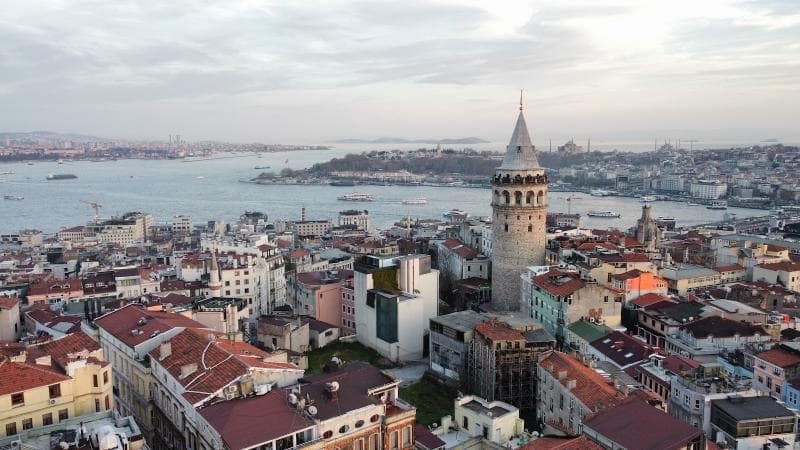
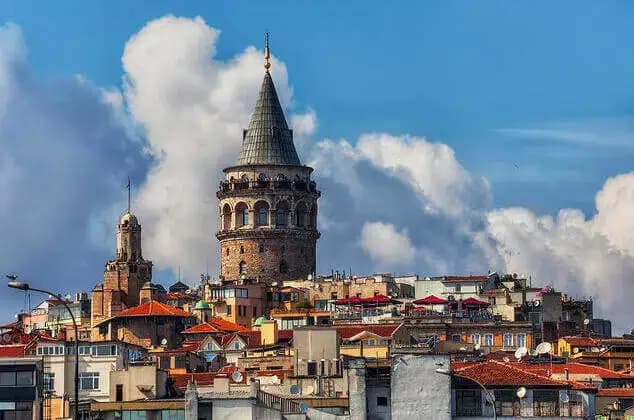
Discover Galata Tower, an iconic landmark in Istanbul, Turkey, offering centuries of history, breathtaking panoramic views, and captivating stories.
Overview
Soaring majestically above the historic skyline, the Galata Tower, known locally as Galata Kulesi, is an iconic landmark situated in Istanbul, Turkey. Perched atop a hill in the Beyoğlu district, on the European side of the city, it offers unparalleled panoramic views of the Golden Horn, the Bosphorus, and the sprawling metropolis of Istanbul. Today, this cylindrical stone tower functions as a museum and observation deck, inviting visitors to delve into centuries of rich history and enjoy breathtaking vistas. [2, 4, 12, 14, 24, 29, 30]
Standing approximately 67 meters (219 feet) tall, the Galata Tower is recognized as one of the oldest towers globally and is a prominent symbol of both Beyoğlu and Istanbul itself. [2, 4, 5, 12, 28] Its distinctive conical roof and robust masonry make it a recognizable silhouette from various points across the city. The tower has also been included in the UNESCO World Heritage Tentative List since 2013, underscoring its significant cultural and historical value. [2, 3, 6, 27, 29]
History & Cultural Background
The history of the Galata Tower is deeply intertwined with the fortunes of Istanbul. While the current structure dates back to the mid-14th century, the site itself has a much older lineage. An earlier Byzantine tower, known as 'Megalos Pyrgos' or the 'Great Tower,' was initially constructed by Emperor Justinian I around 507-508 AD, serving as a lighthouse and defensive structure. [2, 3, 11, 24]
The tower we see today was rebuilt in 1348-1349 by the Genoese colony of Galata, who established a thriving trading post in the area. [2, 3, 4, 5, 12, 24] They named their new creation 'Christea Turris,' meaning 'Tower of Christ,' and it served as the donjon or keep of their fortification system, symbolizing their commercial power and control over the region. [4, 7, 12, 18, 24] At the time of its completion, it was the tallest structure in the city. [4, 5, 18, 26]
Following the Ottoman conquest of Constantinople in 1453, the tower’s function evolved significantly. It was repurposed over the centuries, serving variously as a prison for war captives, an astronomical observatory, and most notably, a crucial fire watchtower from 1717 onwards. [3, 9, 12, 17, 18, 22] Fires were a constant threat to Istanbul's wooden architecture, making the tower's elevated position invaluable for early detection. The tower has undergone numerous restorations throughout its history due to damage from earthquakes and fires, with significant repair work in 1831 and major restorations between 1965 and 1967 when its conical roof was reconstructed. [3, 4, 9, 17] In 2020, it was once again meticulously restored and reopened as a public museum, showcasing its rich past through interactive exhibits. [2, 3, 9, 17, 18, 22, 27]
What Makes It Special
The Galata Tower's enduring appeal lies in its remarkable blend of historical resilience, architectural beauty, and strategic importance. Its robust stone masonry and cylindrical form are exemplary of medieval military architecture, designed for both defense and to project authority. [9, 12, 29] The tower's commanding position on a hilltop provides it with a natural advantage, offering clear, unobstructed views that have been strategically vital for centuries, whether for defense, fire detection, or simply admiring the city. [7, 9, 14, 24]
Beyond its utilitarian roles, the tower has consistently been a symbol. For the Genoese, it represented their presence and power; for the Ottomans, it became an integral part of their city's defense and urban management. Today, it stands as a testament to Istanbul's layered history, a monument that has witnessed the rise and fall of empires and the continuous evolution of a vibrant city. [12, 28]
The current setup as a museum allows visitors to explore the tower's architectural evolution and its many transformations. The viewing balcony at its summit is the highlight, offering a breathtaking 360-degree panorama. From here, one can trace the Golden Horn winding through the European side, the majestic Bosphorus Strait connecting two continents, and the historical peninsula adorned with iconic landmarks like Hagia Sophia and the Blue Mosque. [8, 12, 18, 24, 28, 29, 30]
Stories, Fun Facts & Local Details
The Galata Tower is steeped in fascinating stories and local folklore, none more famous than the legendary flight of Hezârfen Ahmed Çelebi. In 1632, during the reign of Sultan Murad IV, this Ottoman polymath reportedly launched himself from the tower's summit with a pair of self-made wooden wings. According to the accounts of the traveler Evliya Çelebi, Hezârfen successfully glided across the Bosphorus, landing safely in Üsküdar on the Asian side of the city. [2, 3, 5, 12, 17, 18, 21, 22, 23] This audacious feat is celebrated as one of the earliest attempts at intercontinental human flight, embodying a spirit of innovation and daring.
Another enchanting tale connects the Galata Tower with Istanbul's other iconic landmark, the Maiden's Tower (Kız Kulesi), located in the middle of the Bosphorus. Local legend speaks of an impossible love between the two towers, separated by the vast waters. The Galata Tower is said to have written letters of love and longing, which Hezârfen Ahmed Çelebi carried on his legendary flight and delivered to the Maiden's Tower, briefly uniting the star-crossed structures through a messenger of the skies. [3]
Historically, the tower's role as a fire watchtower meant it played a vital role in protecting the city. Firefighters would sound a drum from the tower to alert residents to blazes, guiding them to safety. This practical function, alongside its strategic military uses and later transformation into an observatory, highlights its multifaceted importance throughout history. [3, 9, 16, 18]
Visitor Perspective
A visit to the Galata Tower is an essential Istanbul experience. Upon entering, visitors are greeted by a museum that chronicles the tower's extensive history through various exhibits, including historical photographs, models, and displays of Ottoman calligraphy. [22] Elevators whisk guests up most of the way, with a final short climb via stairs leading to the observation balcony. [6, 19]
Once on the observation deck, the reward is a truly spectacular 360-degree panorama of Istanbul. The vista stretches from the historical peninsula with its grand mosques and palaces to the modern districts of Beyoğlu and beyond, all framed by the shimmering waters of the Golden Horn and the Bosphorus. [8, 12, 18] It's a place where you can feel the city's pulse, tracing its historical layers with your eyes. Many recommend visiting during the 'golden hour' before sunset to witness Istanbul transform under a canvas of changing colors, or in the evening to see the city lights twinkle. [6, 8, 10, 12]
The area surrounding the Galata Tower is a vibrant hub, characterized by narrow, cobbled streets filled with charming cafes, boutique shops, and historical buildings, making it perfect for a leisurely stroll before or after your visit to the tower. [9, 19, 24] It's a journey not just to the top of a tower, but through the very heart of Istanbul's soul.
Coordinates: 28.9744, 41.0256
View on Google Maps💬 How Travelers Describe This Place
Based on community votes
Interesting
958Beautiful
743Unique
719Photogenic
382Must See
176
Traveler Stories
Discover memorable experiences shared by travelers who have visited this place.
No traveler stories yet.
Be the first traveler to share what made this place memorable.
Things to see at Galata Tower



Tour
By
Spot
Discover amazing places around the world. Your journey starts here.
Explore
© 2026 TourBySpot. All rights reserved.