Interior Spiral Staircase and Elevator
Istanbul, Turkey
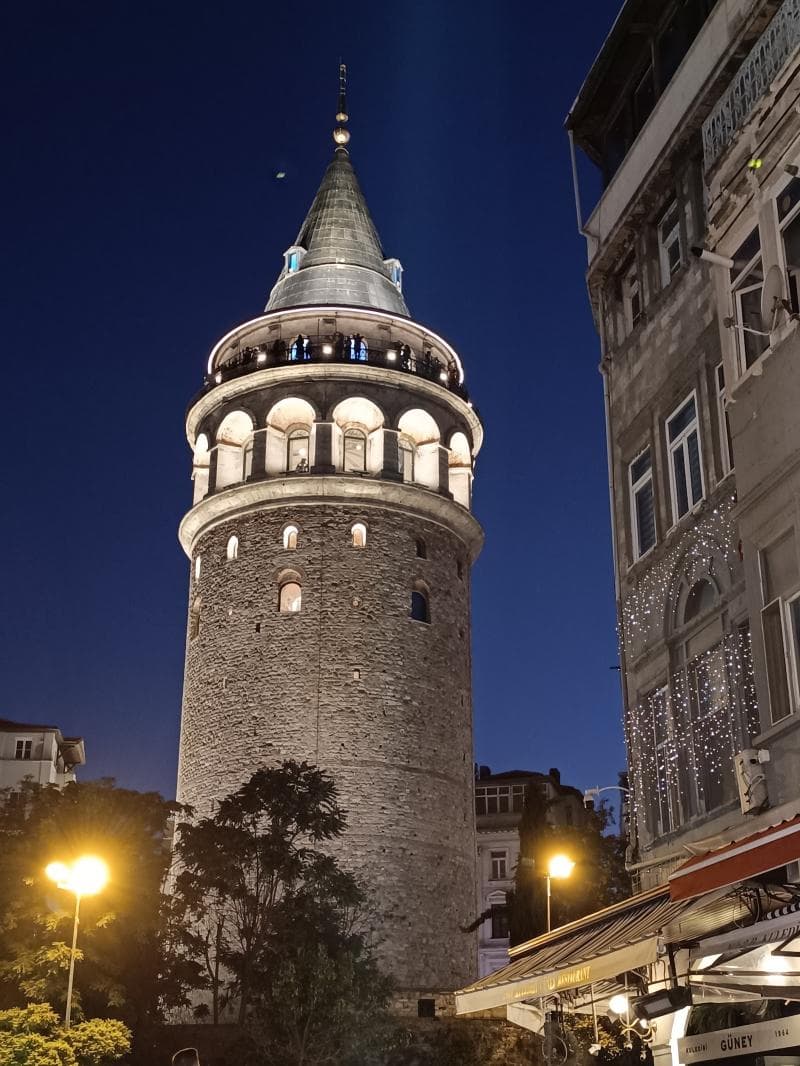

Explore the Galata Tower's interior spiral staircase and elevator in Istanbul, Turkey, revealing centuries of history and breathtaking panoramic views.
Overview
Nestled within the historic Galata Tower in Istanbul, Turkey, the interior spiral staircase and elevator offer a captivating journey through centuries of history and architectural evolution. This iconic medieval Genoese tower, standing approximately 67 meters tall, is not merely a landmark but a vessel guiding visitors through Istanbul's rich past and vibrant present. The tower's interior seamlessly blends ancient stone architecture with modern amenities, creating a unique exploration experience. While an elevator efficiently transports guests to the upper levels, the original spiral staircases invite a more intimate connection with the tower's enduring legacy.
Visitors ascend through nine floors of historical exhibits before reaching the panoramic observation deck. The elevator typically reaches the sixth or seventh floor, leaving the final two flights to the observation deck (the eighth floor) to be conquered on foot via narrow, winding stairs. From the top, a breathtaking 360-degree vista unfolds, showcasing Istanbul's majestic skyline, including the sparkling Bosphorus, the historic Golden Horn, and iconic landmarks such as the Hagia Sophia and Topkapi Palace.
History & Cultural Background
The story of the Galata Tower's internal structure is as layered as Istanbul itself. While an earlier Byzantine tower, 'Megalos Pyrgos,' or 'Great Tower,' existed on the site around 507-508 AD, it was destroyed during the Fourth Crusade in 1204. The current iteration, known then as 'Christea Turris' (Tower of Christ), was majestically rebuilt by the Genoese colony in 1348-1349 during their expansion in the region. Over its long lifespan, the tower served various crucial roles for empires and communities, from a watchtower guarding against invaders to a prison, and later a vital fire lookout point for the Ottoman Empire.
The interior spaces have undergone numerous transformations. Notably, major renovations between 1965 and 1967 saw the tower's wooden interior replaced with a concrete structure, and it was subsequently opened to the public as a tourist attraction. More recently, in 2020, the Turkish Ministry of Culture and Tourism carried out a significant restoration, converting the tower into a museum with interactive displays and historical artifacts. Further technological enhancements, including digital elevator displays, were introduced in 2023, continually adapting this ancient monument for the modern visitor. Today, the Galata Tower stands proudly as part of Istanbul's UNESCO World Heritage-listed Historic Areas.
What Makes It Special
The unique charm of the Galata Tower's interior lies in its fascinating juxtaposition of old and new. As you step inside, you're immediately immersed in the medieval Romanesque architectural style, characterized by thick stone walls and narrow openings that speak of its defensive origins. The lower floors still retain much of their Genoese character, while the upper sections reflect Ottoman influences from subsequent modifications.
What truly sets it apart is the thoughtful integration of accessibility without sacrificing historical integrity. The modern elevator system provides a convenient ascent for the majority of the climb, a testament to contemporary engineering adapting to a centuries-old structure. Yet, the experience culminates with a walk up the authentic spiral stone staircases, allowing visitors to touch the rough-hewn stones and witness the original Genoese stonework up close. This physical engagement with the tower's past makes the journey to the top particularly rewarding. The various museum floors feature engaging exhibits, including a detailed 1:2500 scale model of Istanbul and showcases of artifacts spanning different historical periods, further enriching the internal exploration.
Stories, Fun Facts & Local Details
Beyond its architectural grandeur, the Galata Tower's interior is steeped in fascinating stories and local folklore. Perhaps the most celebrated is the legend of Hezarfen Ahmed Çelebi, an Ottoman aviator who, in the 17th century, is said to have flown from the tower across the Bosphorus to Üsküdar on the Asian side, using self-made wings. This daring feat, while legendary, vividly captures the imaginative spirit associated with the tower. Inside, a giant screen on the second floor even presents an animated simulation of this legendary flight, connecting visitors with Istanbul's enduring tales.
A curious detail from its history is the fate of its conical roof. The tower's distinctive pointed cone was removed in the 19th century after a storm and was only reconstructed during the 1960s renovations, returning the tower to its familiar silhouette. Before its 2020 transformation into a museum, the upper floors of the tower famously housed a restaurant and a nightclub, offering spectacular views alongside dining and entertainment. Today, the journey down from the observation deck is exclusively via the spiral stairs, comprising approximately 146 steps, ensuring every visitor experiences the tower's traditional passageways.
Visitor Perspective
For many travelers, the ascent through the Galata Tower's interior is a highlight of their Istanbul visit. The journey begins on the ground floor with an introductory exhibition and a scale model, setting the historical context. The modern elevator provides a comfortable and efficient ride, usually up to the sixth or seventh floor, making the tower accessible to a wider range of visitors. However, to reach the ultimate prize – the 360-degree observation deck on the eighth floor – one must embrace the tower's authentic experience by climbing the final two flights of narrow, spiral stone stairs. These roughly 146 steps, while potentially steep and sometimes crowded during peak hours, are part of the tower's medieval charm and offer unique glimpses into its ancient construction.
It's important to note for those with mobility concerns that while the elevator is wheelchair accessible and reaches the upper museum floors (around the seventh floor), the observation balcony itself is not. Nevertheless, the lower museum floors and the views accessible from the elevator's highest point still provide a rich and rewarding experience. The interior reveals arched ceilings, narrow windows, and structural details that whisper tales of its defensive past. Whether you choose to savor the climb or appreciate the convenience of the elevator, the interior journey of the Galata Tower culminates in an unforgettable panorama, making every step and every floor a part of Istanbul's enduring narrative.
Coordinates: 28.9741556, 41.0256556
View on Google Maps💬 How Travelers Describe This Place
Based on community votes
Photogenic
795Interesting
753Must See
302Unique
172Beautiful
79
Traveler Stories
Discover memorable experiences shared by travelers who have visited this place.
No traveler stories yet.
Be the first traveler to share what made this place memorable.

Tour
By
Spot
Discover amazing places around the world. Your journey starts here.
Explore
© 2026 TourBySpot. All rights reserved.