Elbphilharmonie Hamburg
Hamburg, Germany
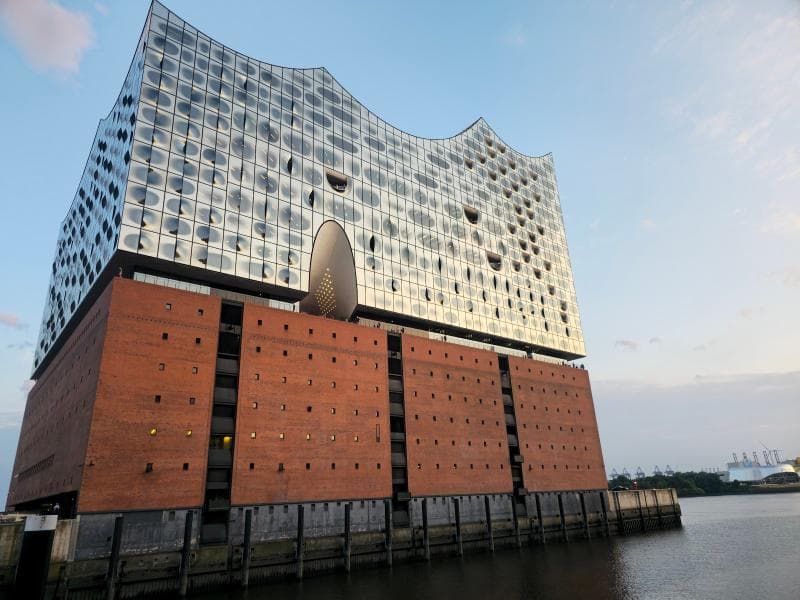
Discover the iconic Elbphilharmonie Hamburg, Germany's stunning concert hall. Explore its unique architecture, world-class acoustics, and vibrant cultural impact.
Overview
The Elbphilharmonie, affectionately known as 'Elphi,' stands as a magnificent architectural and musical landmark in Hamburg, Germany. This world-renowned concert hall is nestled on the Grasbrook peninsula of the Elbe River, serving as a prominent feature of the city's modern HafenCity district. Opened in January 2017, it has quickly become a global symbol for Hamburg, blending innovative design with its rich maritime history.
More than just a concert venue, the Elbphilharmonie is a vibrant cultural center, offering a diverse program of musical performances ranging from classical symphonies and chamber music to jazz, electronic, and world music. Its distinctive silhouette, resembling a hoisted sail, a water wave, or an iceberg, captures the essence of Hamburg's port city identity.
History & Cultural Background
The vision for the Elbphilharmonie originated from a private initiative by architect Alexander Gérard and art historian Jana Marko. Construction officially began on April 2, 2007, with the Swiss architectural firm Herzog & de Meuron leading the design. The building uniquely integrates a modern glass superstructure atop the historic Kaispeicher A, a former brick warehouse built in 1963. This warehouse was originally used for storing goods like tea, tobacco, and cocoa.
The project faced significant challenges, including rising construction costs and prolonged timelines, which led to public debate and even a temporary building halt in 2011. Despite these hurdles, the Elbphilharmonie was completed for €866 million and officially opened its doors on January 11, 2017, after a public test concert in November 2016. Its location between the modern HafenCity and the historic Speicherstadt, a UNESCO World Heritage site, symbolically bridges Hamburg's past and future.
What Makes It Special
The Elbphilharmonie is a masterpiece of modern architecture and acoustic engineering. Its striking glass facade, composed of 1,100 individual panes, some curved and uniquely shaped, reflects the sky, water, and city, creating an ever-changing iridescent appearance. The building stands 110 meters tall, its wave-like roof reaching a height of 110 meters.
At the heart of the Elbphilharmonie are its three concert halls. The Grand Hall, seating 2,100 guests, is renowned for its exceptional acoustics, meticulously designed by Yasuhisa Toyota. This hall features a 'vineyard' style arrangement, with seating rising steeply around a central stage, ensuring an intimate experience where no audience member is more than 30 meters from the conductor. The unique wall paneling, known as the 'white skin,' consists of 10,000 gypsum fiber panels that optimally disperse sound waves. For soundproofing, the 12,500-tonne Grand Hall rests on 362 giant spring assemblies, acoustically decoupling it from the rest of the building.
Another defining feature is the publicly accessible Plaza, located 37 meters high between the brick base and the glass superstructure. Visitors reach it via the 'Tube,' an 82-meter curved escalator, which is one of the longest in Western Europe. From the Plaza, a 360-degree panoramic view of the harbor, the Elbe, and the city unfolds.
Stories, Fun Facts & Local Details
The Elbphilharmonie, or 'Elphi' as locals affectionately call it, has become much more than a concert hall; it is a point of immense civic pride and a significant driver for Hamburg's tourism. In its first five years, the Plaza alone attracted approximately 14.5 million visitors, surpassing footfall at some of Germany's most prominent tourist destinations. The concert hall has been instrumental in tripling concert audiences in Hamburg since its inauguration and has contributed to an increase in music interest across the city. Studies suggest it has been responsible for millions of additional overnight stays in Hamburg.
The meticulous craftsmanship involved in its creation is remarkable; for instance, only one company worldwide could screen-print chrome onto glass for its facade, and only two could bend it into the required forms. The roof's unique elegant lines are formed by eight curved surfaces, adorned with 6,000 shimmering 'sequins' that create impressive light reflections. Beyond performances, the Elbphilharmonie offers educational initiatives, including the 'World of Instruments,' where visitors can explore and play instruments from around the globe.
Visitor Perspective
Visiting the Elbphilharmonie offers a multi-faceted experience. For those not attending a concert, the publicly accessible Plaza is a must-see, providing breathtaking views of Hamburg's working port, the Elbe River, and the city skyline. The journey up the 'Tube' escalator is an experience in itself, offering unique perspectives as you ascend through the building.
Concertgoers are treated to an unparalleled auditory and visual experience in the Grand Hall, where the innovative 'vineyard' design creates an intimate connection with the performers. The Recital Hall provides a more intimate setting for chamber music and other performances. Even if you're not a classical music enthusiast, the Elbphilharmonie's diverse programming ensures there's something to appeal to every taste. The building stands as a testament to Hamburg's commitment to culture, combining historical respect with avant-garde innovation, making it an essential destination for any traveler.
Coordinates: 9.98417, 53.54139
View on Google Maps💬 How Travelers Describe This Place
Based on community votes
Unique
551Beautiful
547Must See
336Interesting
298Photogenic
212
Traveler Stories
Discover memorable experiences shared by travelers who have visited this place.
No traveler stories yet.
Be the first traveler to share what made this place memorable.
Things to see at Elbphilharmonie Hamburg



Tour
By
Spot
Discover amazing places around the world. Your journey starts here.
Explore
© 2026 TourBySpot. All rights reserved.