Basel Minster
Basel, Switzerland

Explore Basel Minster, an iconic red sandstone cathedral in Basel, Switzerland, blending Romanesque and Gothic styles. Discover its rich history and panoramic views.
Overview
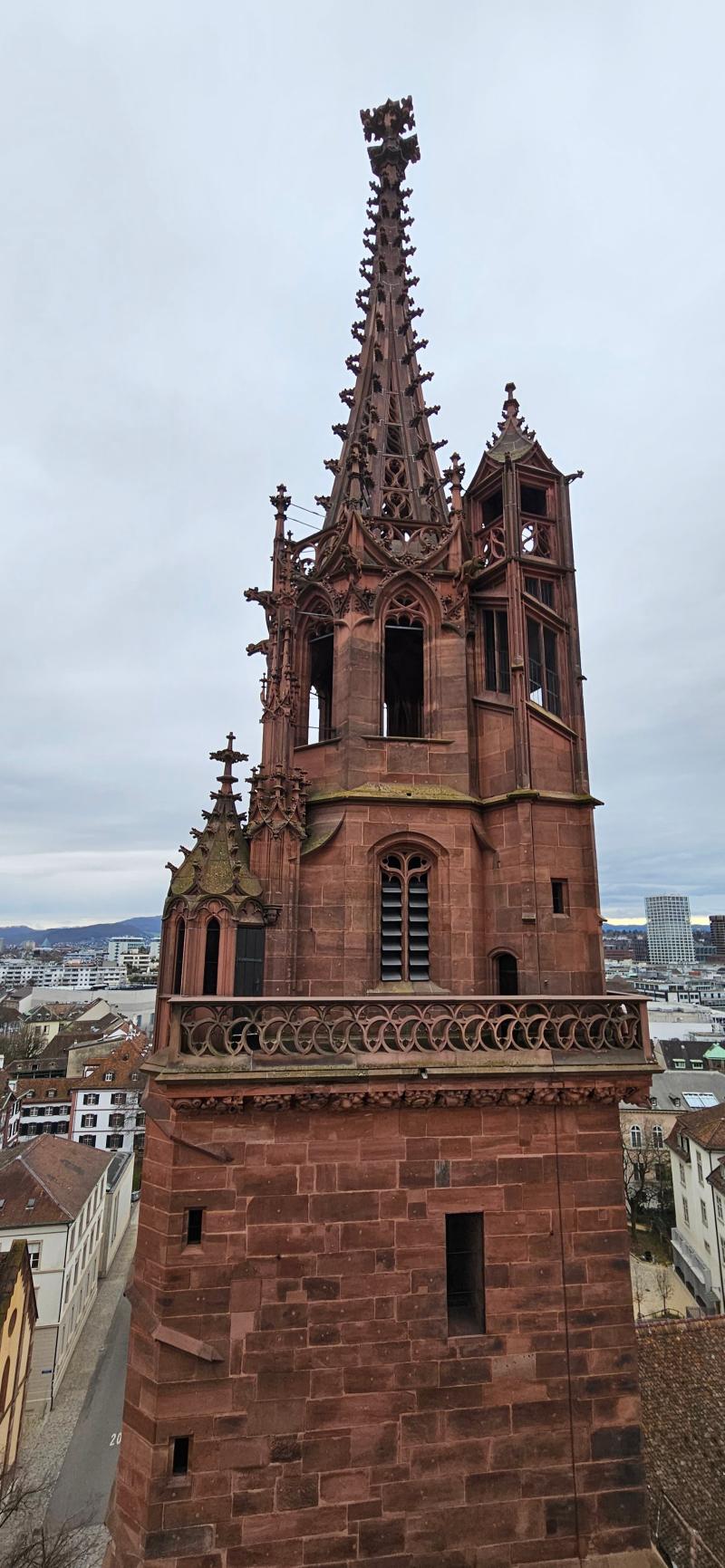
Perched majestically above the Rhine River, the Basel Minster, known locally as Basler Münster, stands as a defining landmark of Basel, Switzerland. This architectural marvel, with its distinctive red sandstone facade, colorful roof tiles, and twin spires, captivates visitors with its rich history and commanding presence. Originally a Roman Catholic cathedral, it now serves as a Reformed Protestant church, harmoniously blending Romanesque and Gothic architectural styles, a testament to centuries of construction and transformation.
The Minster is not merely a church; it is a repository of history, offering a profound connection to Basel's past, from its Celtic and Roman roots to its role in the Reformation. Its location on Münsterhügel, or Cathedral Hill, has been a significant site for millennia, providing a natural vantage point that continues to offer breathtaking views of the city and the surrounding region.
History & Cultural Background
The history of the Basel Minster stretches back to ancient times, with archaeological excavations revealing that the hill on which it stands was once a Celtic fortified city in the first century BC. Later, a Roman fort occupied the site. The first known bishop of Basel, Justinianus, served in the mid-4th century, and the bishop's see was eventually relocated to Minster hill during the Early Middle Ages.
Construction of significant church structures began as early as the 9th century with the Carolingian Haito Minster. This was followed by the Ottonian-Romanesque Heinrich Minster, commissioned by Bishop Adalberto II and consecrated in 1019 in the presence of Emperor Henry II and Empress Kunigunde, to whom the cathedral was dedicated. A later Romanesque structure was largely destroyed by the devastating Basel earthquake of 1356. Rebuilding efforts, led by architects like Johannes Gmünd and later Ulrich von Ensingen and Hans Nußdorf, incorporated new Gothic elements while retaining Romanesque foundations, culminating in its completion around 1500.
During the Reformation in 1529, the Minster transitioned from a Catholic cathedral to a Reformed Protestant church, reflecting significant religious shifts in the region. Extensive restorations in the 19th and 20th centuries aimed to preserve its grandeur and highlight its historical architectural elements.
What Makes It Special
The Basel Minster's distinctiveness lies in its striking red sandstone construction, sourced from the Degerfelden and Wiesental region on the German side of the Rhine, and its colorful patterned roof tiles. This unique color palette sets it apart and is visible from afar. Its architecture is a harmonious blend of Romanesque and Gothic styles, showcasing various construction phases and historical influences.
One of its most impressive features is the Romanesque St. Gallus Portal (Galluspforte) on the north side. Constructed around 1185–1195, it is considered one of Switzerland's finest surviving Romanesque portals, adorned with intricate sculptures, including a relief of Christ in judgment.
The Minster is also renowned for its twin towers, the Georgsturm (St. George's Tower) and Martinsturm (St. Martin's Tower). While appearing to be of similar height, the Georgsturm is actually two meters taller. These towers offer unparalleled panoramic views of Basel, the Rhine, and the tri-national border region. Inside, visitors can explore the nave, choir, and crypts, which preserve fragments of the original 11th-century structure.
Stories, Fun Facts & Local Details
The site of the Minster holds tales spanning millennia. Imagine ancient Celts inhabiting this very hill, followed by Roman soldiers. Later, the Minster played a central role in significant historical events, including a papal election.
A fascinating detail for those with keen eyes is the presence of elephant sculptures on the eastern end of the church. These rare carvings, created by Romanesque masons who likely had never seen a real elephant, offer a whimsical glimpse into medieval artistry.
The surrounding Münsterplatz is more than just a square; it is a vibrant hub lined with historic canons' houses and hosts various events throughout the year, including Christmas markets and open-air concerts. The Pfalz, a terrace adjacent to the Minster, provides a serene retreat and has been an attraction since Roman times, once used as a vineyard, and now a popular spot for locals and tourists to enjoy the scenic Rhine view.
Perhaps one of the most poignant facts is that the tomb of the influential humanist scholar, Erasmus of Rotterdam, is located within the Minster, underscoring Basel's deep intellectual and religious heritage.
Visitor Perspective
Visiting the Basel Minster offers a truly immersive historical and cultural experience. The Minster is generally open daily, with varying hours depending on the season and day of the week; it typically opens later on Sundays after morning services. Admission to the Minster itself is free, allowing everyone to admire its stunning interior and architectural details.
For those seeking an unforgettable vista, climbing the 250 steps to the top of one of the twin towers is highly recommended. While there is a small fee, the panoramic views of Basel, the Rhine River, and the distant landscape are well worth the effort. Comfortable shoes are advisable for the climb. Guided tours are available, offering deeper insights into the building's history, architectural styles, and artistic elements. Some special experiences, like 'cathedral nights,' create a unique atmosphere with lighting and music.
Beyond the main structure, be sure to explore the cloisters, peaceful arcades lined with memorials, and the Pfalz terrace for relaxing moments and excellent views of the Rhine. The area around the Minster, including the Münsterplatz and the Old Town, is perfect for wandering and discovering quaint shops and cafes.
Coordinates: 7.59222, 47.55667
View on Google Maps💬 How Travelers Describe This Place
Based on community votes
Must See
996Beautiful
726Unique
717Interesting
335Photogenic
22
Traveler Stories
Discover memorable experiences shared by travelers who have visited this place.
No traveler stories yet.
Be the first traveler to share what made this place memorable.
Things to see at Basel Minster





Tour
By
Spot
Discover amazing places around the world. Your journey starts here.
Explore
© 2026 TourBySpot. All rights reserved.