Cloister
Basel, Switzerland
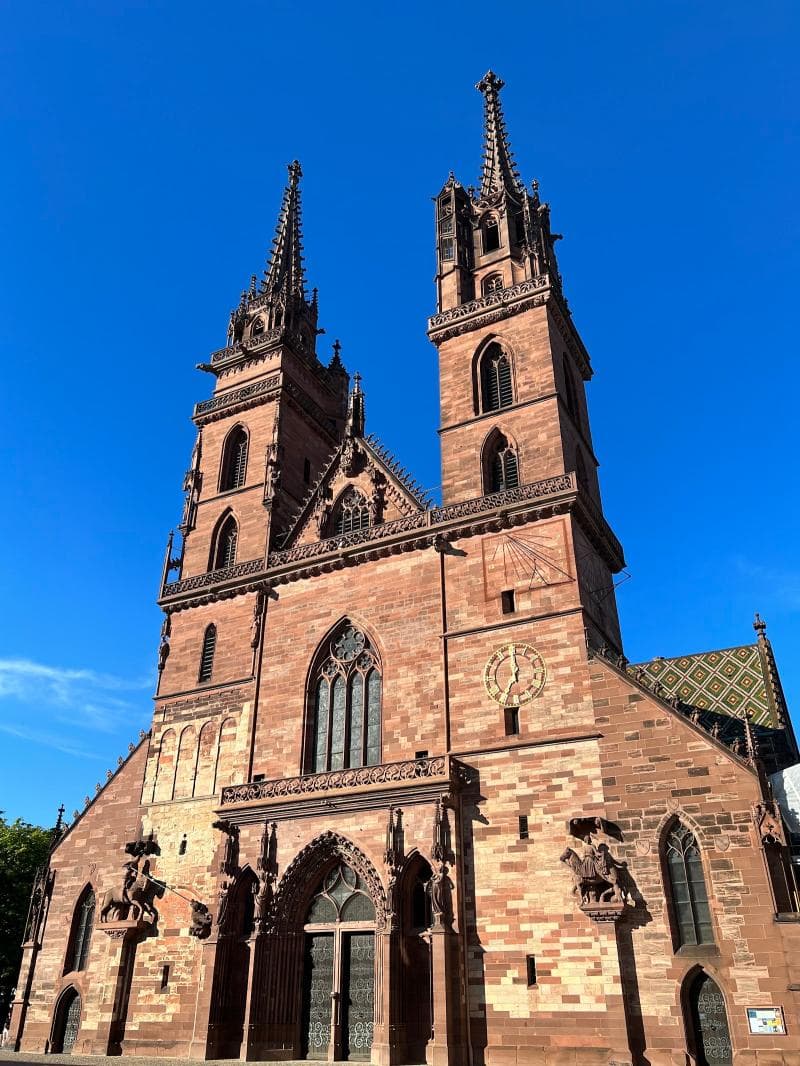
Discover the tranquil Cloister of Basel Minster in Basel, Switzerland. Explore its Gothic arches, historical tombs, and serene courtyards.
Overview
Nestled within the imposing red sandstone walls of the Basel Minster in Basel, Switzerland, lies a serene and historically rich sub-spot: its Cloister. This tranquil space offers a profound contrast to the grandeur of the main church, inviting contemplation and a deeper connection to centuries of history. The Minster, a majestic example of Romanesque and Gothic architecture, stands proudly on Münsterhügel (Cathedral Hill), overlooking the Rhine River and the city's charming old town. While the Minster itself is a significant landmark, the Cloister provides a more intimate experience, a quiet arcaded courtyard where time seems to slow. It serves not only as an architectural marvel with its picturesque Gothic arches but also as a repository of local history, its walls adorned with memorial slabs dedicated to prominent Basel families, scholars, and clerics. This sacred enclosure is a testament to Basel's layered past, bearing witness to its evolution from a Roman Catholic cathedral to a Reformed Protestant church, and silently reflecting the city's enduring legacy of faith, scholarship, and community. Visiting the Cloister offers a unique opportunity to step away from the bustling city and immerse oneself in an atmosphere of peace and historical resonance, making it an essential stop for any curious traveler to Basel.
History & Cultural Background
The history of the Basel Minster's Cloister is intricately linked with the broader narrative of the Minster itself, a structure shaped by centuries of construction, destruction, and reformation. While the Minster has Romanesque origins dating back to an 11th-century church, much of its current Gothic appearance, including the cloisters, emerged after the devastating earthquake of 1356. This natural disaster necessitated significant rebuilding efforts, which gave rise to the architectural forms we see today. The cloisters, featuring distinctive Gothic arches, were primarily added in the 15th century, serving as a vital part of the former monastery complex attached to the cathedral.
Culturally, the Cloister holds immense significance as a place that once intertwined spiritual life with civic identity. Before the Reformation, it was a Catholic cathedral and monastery. With the advent of the Reformation in 1529, the Minster transitioned to a Reformed Protestant church, and the monastery was closed. Despite these changes, the Cloister retained its role as a memorial space. Its walls are lined with memorial slabs, or epitaphs, commemorating influential Basel families, clerics, and scholars. These inscriptions and coats of arms are not merely decorative; they powerfully illustrate the close relationship between the church and the social status of the city's inhabitants. Burial within or near the cathedral was a mark of piety, memory, rank, and belonging, reflecting the deep ties individuals had to this central institution. The tranquil ambiance of the Cloister stands as a quiet counterpoint to the dramatic historical shifts that shaped the city of Basel.
What Makes It Special
What truly sets the Basel Minster Cloister apart is its distinctive blend of serene beauty and profound historical depth. Unlike the often bustling main nave of the Minster, the Cloister offers a remarkably quieter and more contemplative atmosphere, providing visitors with a peaceful retreat. Its picturesque Gothic arches, crafted from the characteristic red sandstone of the region, create an architectural harmony that is both visually appealing and historically resonant. The structure itself is a testament to the resilience of human craftsmanship, having been rebuilt and adapted over centuries, particularly following the destructive 1356 earthquake.
More than just an architectural marvel, the Cloister serves as an open-air museum of Basel's past. The memorial slabs embedded in its walls tell a silent story of generations of influential figures – from esteemed scholars and religious leaders to prominent families and merchants. Each epitaph, with its unique inscriptions and heraldic symbols, offers a glimpse into the social hierarchy and cultural values of medieval and early modern Basel. This collection of personal histories provides a tangible link to the city's heritage, making the Cloister a deeply moving and educational experience. It is a place where one can literally walk among the echoes of Basel's ancestors, pondering their lives and contributions in a uniquely intimate setting.
Stories, Fun Facts & Local Details
The Basel Minster Cloister is not just a collection of old stones; it is steeped in stories and fascinating details that bring its past to life. One of the most intriguing aspects is its connection to the celebrated humanist scholar, Erasmus of Rotterdam. Although a Roman Catholic, Erasmus spent several years in Basel and was buried in the Minster after his death in 1536, despite the city having embraced the Reformation. His tomb within the Minster underscores Basel's historical role as a center for printing, scholarship, and intellectual discourse, even amidst religious tensions.
Beyond the solemn memorials, the Cloister also holds some unique artistic elements. Travelers have noted interesting sculptures, including representations of elephants. One particular account mentions a bronze market stall within the smaller cloister, featuring realistic fruits, vegetables, and flowers, but with a more 'sinister' twist on the other side – an empty stall topped with a human skull. This thought-provoking piece, possibly by local artist Bettina Eichin, adds a layer of artistic commentary, perhaps on themes of impermanence or the cycle of life and death, inviting deeper reflection from those who encounter it. These unexpected details contribute to the Cloister's unique charm, offering moments of discovery amidst its ancient walls.
Furthermore, the Cloister's position provides direct access or proximity to the Pfalz, a viewing terrace that offers breathtaking panoramic vistas over the Rhine River and the city. This fusion of historical exploration with stunning natural beauty makes a visit to the Cloister particularly memorable.
Visitor Perspective
For the curious traveler, the Cloister of the Basel Minster offers a truly enriching and contemplative experience. As you step from the grand interior of the Minster into the sheltered courtyards of the Cloister, you'll immediately notice a shift in atmosphere; it's quieter and more intimate. This peaceful ambiance makes it an ideal spot for slow looking and quiet reflection, a welcome respite from the usual pace of sightseeing.
Wandering through the arcades, you can take your time examining the numerous memorial slabs embedded in the walls. Each stone tells a fragment of Basel's history, commemorating individuals who shaped the city's past. Observing the intricate details of the Gothic arches and the weathered stone, one can almost feel the weight of centuries pressing in. The Cloister is openly accessible to the public, allowing for unhurried exploration. After soaking in the tranquility and history of the Cloister, be sure to seek out the nearby Pfalz terrace. This elevated viewpoint, often considered one of the city's best, offers spectacular panoramic views across the Rhine River and the rooftops of Basel, providing a magnificent backdrop to your historical journey. It’s a place where history, architecture, and scenic beauty converge, leaving a lasting impression on those who visit.
Coordinates: 7.592222, 47.556389
View on Google Maps💬 How Travelers Describe This Place
Based on community votes
Unique
898Interesting
667Must See
618Beautiful
308Photogenic
32
Traveler Stories
Discover memorable experiences shared by travelers who have visited this place.
No traveler stories yet.
Be the first traveler to share what made this place memorable.

Tour
By
Spot
Discover amazing places around the world. Your journey starts here.
Explore
© 2026 TourBySpot. All rights reserved.