Atomium
Brussels, Belgium
Explore the Atomium in Brussels, Belgium, a landmark structure from Expo 58 symbolizing scientific progress with its unique atom-like design and panoramic views.
Overview
The Atomium stands as a truly unique and iconic landmark in Brussels, Belgium, immediately capturing attention with its distinctive design. Originally constructed as the centerpiece and flagship building for the 1958 Brussels World's Fair, known as Expo 58, it has since evolved into a symbol of both the city and Belgium itself. This striking structure, resembling a magnified iron crystal, serves today as a museum, an art center, and a cultural destination, drawing countless visitors to its futuristic spheres.
Standing 102 meters (335 feet) tall on the Heysel Plateau in Laeken, the Atomium offers a blend of architectural marvel and historical significance, reflecting the optimism and scientific ambition of the post-war era. It invites curious travelers to explore its interior, which houses exhibitions, a restaurant with panoramic views, and spaces dedicated to interactive experiences.
History & Cultural Background
The Atomium's origins are deeply rooted in the post-World War II period, a time marked by strong faith in scientific progress and a desire for a better future. Belgium was chosen to host the first World's Fair after the war, and Brussels, as the capital, underwent significant transformations to accommodate the event. Designed by engineer André Waterkeyn and architects André and Jean Polak, the Atomium was conceived as the main pavilion for Expo 58.
Its construction, which began in 1956 and was completed in 1958, aimed to embody the enthusiasm of the Atomic Age and symbolize Belgian engineering prowess. The theme of Expo 58 was 'A world for a better life for mankind,' promoting peace among nations and faith in technical and scientific advancement. Although initially intended to be a temporary structure that would be dismantled after the six-month exhibition, the Atomium's overwhelming popularity led authorities to preserve it. For decades, it stood as a beloved, albeit aging, monument until a major renovation between 2004 and 2006 restored its original brilliance, replacing its aluminum skin with modern stainless steel panels.
What Makes It Special
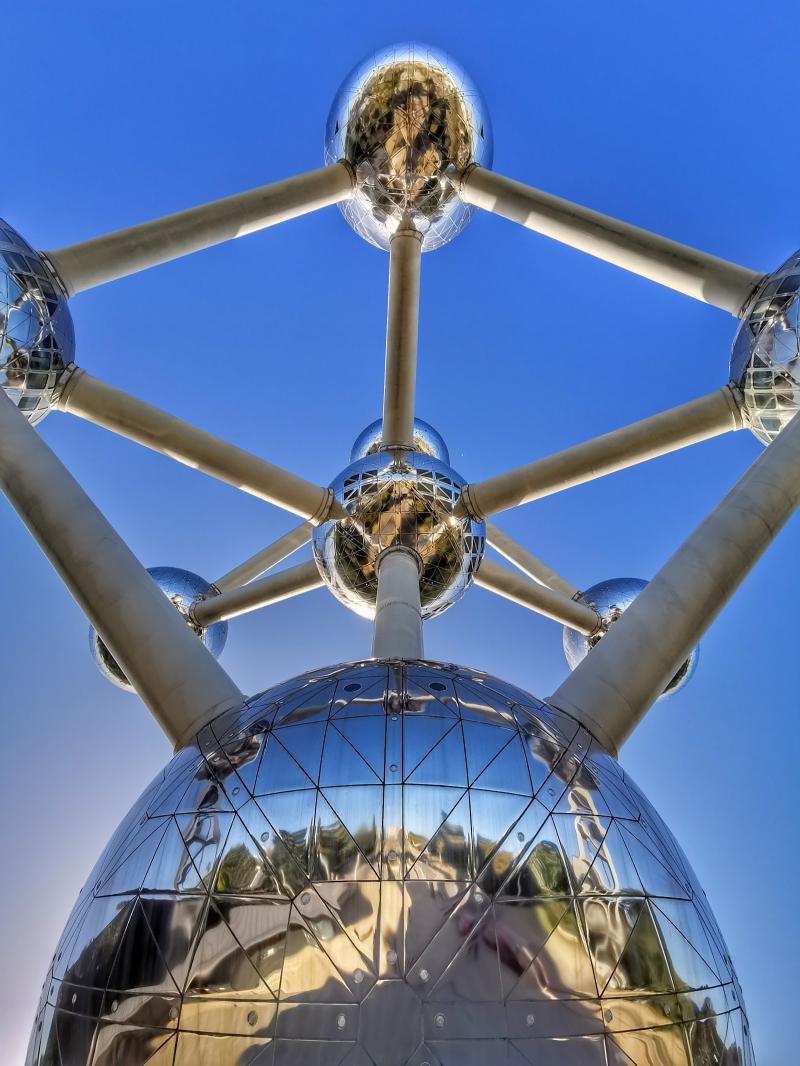
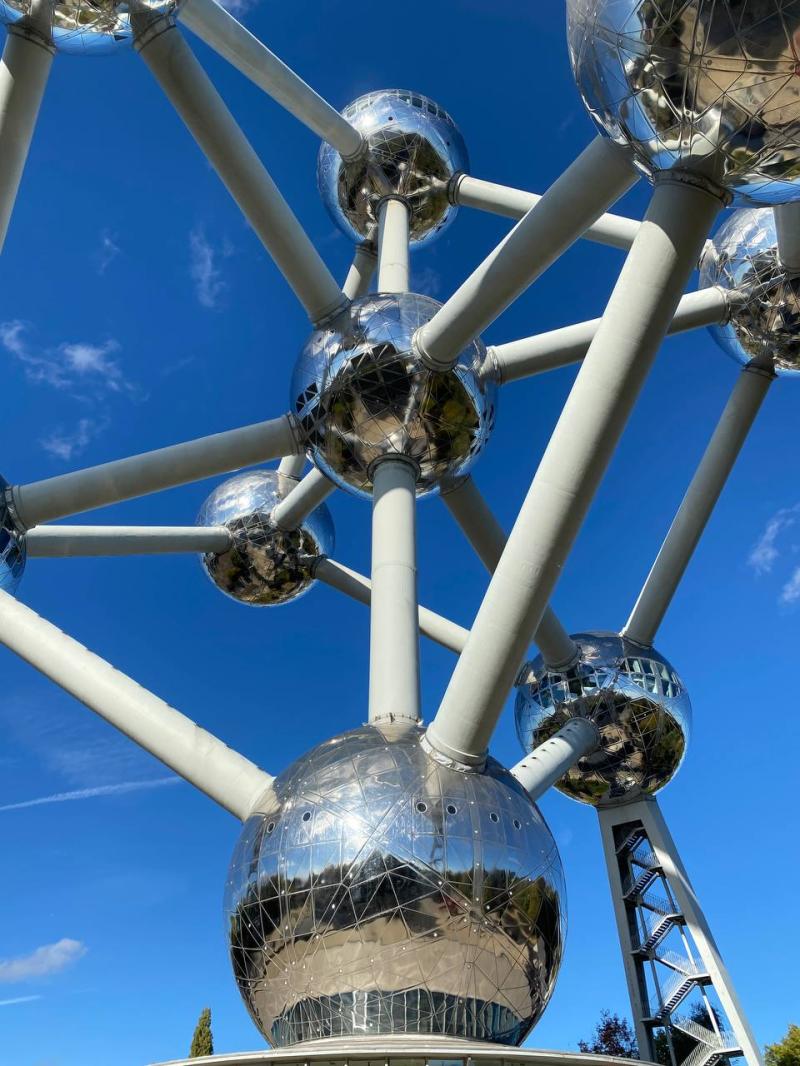
What truly sets the Atomium apart is its extraordinary architectural concept. It represents an elementary iron crystal, magnified an astonishing 165 billion times. This unique form consists of nine 18-meter-diameter (59 feet) spheres, clad in polished stainless steel, connected by tubes. These spheres, linked by escalators and a central elevator, create an otherworldly journey for visitors as they move between the different sections.
Beyond its striking exterior, the Atomium offers a multi-faceted experience. Six of its nine spheres are accessible to the public, featuring permanent and temporary exhibitions that delve into the history of Expo 58, 1950s design, and various cultural and scientific themes. The uppermost sphere houses a panoramic restaurant, providing breathtaking views across Brussels and its surrounding landscape, making a visit both visually spectacular and gastronomically delightful.
Stories, Fun Facts & Local Details
The Atomium holds several intriguing stories and fun facts. When it opened in 1958, its central vertical tube housed what was then considered the world's fastest elevator, capable of transporting 22 people to the top sphere in about 23 seconds. The connecting tubes also contain some of Europe's longest escalators, adding to the unique internal journey. One such escalator measures nearly 35 meters (100 feet) long.
Despite initial criticism from some who viewed it as an eyesore, the public quickly embraced the Atomium, ensuring its survival beyond its intended six-month lifespan. Its continued existence is a testament to its powerful appeal and its transformation from a temporary exhibit to an enduring symbol. The name 'Atomium' itself is a portmanteau, combining 'atom' and 'aluminum,' the metal with which its spheres were initially covered. It has become to Brussels what the Eiffel Tower is to Paris – a monumental structure designed for a World's Fair that transcended its original purpose to become a national icon.
Visitor Perspective
A visit to the Atomium typically takes between one and two hours, offering a captivating journey through its spheres. Visitors can expect to explore exhibition spaces, enjoy the panoramic views from the top sphere, and experience the unique escalators and elevator rides. Inside, one sphere is dedicated to the history of Expo 58, showcasing documents, videos, and photographs, providing a deep dive into the historical context. Another sphere is designed as a learning environment for children, complete with interactive displays.
Tickets can be purchased online or at the cash desk, with online purchases often helping to bypass ticket queues. The Atomium is generally open every day from 10 am to 6 pm, though hours may vary on specific dates, particularly during holidays. To avoid peak crowds, it's often recommended to visit right at opening time or after 5 pm. For those seeking a complete experience, a combined ticket often includes entry to the nearby Design Museum Brussels. The Atomium is easily accessible via public transport, with the Heysel metro station just a few minutes' walk away.
Coordinates: 4.34111, 50.89472
View on Google Maps💬 How Travelers Describe This Place
Based on community votes
Photogenic
551Interesting
547Unique
336Beautiful
219Must See
186
Traveler Stories
Discover memorable experiences shared by travelers who have visited this place.
No traveler stories yet.
Be the first traveler to share what made this place memorable.
Things to see at Atomium





Tour
By
Spot
Discover amazing places around the world. Your journey starts here.
Explore
© 2026 TourBySpot. All rights reserved.