Atomium Park Area
Brussels, Belgium
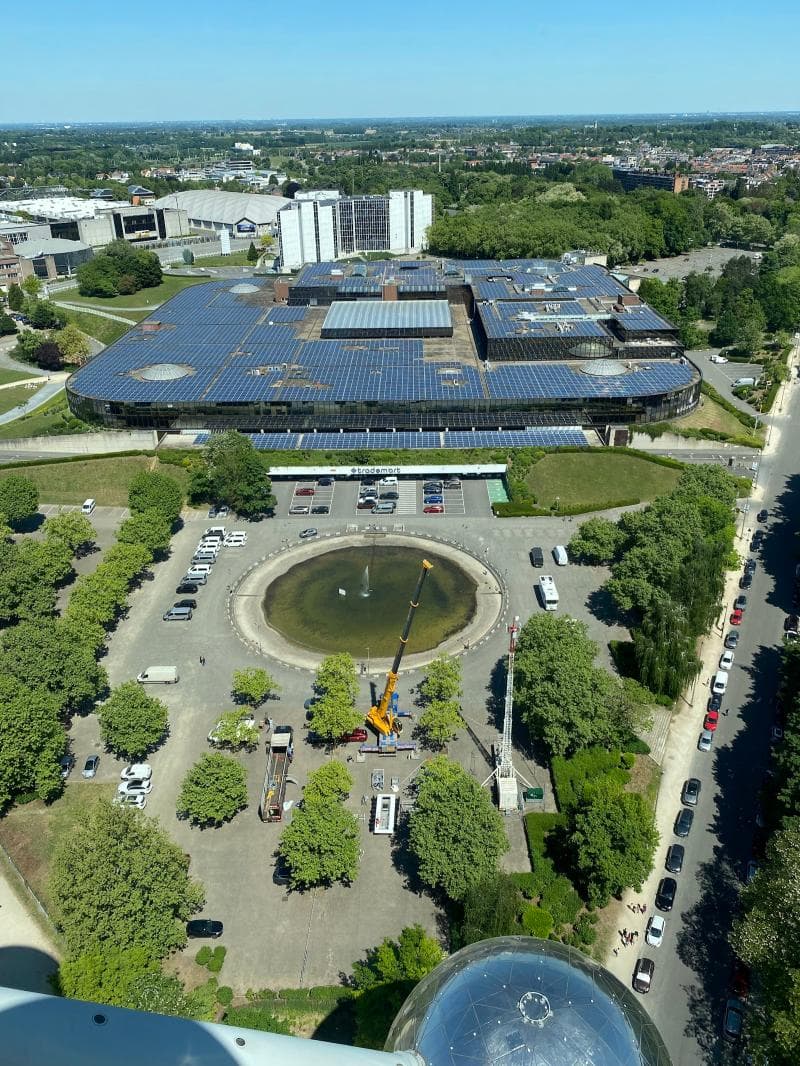
Explore Brussels' Atomium Park Area, home to the iconic Atomium and Mini-Europe. Discover history, unique architecture, and European landmarks.
Overview
The Atomium Park Area, located within Brussels, Belgium, is a distinctive urban landscape centered around the iconic Atomium structure. This monumental building, originally erected for the 1958 Brussels World's Fair (Expo 58), stands as a enduring symbol of scientific optimism and Belgian engineering prowess. Magnifying an iron crystal 165 billion times, its futuristic design immediately captures attention. Beyond the Atomium itself, the surrounding parklands host other significant attractions, most notably Mini-Europe, offering a unique journey through the continent's most famous landmarks in miniature. This area provides a blend of historical context, architectural marvels, and family-friendly entertainment, making it a prominent destination for visitors to the European capital.
History & Cultural Background
The Atomium was conceived as the centerpiece and main pavilion of Expo 58, the first major World's Fair held after World War II. In a period marked by post-war reconstruction and immense faith in scientific and technical progress, the Atomium was designed by engineer André Waterkeyn and architects André and Jean Polak to embody the spirit of the 'Atomic Age' and symbolize Belgian industrial skill. The 1958 World's Fair propagated a message of limitless optimism, focusing on 'a world for a better life for mankind', and transformed Brussels into a modern capital. Initially intended to stand for only six months, the Atomium's overwhelming popularity ensured its preservation, becoming a permanent fixture of Brussels' skyline. Its construction represented a pivotal moment in Belgium's post-war identity, celebrating innovation and looking forward to a peaceful, technologically advanced future.
What Makes It Special
The Atomium's exceptional design is undoubtedly its most striking feature. Standing 102 meters tall, it comprises nine 18-meter diameter stainless steel-clad spheres, connected by tubes housing escalators and lifts. The experience of traversing these connecting tubes, some up to 35 meters long, with their illuminated interiors, often evokes the feeling of stepping into a science fiction film. The top sphere offers a breathtaking 360-degree panoramic view of Brussels and, on clear days, even beyond, creating a memorable vista. Inside, visitors discover permanent exhibitions detailing the Atomium's history and the 1958 World's Fair, alongside temporary art and design exhibitions. Adjacent to the Atomium, Mini-Europe distinguishes itself by presenting over 350 European monuments reproduced at a scale of 1:25. This miniature park features interactive models, sound effects, and intricate details, allowing visitors to 'travel' across the continent in a matter of hours.
Stories, Fun Facts & Local Details
A fascinating detail about the Atomium is its comparison to Paris's Eiffel Tower; both were initially temporary structures built for World's Fairs that became enduring national symbols against original plans. At its inauguration in 1958, the Atomium boasted some of Europe's fastest escalators and its fastest lift, capable of carrying 500 people per hour at 5 meters per second. The detail in Mini-Europe's models is astonishing; for instance, the reproduction of the Cathedral of Santiago de Compostela required 24,000 hours of work, and statues in the Grand-Place of Brussels model are painted with real gold leaf. The park also includes animated features like an erupting Mount Vesuvius and taking off Ariane rockets, adding a playful dynamic to the educational experience. The Atomium's restaurant, located in its highest sphere, offers not just fine Belgian cuisine but also spectacular night views of the city, making it a unique dining destination.
Visitor Perspective
Visiting the Atomium Park Area offers a multifaceted experience. Upon arrival, the sheer scale and modernist architecture of the Atomium are awe-inspiring. Inside, the journey through the spheres involves exploring exhibitions that delve into the structure's origins, the optimistic post-war era, and contemporary artistic expressions. The panoramic view from the highest sphere is a highlight, providing an unparalleled perspective of Brussels. After descending, a short walk leads to Mini-Europe, where families and curious travelers can embark on a miniature tour of the European continent. The meticulously crafted models, often with interactive elements, provide an engaging and educational experience suitable for all ages, allowing for an appreciation of Europe's diverse architectural and cultural heritage. The entire area is well-connected by public transport, with the Heysel metro station providing easy access.
Coordinates: 4.34111, 50.89472
View on Google Maps💬 How Travelers Describe This Place
Based on community votes
Beautiful
1.0kPhotogenic
563Must See
309Unique
100Interesting
63
Traveler Stories
Discover memorable experiences shared by travelers who have visited this place.
No traveler stories yet.
Be the first traveler to share what made this place memorable.

Tour
By
Spot
Discover amazing places around the world. Your journey starts here.
Explore
© 2026 TourBySpot. All rights reserved.