Albertina Museum
Vienna, Austria
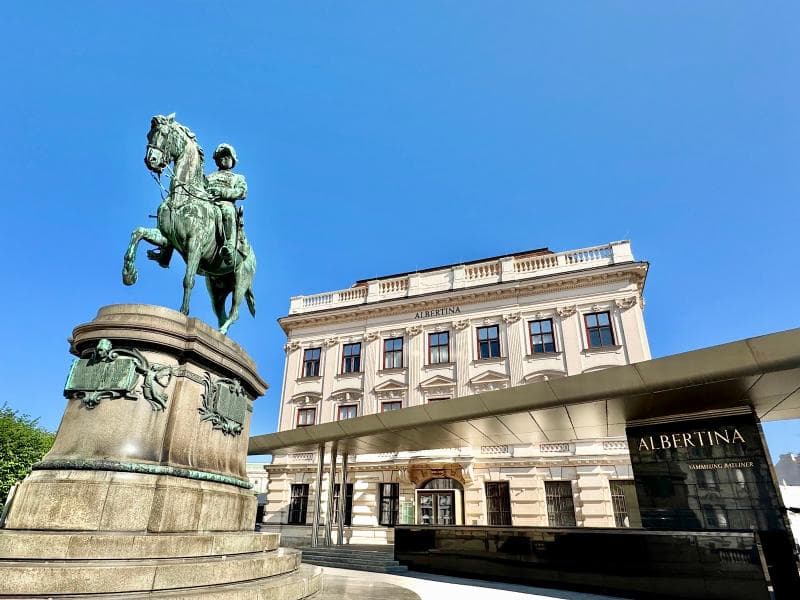
Explore the Albertina Museum in Vienna, Austria, home to one of the world's largest graphic art collections and modern masterpieces.
Overview
Nestled in the heart of Vienna, Austria, the Albertina Museum stands as a compelling fusion of imperial grandeur and artistic innovation. This world-renowned institution is much more than a typical art gallery; it is a former Habsburg residential palace that houses one of the globe's most significant collections of graphic art, alongside an impressive array of modern and contemporary masterpieces. Its unique position, atop one of the last remaining fortifications of Vienna, offers visitors not only a journey through centuries of art but also a commanding view over the city's historic center. The Albertina seamlessly blends historical opulence with cutting-edge curation, making it a pivotal cultural destination for any traveler exploring Vienna.
History & Cultural Background
The Albertina's story began in 1776 with Duke Albert of Saxony-Teschen, son-in-law of Empress Maria Theresa, who initiated its celebrated collection of prints and drawings. This foundational graphic art collection, boasting approximately one million prints and 65,000 drawings, established the museum's initial reputation. The museum itself is housed within a magnificent neoclassical palace, originally built in 1744 as a residence for General Emanuel Teles da Silva. Over time, it became the largest residential palace during the Habsburg monarchy, deeply embedded in Vienna's imperial landscape. After the fall of the monarchy, the collection transitioned into the property of the Austrian Republic in 1919. The building suffered significant damage during World War II but underwent extensive restoration and modernization from 1998 to 2003, which included the striking addition of a wing-shaped roof by architect Hans Hollein, symbolizing its embrace of modernity while respecting its past.
What Makes It Special
What truly sets the Albertina apart is its extraordinary breadth and depth of collections, presented within a stunning architectural framework. Its graphic arts collection is unparalleled, featuring masterpieces from the Late Gothic period to the present, including iconic works by Michelangelo, Raphael, Rembrandt, Rubens, Gustav Klimt, Egon Schiele, and a significant holding of Albrecht Dürer's works, such as 'Hare' and 'Hands folded in prayer'. Complementing this is the Batliner Collection, a permanent display that offers an uninterrupted survey of 130 years of art history, ranging from French Impressionism to the present day. Here, visitors can marvel at paintings by Claude Monet (including 'The Water Lily Pond'), Edgar Degas, Pierre-Auguste Renoir, Pablo Picasso, Marc Chagall, René Magritte, and many other pioneers of modern art. Beyond paintings and drawings, the Albertina also curates impressive collections of photography and architectural drawings, boasting over 50,000 plans, studies, and models. The juxtaposition of these diverse artistic expressions with the impeccably restored Habsburg State Rooms, which preserve the opulent lifestyle of imperial times, creates a uniquely enriching cultural experience.
Stories, Fun Facts & Local Details
The Albertina holds many fascinating tales. One of its most famous pieces, Albrecht Dürer's 'Hare', is so delicate and light-sensitive that it can only be displayed occasionally, making its rare appearances highly anticipated events. When not on view, visitors can often see a high-quality facsimile, ensuring its legacy remains accessible. The museum's very name, 'Albertina', honors its founder, Duke Albert, and his wife Archduchess Maria Christina, Empress Maria Theresa's favorite daughter, whose love match inspired the initial art collection. Within the palace, the 21 State Rooms transport visitors back to the Habsburg era with their shining yellow, green, and turquoise silk tapestries, original furnishings, and exquisite 'Albertina gold' gilding. The artistic parquet floors, inlaid with rose and ebony, are themselves works of art, inviting a moment of quiet appreciation for the craftsmanship of a bygone era. The museum's prominent location on the Augustinian Bastion, a remnant of Vienna's old city wall, not only offers strategic views but also connects the museum physically and historically to the city's defensive past.
Visitor Perspective
A visit to the Albertina Museum begins with a journey up a modern escalator or lift, contrasting immediately with the historical grandeur awaiting inside. Upon entering, travelers are guided through spaces that thoughtfully blend the classic and the contemporary. The museum is designed to be accessible, with all public areas and facilities wheelchair-friendly, ensuring a welcoming experience for everyone. From the dynamic temporary exhibitions that continually refresh its offerings to the permanent displays spanning centuries of artistic evolution, there is truly something for every art enthusiast. The museum's creative curation ensures that the diverse collections are presented with engaging narratives, allowing visitors to trace the evolution of artistic expression from Renaissance masters to modern visionaries. After exploring the art, guests can enjoy refreshments at the DO&CO restaurant or browse the museum shop, both accessible without a museum ticket. The Albertina provides a comprehensive and deeply human encounter with art and history in a truly magnificent setting.
Coordinates: 16.36826, 48.20464
View on Google Maps💬 How Travelers Describe This Place
Based on community votes
Photogenic
836Must See
287Interesting
255Beautiful
231Unique
86
Traveler Stories
Discover memorable experiences shared by travelers who have visited this place.
No traveler stories yet.
Be the first traveler to share what made this place memorable.
Things to see at Albertina Museum



Tour
By
Spot
Discover amazing places around the world. Your journey starts here.
Explore
© 2026 TourBySpot. All rights reserved.