Yangon Central Railway Station
Yangon, Myanmar
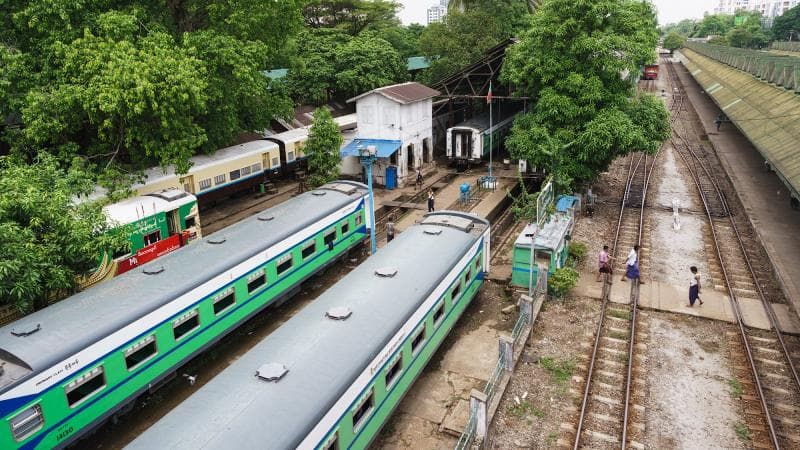
Explore Yangon Central Railway Station, a historic landmark in Yangon, Myanmar, and gateway to the Circular Railway. Discover its unique architecture and vibrant local life.
Overview
Yangon Central Railway Station, often affectionately known as the 'Grand Old Lady of Yangon', stands as a majestic and enduring symbol at the heart of Myanmar's largest city. More than just a transport hub, it is a living monument to the nation's history, a vital artery for daily life, and the central point of the extensive Myanmar Railways network. This iconic station serves as the primary gateway for rail travel across Myanmar, connecting the bustling capital to far-flung regions like Upper Myanmar, the Shan Hills, and the Taninthayi coast. It is also the starting and ending point for the renowned Yangon Circular Railway, a unique urban line that offers an unparalleled glimpse into the authentic rhythms of local life in Yangon.
As the largest railway station in Myanmar, covering an area of 5,110 square meters, Yangon Central Railway Station transcends its functional purpose to become a destination in itself, drawing both commuters and curious travelers into its vibrant embrace. Its architectural grandeur and bustling atmosphere provide a fascinating window into the soul of the city, making it an essential experience for anyone seeking to understand the cultural tapestry of Yangon.
History & Cultural Background
The story of Yangon Central Railway Station is deeply intertwined with the history of Myanmar itself, reflecting periods of colonial influence, wartime destruction, and national rebirth. The station's origins trace back to 1877 when the British colonial administration built the first railway station to support Burma's inaugural railway line, stretching from Yangon (then Rangoon) to Pyay. This initial structure was designed in a British Victorian style, praised by locals as the 'Fairy Station' for its beauty.
However, the ravages of World War II dramatically altered its fate. In 1943, the original station was destroyed by retreating British forces to prevent its strategic use by advancing Japanese troops. Following the war, a new vision for the station emerged, one that would proudly incorporate traditional Burmese identity. The current edifice, completed on June 5, 1954, was meticulously designed by U Tin (also attributed to U Hla Gyaw in some accounts). His design prominently features indigenous tiered roofs, known as 'pyatthat', which are characteristic of Burmese architecture. This post-independence reconstruction symbolized a cultural assertion, moving away from purely colonial aesthetics to embrace a unique national style, and the station has since been designated a landmark building.
What Makes It Special
What truly sets Yangon Central Railway Station apart is its harmonious blend of historical resilience and vibrant daily life. Architecturally, it is a magnificent example of traditional Burmese design, distinguishable by its towering clock tower, intricate detailing, and especially the distinctive 'pyatthat' roofs that crown its structures. These multi-tiered roofs, evocative of temple design, give the station a distinctly local character that contrasts sharply with the more functional designs of many modern railway terminals.
Beyond its striking facade, the station is the heart of Myanmar's vast rail network, facilitating both long-distance journeys and the everyday commutes of thousands. It serves as the primary hub for the Yangon Circular Railway, an almost three-hour loop that circumnavigates the city and its surrounding areas. This circular line is not merely a mode of transport; it is a moving marketplace and a social connector, providing an unvarnished view of urban and rural Burmese life. The constant ebb and flow of people, goods, and stories through this station make it a microcosm of Yangon itself.
Stories, Fun Facts & Local Details
The station is replete with fascinating anecdotes and unique local elements that enrich its character. It has earned the affectionate moniker 'Grand Old Lady of Yangon' for its enduring presence and historical charm. Visitors might notice the weathered yet grand structure, where ancient ticket counters and vintage signage seem to transport one back in time. A quirky detail often pointed out is an old machine near the ticket office that offers both a weight measurement and a horoscope reading.
The atmosphere within the station is a sensory delight, filled with the distinctive sounds of British-era trains, the calls of vendors, and the chatter of passengers. It’s a place where communities have formed; some residents even live within the station's walls, drawn by amenities like running water and a sense of collective security, where neighbors look out for each other. On the Yangon Circular Railway, the train carriages often transform into impromptu markets, with vendors expertly navigating the aisles, selling everything from fresh produce and snacks to newspapers and betel quids. These interactions offer a truly authentic and unscripted experience of Burmese daily life.
Visitor Perspective
For the curious traveler, Yangon Central Railway Station and its Circular Railway offer an unparalleled journey into the soul of Yangon. Stepping onto the platforms is like entering a vibrant, living theater, where every glance reveals a story. It's an ideal spot for people-watching, where you can observe locals in their everyday routines – families traveling, vendors carrying their wares, monks commuting, and children playing. The photographic opportunities are endless, capturing candid moments of genuine life.
To experience the full charm, consider taking a ride on the Yangon Circular Railway. Tickets for the Circular Railway are typically purchased on Platform 7 of the main station. The three-hour loop, though sometimes bumpy and without air-conditioning, provides a unique perspective of the city's outskirts, passing through agricultural lands, villages, and lively markets. It's a chance to immerse yourself in the local pace, interact with friendly Burmese people, and witness life unfold beyond the typical tourist sites. The station is not just a point of departure or arrival; it is an experience rich in cultural immersion and human connection.
Coordinates: 96.16111, 16.78167
View on Google Maps💬 How Travelers Describe This Place
Based on community votes
Interesting
887Must See
713Photogenic
711Unique
261Beautiful
34
Traveler Stories
Discover memorable experiences shared by travelers who have visited this place.
No traveler stories yet.
Be the first traveler to share what made this place memorable.

Tour
By
Spot
Discover amazing places around the world. Your journey starts here.
Explore
© 2026 TourBySpot. All rights reserved.