Yanar Dag
Baku, Azerbaijan
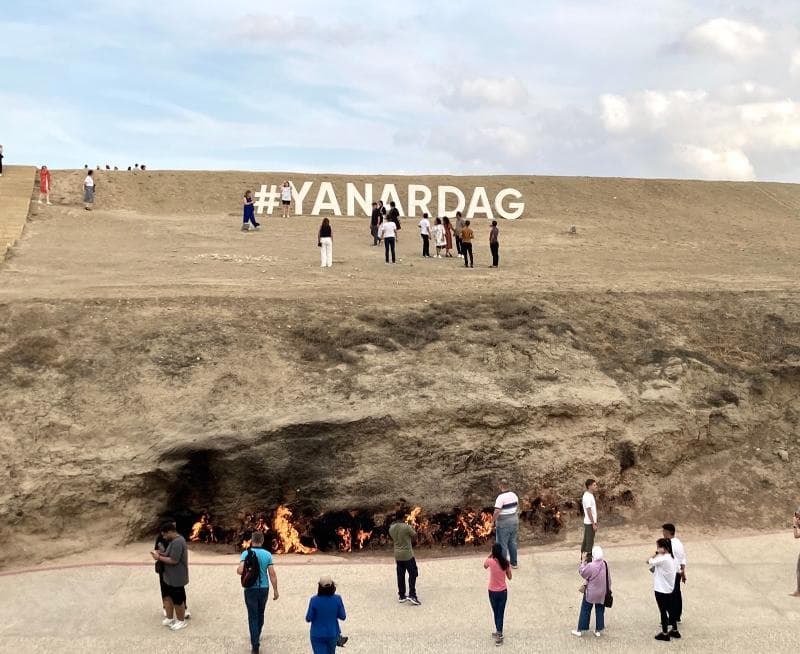
Discover Yanar Dag, the 'Burning Mountain' in Baku, Azerbaijan, where eternal natural flames have burned for centuries, a sacred site for Zoroastrians.
Overview
Yanar Dag, meaning 'burning mountain' in Azerbaijani, is a captivating natural phenomenon located on the Absheron Peninsula near Baku, Azerbaijan. This hillside is perpetually aflame, with natural gas seeping from porous sandstone layers and igniting upon contact with the air. It is one of the most iconic natural wonders in Azerbaijan, a country often referred to as the 'Land of Fire' (Odlar Yurdu), a moniker deeply rooted in its geological landscape and rich history of fire worship. The flames, which can reach several meters high, create a mesmerizing spectacle, particularly after sunset, drawing visitors from around the globe to witness this enduring natural fire. Unlike a volcanic eruption, the fire at Yanar Dag is a continuous, steady burn without mud or liquid flows, sustained by vast underground natural gas reserves.
Yanar Dag is now preserved as part of the Yanardag State Historical-Cultural and Natural Reserve, which was established to protect this unique landmark and enhance its tourism appeal. The reserve includes modern visitor facilities, a museum, and other attractions that offer insights into the region's geological and cultural heritage.
History & Cultural Background
The history of fire in Azerbaijan stretches back millennia, profoundly influencing its culture and earning it the 'Land of Fire' title. Natural gas seepages igniting spontaneously have been a feature of the Absheron Peninsula for ancient civilizations. Historical records from the Middle Ages describe constantly burning lands and waters around Baku. The Greek historian Priscus of Panium, in the 5th century AD, wrote about eternal flames in the region, and the renowned explorer Marco Polo also documented numerous natural fires during his 13th-century travels through Baku.
These eternal flames held immense spiritual significance for ancient Zoroastrians, who regarded fire as a sacred symbol of purity and a divine manifestation. Places like Yanar Dag were considered holy sites for pilgrimage and worship, long before temples such as Ateshgah at Surakhany became prominent. While some local lore suggests the current flames of Yanar Dag were accidentally ignited by a shepherd's discarded cigarette in the 1950s, archaeological and geological evidence confirms that natural fires have existed in this area for thousands of years. This deep historical connection with fire is even reflected in Baku's symbol, which features three flames and the sea, believed to be inspired by these very burning hills.
What Makes It Special
What sets Yanar Dag apart is the unwavering persistence of its flames. Unlike many other natural gas fires that have extinguished over time due to gas exploitation, Yanar Dag continues to burn continuously, day and night, regardless of weather conditions. The flames emanate from a thin, porous sandstone layer, reaching heights of up to three meters along a 10-meter-wide scarp. The sheer volume of methane gas constantly escaping from the earth's depths ensures this eternal blaze. The uniqueness of Yanar Dag also lies in its distinction from mud volcanoes; there's no accompanying mud or liquid, only pure, vibrant flame.
The reserve itself extends beyond the immediate burning hillside. It encompasses a broader area rich in geological and historical features, including ancient caves like 'Gurd Yuvasi' (The Nest of Wolf), two thousand-year-old cemeteries, active mud volcanoes, sulfur springs, and historical burial sites, showcasing the ancient funeral traditions of Turkic tribes.
Stories, Fun Facts & Local Details
Yanar Dag has woven itself into the fabric of Azerbaijani folklore and identity. For centuries, travelers along the Silk Road were said to be fascinated by this 'burning mountain,' and stories of Azerbaijan's fiery landscapes spread far and wide. The site's ancient significance as a place of worship for Zoroastrians adds a mystical layer to its natural wonder, with many believing the flames symbolize God's enduring presence.
A lesser-known but equally intriguing phenomenon nearby are the 'Yanar Bulag' or 'burning springs.' In these streams, the water itself can be ignited with a match due to its remarkably high methane content, offering another testament to the region's abundant natural gas. The atmosphere around Yanar Dag is always warm to the touch, and the air carries a faint, distinct scent of gas, adding to the immersive experience. The extensive renovations between 2017 and 2019 have transformed the site from a relatively 'wild' spot into a well-organized historical-cultural and natural reserve, complete with a museum, a 500-seat amphitheater, and exhibitions of ancient artifacts.
Visitor Perspective
Visiting Yanar Dag offers a truly unique experience. While impressive during the day, the flames are most spectacular and mystical at night, glowing vividly against the dark sky. The Yanardag State Historical-Cultural and Natural Reserve provides an organized and comfortable visit. Travelers can explore the modern museum, which features multimedia installations explaining the site's geology, the history of fire worship, and Azerbaijan's identity as the Land of Fire. There is also an open-air 'Cromlech' exhibition showcasing ancient stone artifacts found in the surrounding area.
The site is easily accessible, located approximately 25-27 km from Baku in Mammadli village, Absheron District. It is often combined with other fire-related attractions in the region, such as the Ateshgah Fire Temple and the Gobustan mud volcanoes, for a comprehensive 'fire and earth' tour. Designated paths ensure visitors can view the flames safely. Guided tours are available, offering deeper insights into the geological processes sustaining the fire and its profound cultural significance.
Coordinates: 49.89073, 40.50153
View on Google Maps💬 How Travelers Describe This Place
Based on community votes
Beautiful
1.0kPhotogenic
563Must See
309Unique
100Interesting
63
Traveler Stories
Discover memorable experiences shared by travelers who have visited this place.
No traveler stories yet.
Be the first traveler to share what made this place memorable.
Things to see at Yanar Dag



Tour
By
Spot
Discover amazing places around the world. Your journey starts here.
Explore
© 2026 TourBySpot. All rights reserved.