Surrounding Hills
Baku, Azerbaijan
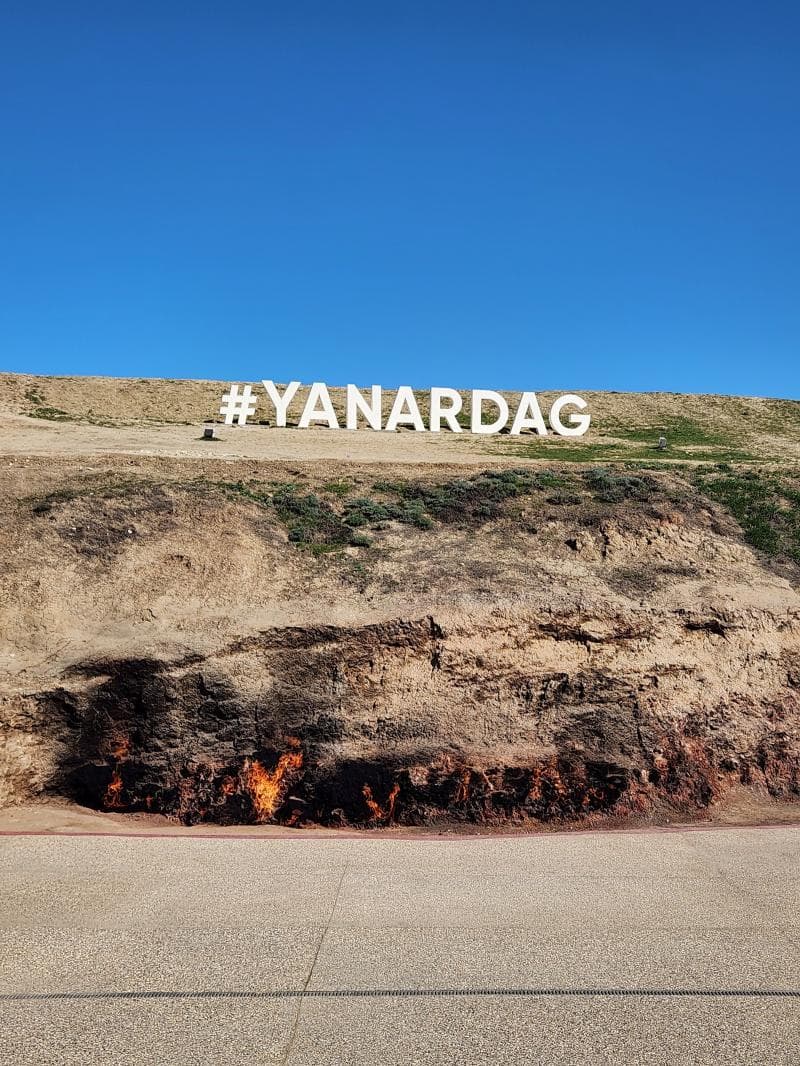
Explore Yanar Dag's Surrounding Hills in Baku, Azerbaijan, where natural gas fuels eternal flames amidst a landscape rich in history and unique geology.
Overview
The ‘Surrounding Hills’ of Yanar Dag, situated on the Absheron Peninsula near Baku, Azerbaijan, refer to the remarkable natural landscape that cradles the perpetually burning hillside. While not a distinct named attraction in itself, these gentle slopes of limestone and sandstone are integral to understanding the unique geological phenomenon of Yanar Dag, or 'Burning Mountain.' This region, often called the 'Land of Fire,' is characterized by its rich natural gas reserves and a fascinating geological history. The surrounding terrain provides the dramatic backdrop for the eternal flames, creating an atmosphere steeped in both natural wonder and ancient mystique. These hills form part of the larger Yanardag State Historical, Cultural, and Natural Reserve, which encompasses 64.55 hectares and protects the extraordinary interplay of geology and human history in this part of Azerbaijan.
History & Cultural Background
The Absheron Peninsula, home to Yanar Dag and its surrounding hills, has been revered for its natural fires since antiquity. These spontaneous flames, fed by abundant natural gas seeping from the earth, played a pivotal role in the development of Zoroastrianism, an ancient religion centered on fire worship. For millennia, these natural fire vents were considered sacred, serving as a powerful link between humans and supernatural forces.
Historical accounts, such as those by the 13th-century Venetian explorer Marco Polo, documented the 'eternal fires' of the Absheron Peninsula, indicating their long-standing presence and significance. Unlike some other ancient fire sites in Azerbaijan, such as the Ateshgah Fire Temple, where flames are now maintained by artificial gas supply, the fire at Yanar Dag continues to burn naturally, making it a rare and authentic example of this geological wonder. The cultural importance of fire is so profound in Azerbaijan that its very name is often traced back to the Persian word 'Azer,' meaning fire, solidifying the nation's identity as the 'Land of Fire.'
What Makes It Special
The distinctive character of Yanar Dag's surrounding hills lies in their remarkable geology. The Absheron Peninsula is an anticline, a dome-like geological structure composed mainly of Tertiary limestone, marl, and sandstone. Beneath this porous sandstone layer lies one of the world's most prolific oil and gas-bearing formations. Natural hydrocarbon gases continuously emanate from below the Earth's surface through cracks and fissures in these rocks.
Upon contact with oxygen, these gases ignite spontaneously, creating the persistent flames of Yanar Dag. This continuous combustion distinguishes Yanar Dag from other natural phenomena in Azerbaijan, such as mud volcanoes, where the burning is often less steady and involves mud or liquid discharge. The flames, which can reach several meters high, particularly impress visitors at night when they vividly illuminate the hillside, showcasing nature's raw power in an enduring spectacle.
Stories, Fun Facts & Local Details
The enduring fires of Yanar Dag have woven themselves into local folklore. One popular legend suggests that the Yanar Dag flame was accidentally ignited by a shepherd who tossed a discarded cigarette onto the hillside in the 1950s, and it has burned ever since. However, historical records and geological studies confirm the presence of these natural fires for centuries, if not millennia.
Beyond the main burning hill, the surrounding landscape offers further intriguing natural details. Nearby, 'burning springs,' known locally as Yanar Bulaq, reveal water saturated with sulfur that can be ignited with a match. Locals have traditionally believed these springs possess curative properties, leading people to take footbaths in them. The wider reserve also includes areas like 'Gurd yuvasi' (Wolf's Nest) and ancient burial grounds, hinting at a long history of human interaction with this fiery land. The iconic symbol of Baku, featuring three tongues of flame, is even believed to be inspired by the natural fires of this region, emphasizing their deep cultural resonance.
Visitor Perspective
Visiting the Surrounding Hills of Yanar Dag offers a deeply immersive experience into Azerbaijan's natural and cultural heritage. The site has been developed into a protected reserve, providing visitors with well-maintained paths and viewing platforms to observe the flames safely and closely. A modern museum and visitor center offer insights into the geology, history of fire worship, and the science behind the continuous blaze, enriching the journey with educational context.
Many visitors choose to arrive in the evening to witness the flames at their most dramatic against the darkening sky, creating a truly unforgettable and somewhat otherworldly atmosphere. The area's tranquil yet powerful beauty, combined with the lingering scent of natural gas, makes for a sensory experience unlike any other. It is a place that invites contemplation on the ancient forces shaping our planet and the profound impact such phenomena have had on human civilization and belief systems.
Coordinates: 49.8912, 40.5018
View on Google Maps💬 How Travelers Describe This Place
Based on community votes
Unique
551Beautiful
547Must See
336Interesting
298Photogenic
212
Traveler Stories
Discover memorable experiences shared by travelers who have visited this place.
No traveler stories yet.
Be the first traveler to share what made this place memorable.

Tour
By
Spot
Discover amazing places around the world. Your journey starts here.
Explore
© 2026 TourBySpot. All rights reserved.