Wooden Doors
Split, Croatia
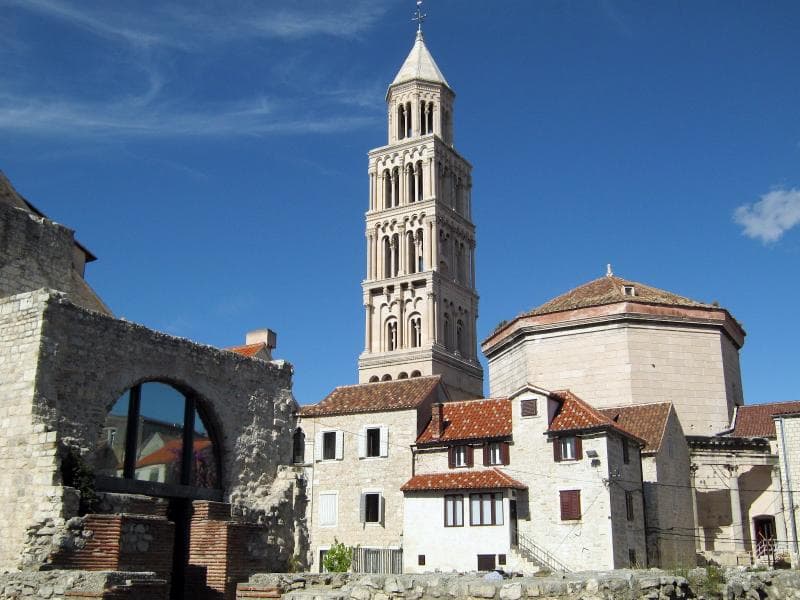
Discover the exquisite 13th-century Wooden Doors by Master Buvina at the Cathedral of Saint Domnius in Split, Croatia. Intricately carved with scenes from Christ's life, these Romanesque masterpieces offer a unique glimpse into medieval art.
Overview
Stepping into the Cathedral of Saint Domnius in Split, Croatia, one is immediately drawn to the monumental wooden doors that grace its main entrance. These doors are not merely an entryway; they are a profound work of art and a cornerstone of Croatian Romanesque sculpture. Created by the skilled local master Andrija Buvina in 1214, these imposing doors are carved from walnut wood, standing approximately 5.3 meters tall. Each of the two wings features fourteen meticulously carved panels, presenting a total of 28 scenes that vividly narrate key events from the life of Jesus Christ.
These wooden doors have endured centuries, surviving in remarkable condition, which is a rare feat for medieval wooden artworks in Europe. Their exceptional preservation offers a tangible link to the artistic and religious fervor of the 13th century.
History & Cultural Background
The history of these remarkable wooden doors is inextricably linked to the Cathedral of Saint Domnius itself, a structure with a story spanning nearly two millennia. The cathedral was originally built as the mausoleum for the Roman Emperor Diocletian in the early 4th century. After the fall of the Western Roman Empire and the arrival of Christian communities in the 7th century, this imperial tomb was transformed into a Christian cathedral. It was during the Romanesque period, a time of flourishing artistic and architectural innovation in Europe, that Andrija Buvina undertook the creation of these magnificent doors.
Buvina, identified as a local master sculptor and painter from Split, completed this masterpiece in 1214. His work emerged from a strong tradition of medieval art in Dalmatia, characterized by a blend of Byzantine influences and burgeoning Western European Romanesque styles. The doors were not just decorative; they served as a visual Bible for a populace where literacy was not widespread, conveying sacred narratives through powerful imagery.
What Makes It Special
The wooden doors of the Cathedral of Saint Domnius are celebrated for several reasons. Firstly, their age and state of preservation are extraordinary; very few medieval wooden doors of this scale have survived intact across Europe. This makes them an invaluable artifact for understanding Romanesque art and the craftsmanship of the era. Secondly, the sheer detail and artistic skill evident in each of the 28 panels are astounding. Buvina's ability to imbue emotion and movement into carved wood panels, depicting scenes from the Annunciation to the Ascension, showcases an exceptional talent. The carvings are separated by rich ornamental motifs of grapevines, acanthus leaves, and interlace patterns, often incorporating small human and animal figures, adding layers of intricate beauty.
Historically, these doors were even more vibrant, as they were originally colored and gold-plated, creating an even more striking visual impact for those entering the cathedral. Their existence also signifies the sophisticated artistic patronage present in Split during the 13th century, highlighting the city's importance as a cultural center.
Stories, Fun Facts & Local Details
Imagine standing before these doors almost 800 years ago. The detailed carvings would have been a central point of contemplation and education for the faithful. Each scene, from the Annunciation by the Archangel Gabriel to Mary, through the Nativity, the miracles of Jesus, his crucifixion, and ultimately the Resurrection and Ascension, unfolds like a sacred storybook. It's said that Buvina was also known for other works, including a painting of Saint Christopher, hinting at a broader artistic output beyond these doors.
A fascinating detail about the Cathedral of Saint Domnius is its ironic history. It was once the mausoleum of Emperor Diocletian, a fierce persecutor of Christians, yet it later became a cathedral dedicated to Saint Domnius, a bishop martyred under Diocletian's reign. The wooden doors, depicting the life of Christ, serve as a powerful symbol of Christianity's triumph and enduring legacy within a structure originally built by its adversary. These doors represent not only artistic mastery but also a testament to faith and resilience, a silent witness to the profound transformations of history within these ancient walls.
Visitor Perspective
For the curious traveler today, encountering the Wooden Doors is an awe-inspiring experience. They are positioned at the entrance to the cathedral, offering an immediate immersion into centuries of history and art as you cross the threshold into what was once a Roman emperor's final resting place. While photography is often permitted (check local signage), visitors are encouraged to take a moment to truly appreciate the intricate details of each panel and consider the immense effort and artistry that went into their creation. The doors provide a contemplative introduction to the sacred space within and serve as a powerful reminder of Split's rich cultural tapestry, where Roman antiquity and medieval Christian artistry converge. Standing before them, one can almost feel the echoes of countless generations who have passed through these same magnificent portals.
Coordinates: 16.4394, 43.5086
View on Google Maps💬 How Travelers Describe This Place
Based on community votes
Interesting
722Unique
698Must See
276Beautiful
126Photogenic
19
Traveler Stories
Discover memorable experiences shared by travelers who have visited this place.
No traveler stories yet.
Be the first traveler to share what made this place memorable.

Tour
By
Spot
Discover amazing places around the world. Your journey starts here.
Explore
© 2026 TourBySpot. All rights reserved.