Wood Carving Displays
Tashkent, Uzbekistan
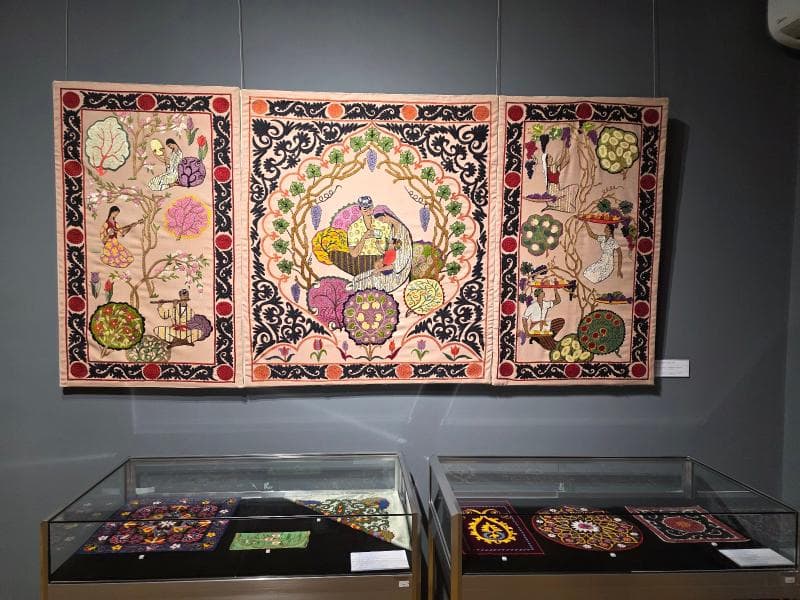
Explore stunning wood carving displays at the Museum of Applied Arts in Tashkent, Uzbekistan. Discover centuries of intricate Uzbek craftsmanship.
Overview
The Wood Carving Displays within Tashkent's Museum of Applied Arts offer a captivating journey into Uzbekistan's rich artistic heritage. Housed in a stunning late 19th-century palace, the museum itself is a masterpiece of traditional Central Asian architecture, with its intricately carved interiors setting the stage for the exquisite collection it holds. This sub-spot is a highlight for anyone wishing to understand the profound skill and cultural significance of Uzbek wood carving, showcasing a diverse range of items from architectural elements to delicate household objects.
The museum's collection features thousands of examples of decorative art, including significant wood carving pieces that span from the early 19th century to the present day. Visitors can admire the precision and beauty of this ancient craft, which transforms simple wood into enduring works of art. These displays are not merely static exhibits; they are windows into the soul of Uzbek craftsmanship, reflecting centuries of tradition passed down through generations.
History & Cultural Background
Wood carving in Uzbekistan boasts deep, ancient roots, with archaeological evidence tracing the tradition back to at least the 9th century. Initially, this craft adorned crucial architectural elements such as columns and beams in traditional Uzbek houses, which were greatly valued in ancient architecture. Over time, its application expanded to include doors, trunks, caskets, and various smaller decorative and functional items.
The Museum of Applied Arts itself has a fascinating history. Established in 1937 as a temporary exhibition for handicrafts, it found its permanent home in the former residence of Russian diplomat Alexander Polovtsev Jr. Polovtsev, an admirer of local craftsmanship, commissioned master builders from various regions like Bukhara, Samarkand, Khiva, and Ferghana to decorate his palace. The resulting interiors, rich with carved wood and ganch (carved plaster), became an integral part of the museum's allure, making the building a significant exhibit in its own right.
What Makes It Special
Uzbek wood carving is distinctive for several reasons, most notably that many pieces are crafted from a single block of wood without the use of nails. Masters take pride in revealing the natural beauty, texture, and color of the wood. The craft employs a variety of woods, including walnut, plane, juniper, elm, and mulberry, each contributing its unique characteristics to the final piece.
The displays showcase diverse regional styles and ornamental techniques. For instance, in Fergana, carvings are delicate and intricate, while Samarkand is known for its elegant blend of floral and geometric motifs. Tashkent's style is often characterized by a more austere approach, with selective use of varnish and color. Key ornamental styles you'll encounter include 'bagdadi,' a no-background geometric pattern, 'islimi,' featuring curling stems with buds, leaves, and flowers, and 'pargori,' a fine background thread based on geometric grids of circles, squares, and triangles.
Stories, Fun Facts & Local Details
The art of wood carving in Uzbekistan is a living tradition, carefully passed down from master to student across many generations. This lineage ensures that ancient techniques and intricate patterns continue to thrive. The museum's collection includes works by renowned masters such as K. Khaydarov from Kokand, and T. Takhtakhodjaev, Y. Raufov, and D. Khakimov from Tashkent, whose skill brought carved columns, caskets, and decorative tables to life.
A fascinating detail is that some traditional carvings, particularly from regions like Khiva, are intentionally left unvarnished and instead treated with natural oils to preserve the wood's inherent beauty. The museum building itself holds stories; before becoming a museum, it served various purposes, including a temporary hospital for Austrian prisoners during WWI and later an orphanage, before housing a craft training center in the 1930s. This history adds another layer of appreciation for the craftsmanship that decorates its walls and is exhibited within.
Visitor Perspective
Stepping into the Wood Carving Displays provides a tangible connection to Uzbekistan's artistic soul. The sheer volume and variety of the carved pieces — from towering columns to delicate bookstands — allow you to observe the evolution of this craft over centuries. You'll marvel at the intricate details of geometric patterns (girih) and the flowing elegance of floral motifs (islimi), each telling a story of cultural influences and artistic mastery.
It's an experience that highlights the patience, precision, and artistic vision of Uzbek artisans. Walking through these halls, one can easily imagine the hands that meticulously shaped each piece, turning raw wood into objects of profound beauty and cultural significance. It offers a powerful insight into how art is woven into the fabric of daily life and architectural grandeur in Uzbekistan.
Coordinates: 69.1534, 41.1803
View on Google Maps💬 How Travelers Describe This Place
Based on community votes
Photogenic
989Must See
791Interesting
613Beautiful
514Unique
207
Traveler Stories
Discover memorable experiences shared by travelers who have visited this place.
No traveler stories yet.
Be the first traveler to share what made this place memorable.

Tour
By
Spot
Discover amazing places around the world. Your journey starts here.
Explore
© 2026 TourBySpot. All rights reserved.