Winter Palace
Ulaanbaatar, Mongolia
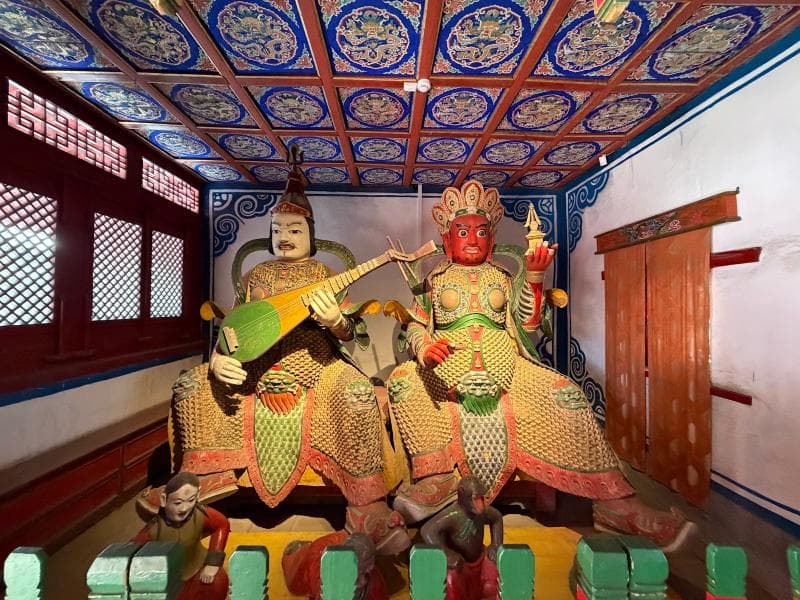
Explore the Winter Palace of Bogd Khan Palace Museum in Ulaanbaatar, Mongolia, the last emperor's preserved residence.
Overview
Nestled in the bustling capital of Ulaanbaatar, Mongolia, lies the Bogd Khan Palace Museum, a site of profound historical and cultural significance. Within this sprawling complex stands the Winter Palace, the only surviving residence of Mongolia's last theocratic ruler, Bogd Khan (Javzandamba), and his Queen Dondogdulam Khatan. Built between 1893 and 1903, this unique museum offers a rare glimpse into early 20th-century Mongolian royalty and Buddhist traditions, having remarkably escaped the widespread destruction of religious sites during the communist era. It serves as a meticulously preserved testament to a pivotal period in Mongolian history, blending traditional temple architecture with European-style design.
The museum complex is a sanctuary of over 8,000 exhibits, ranging from the Bogd Khan's personal effects to priceless religious artworks, providing visitors with a rich, immersive experience into the life and legacy of a sovereign deeply entwined with his nation's spiritual and political destiny.
History & Cultural Background
The Winter Palace is intrinsically linked to the life of the 8th Jebtsundamba Khutughtu, Bogd Khan, who was not only the spiritual leader of Mongolian Buddhism but also the last monarch of Mongolia. The complex, often referred to as the Green Palace, was constructed between 1893 and 1903, with the European-style Winter Palace specifically built from 1903 to 1905 under the guidance of Tsarist Russian architects. This two-story, white European-style building served as the Bogd Khan's winter residence for two decades, where he lived with his queen.
Its survival is a remarkable tale. While the Bogd Khan had four main palaces, the Winter Palace is the only one that was not destroyed during the communist purges of the 1930s, primarily because it was converted into a museum shortly after his death in 1924. This transformation, formalized in 1926, inadvertently preserved a treasure trove of Mongolian heritage. The palace grounds themselves played a significant role in ceremonial life, particularly the Gate of Peace, constructed between 1912 and 1919 to commemorate Mongolia's independence from the Manchu empire.
What Makes It Special
What sets the Winter Palace apart is its extraordinary blend of architectural styles and the sheer breadth of its preserved artifacts. The European-style Winter Palace stands in fascinating contrast to the traditional Mongolian temple structures within the same complex, reflecting the cross-cultural influences of the era. It houses a phenomenal collection of the Bogd Khan's personal belongings, offering an intimate glimpse into his daily life, interests, and the opulent world of Mongolian royalty.
Among its most unique displays are rare Buddhist artworks, including 21 priceless Taras sculptures crafted by Zanabazar, Mongolia's renowned first Bogd Khan. The palace also showcases peculiar gifts and possessions, such as golden ceremonial boots from Russian Tsar Nicholas II, and the Bogd Khan's elaborate ceremonial ger (yurt) famously lined with approximately 150 snow leopard skins. These objects collectively tell a compelling story of a nation at a crossroads, balancing spiritual devotion with emerging political realities and international diplomacy.
Stories, Fun Facts & Local Details
Imagine the grandeur of Bogd Khan's court as you wander through rooms filled with his personal treasures. One intriguing detail is the Bogd Khan's private collection of stuffed animals, which includes an imported elephant whose jeweled regalia is on display. This collection speaks volumes about his eccentricities and fascinations with the wider world. Another fascinating aspect is the mural by artist Marzan Sharav, which humorously and ironically depicts scenes from ordinary Mongolian life at the turn of the 20th century, offering a vivid social commentary.
The Peace Gate, or Andi Men, built without a single nail using 108 different interlocking joints, is an engineering marvel and a symbol of Mongolia's hard-won independence. It was funded by public contributions, equivalent to 175 kg of silver. The contrast between the Khan's lavish lifestyle, evidenced by his four palaces (of which the Winter Palace is the sole survivor), and the poverty faced by many of his subjects, is a poignant historical detail that visitors often reflect upon.
Visitor Perspective
Visiting the Winter Palace within the Bogd Khan Palace Museum is a journey back in time, offering a profound understanding of Mongolia's cultural identity. The complex provides a serene escape from the urban hustle of Ulaanbaatar, with its ornate arches and painted timbers contributing to a tranquil atmosphere. While exploring, travelers should wear sturdy shoes due to the extensive grounds.
Visitors can expect to spend one to two hours immersing themselves in the history and art. It's an ideal destination for history enthusiasts, photographers, and anyone interested in the unique intersection of Buddhism, monarchy, and early 20th-century Mongolian statehood. The experience provides valuable context, especially if combined with a visit to the nearby Zaisan Memorial, allowing one to appreciate the historical district within the modern landscape of Ulaanbaatar.
Coordinates: 106.90667, 47.8975
View on Google Maps💬 How Travelers Describe This Place
Based on community votes
Interesting
869Must See
445Beautiful
416Photogenic
309Unique
33
Traveler Stories
Discover memorable experiences shared by travelers who have visited this place.
No traveler stories yet.
Be the first traveler to share what made this place memorable.

Tour
By
Spot
Discover amazing places around the world. Your journey starts here.
Explore
© 2026 TourBySpot. All rights reserved.